

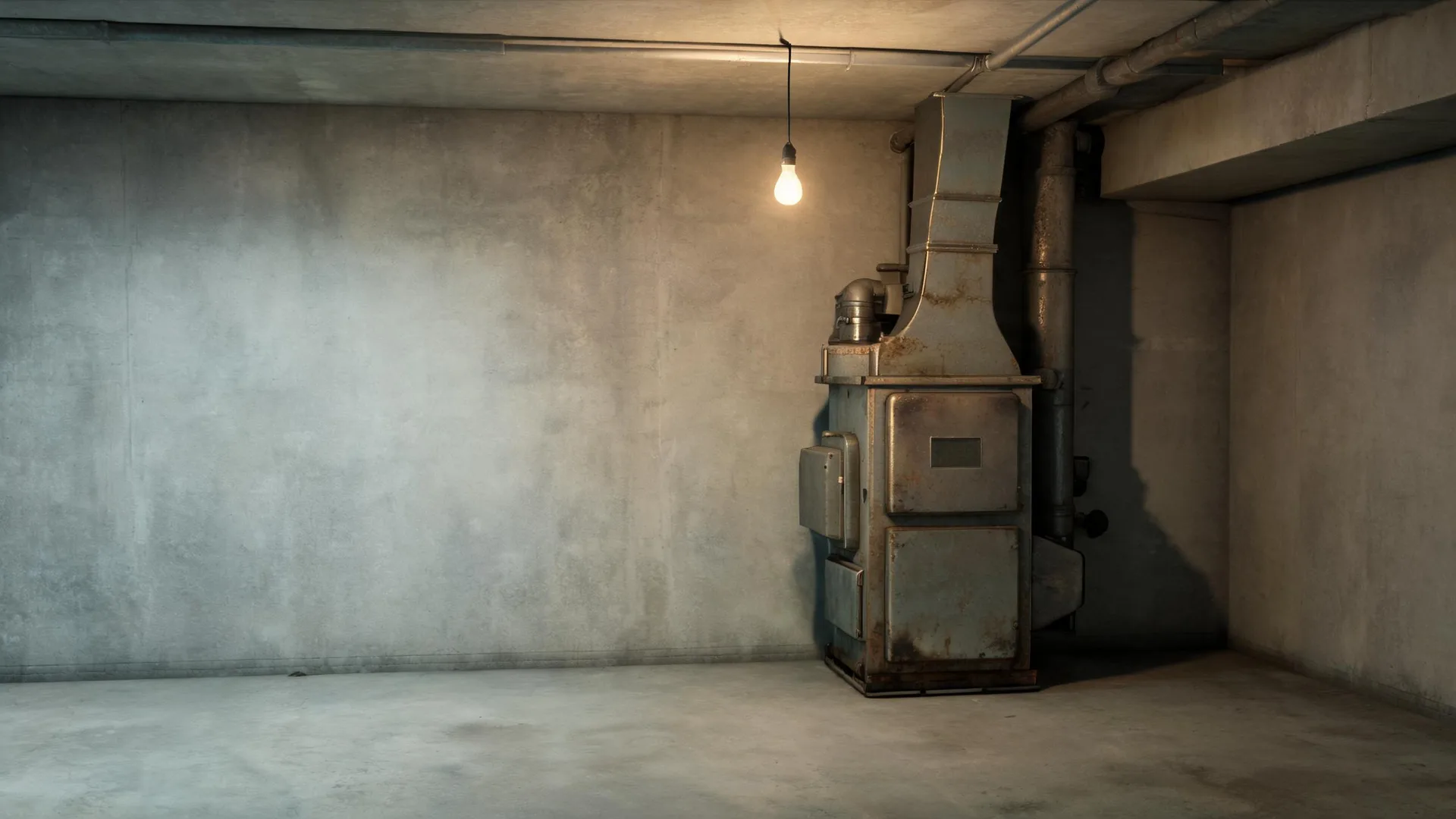
A gas furnace with sheet-metal ductwork and PVC pipes installed in an unfinished basement.

Furnace Repair in Santa Rosa, NM

Tell us about the job

Takes about a minute. No obligation.

RepairFurnace or heatingGuadalupe County, NM
Step 1 of 2

What ZIP code is the job in?

September is worth a look before heat season starts in October. Furnaces here run clear through April, about seven months straight, and most breakdowns show up in those first cold weeks rather than mid-winter. That first hard run is what finds a weak igniter or a failing flame sensor, the kind of part that was already on its way out over the summer. Catching it before October means a call on your schedule instead of one made after the house has already gone cold.

7 months
October through April, your furnace is on duty
24°F
the average winter night it heats against
12 winter storms
in ten years, the nights a failure hurts most
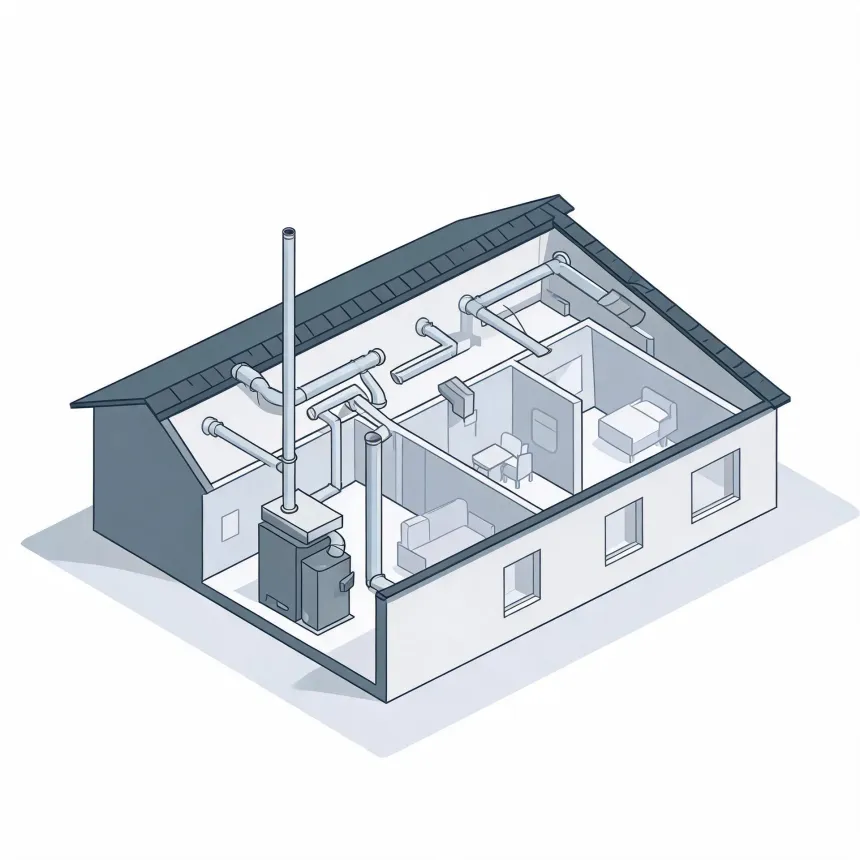
Isometric line illustration of a single-story house cutaway showing interior rooms with furniture, ductwork or piping running along the ceiling, and a boxy furnace unit with a tall vertical flue pipe.
Your furnace works hardest from November through March.

NOAA nClimDiv, 1991–2020 normals

Furnaces in Santa Rosa run from October through April, with overnight lows averaging 24°F in December and January.

Seven months of steady work wears out the usual parts the usual way, nothing more.

Half the furnaces in Santa Rosa are working in houses built by 1976

Half the homes here were built by 1976
Heat runs October through April
Winter nights average 24°F

Get it looked at early

Problems tend to show up in the first weeks of the season, when the load hits a part that was already weak.

Find a contractor
A gas furnace with attached ductwork, gas piping, and condensate lines installed in a concrete-block basement.

What to check before you call

Start with the thermostat. Make sure it is set to heat and the set point is above room temperature. If it runs on batteries, swap them. Go to the breaker box and look for a tripped furnace breaker. Reset it once. If it trips again, stop there and call, that is not something to keep resetting yourself. Check the filter. A filter packed with dust chokes airflow so badly the furnace shuts itself off, and that one you can fix in a few minutes with a new filter. Look at the vent hood or pipe where it exits the house and make sure nothing is blocking it. No debris, no nest, nothing pressed against it. If the furnace has a standing pilot, check whether it is lit. If it has an igniter instead, listen for the sequence. Air moving, then a click or glow, then the burners catching. A furnace that runs through that sequence but never lights is telling you the igniter or flame sensor has failed, and that calls for a contractor. Note what you heard and saw before anything resets itself. It helps whoever comes out get to the real problem faster.

A small problem doesn't hold still

A furnace with a cracked heat exchanger or a clogged flue is already failing when you first notice it acting up. Keep running it and the crack spreads, the exhaust leak worsens, the strain on the blower motor compounds. What would have been a part swap this week becomes a bigger repair, or a unit not worth fixing, a few weeks later.

What that means for your call

Don't wait out a problem hoping it settles down on its own. A furnace that's short cycling, tripping its breaker, or putting off a burning smell needs a contractor before the next cold snap, not after. Shutting it off and calling is the safer move than letting it keep running while you decide.

An unfinished basement featuring a forced-air furnace, exposed wooden ceiling joists, bare concrete walls, and miscellaneous items including cardboard boxes and coiled cables on the floor.

A new furnace would cut about $160 a year off heating for a typical Guadalupe County home.

  • A new high-efficiency furnace$780 a year
  • An older furnace$940 a year

Estimates for a typical Guadalupe County home, compared with an older unit built to the previous federal minimum, from EIA household energy data, New Mexico fuel prices and NOAA climate normals. Your home will differ.

Repair makes sense when one part has failed and the heat exchanger is sound.

Replacement makes sense when the heat exchanger is cracked or the furnace keeps needing parts.

A diagnostic call starts before any panel comes off. The contractor asks what the furnace was doing right before it quit, what sounds it made, whether the thermostat even called for heat. Then comes the power and gas check, making sure the unit has what it needs to run in the first place. From there it's a walk through the sequence. Does the inducer motor start. Does the igniter glow or spark. Do the burners light. Does the blower push air once the burners are going. Each step either passes or it doesn't, and wherever it stops is where the problem lives. A failed igniter looks different from a bad flame sensor or a blocked flue, even though all of them can leave you with cold air and a furnace that won't stay lit. Walking the sequence is how the contractor finds out which one it actually is before anything gets replaced.