




An unfinished basement featuring a grey forced-air furnace with metal ductwork, concrete block walls, exposed wooden joists, and a single hanging bare bulb.

Furnace Repair in Roswell, NM

Tell us about the job

Takes about a minute. No obligation.

RepairFurnace or heatingChaves County, NM
Step 1 of 2

What ZIP code is the job in?

Your furnace in Roswell runs from October through April, with overnight lows averaging 27°F through the coldest months. That's a normal winter workload, not an extreme one. Nothing about this stretches a furnace past what it's built for. When one starts short cycling, won't light, or blows cold air, the cause is usually something specific. A cracked heat exchanger. A bad igniter. A clogged filter choking airflow. A flame sensor that needs cleaning. Find which one it is and the fix is usually straightforward.

7 months
October through April, your furnace is on duty
27°F
the average winter night it heats against
11 winter storms
in ten years, the nights a failure hurts most
Isometric cutaway illustration of a single-story house showing interior rooms, furniture, a dark furnace unit with a tall vertical flue pipe, and ductwork running under the pitched shingle roof.
Your furnace works hardest from November through March.

NOAA nClimDiv, 1991–2020 normals

A furnace that won't stop short cycling isn't being temperamental, something is telling it to shut off.

Chase down which safety switch is tripping before you replace anything, since swapping parts at random won't fix a sensor that's just doing its job.

Electricity here runs $41.61 per million Btu, so a furnace running wrong burns money every night it's 27°F outside.

Heat runs October through April
Winter nights average 27°F
11 winter storms from 2015 to 2024
Roswell's weather isn't what breaks your furnace108 damaging wind events in Chaves County between 2015 and 2024, and furnaces here still fail for the usual reasons.

Half the homes in Roswell were built in 1972 or earlier. If your furnace came with the house, it's worth finding out how old the unit itself is, since a furnace rarely lasts as long as the house around it. An older furnace is more likely to have a cracked heat exchanger, and that's not something you patch. Before paying for a big repair, ask how much life is actually left in the unit.

Find out how much life is left before you pay for the repair

A technician can check the age of the unit against what's failing before you commit to a repair. If it's a cracked heat exchanger on an old furnace, that number matters more than anything else.

Find a contractor
A man in a cap, gray long-sleeve shirt and tan work pants carries a worn canvas tool bag up porch steps toward a dark gray front door beside a potted shrub.
A gray high-efficiency gas furnace installed in an unfinished basement, surrounded by gas lines, a condensate drain, and sheet-metal ductwork.

Why furnaces fail

The igniter fails more than any other part. It heats up and cools down every time the furnace fires, and that fatigue wears it out. A flame sensor collects a film over time and stops sensing the flame, so the furnace shuts itself off as a safety measure. That looks like a failure but it's the furnace doing what it's supposed to do. The blower motor wears on its bearings from running hour after hour and usually gets loud before it quits. The heat exchanger matters most. It cracks from expanding and contracting over years of heating, and a cracked one gets replaced, not patched. A dirty filter doesn't fail by itself, but it starves airflow and pushes the blower and the exchanger to work harder than they should. None of this is about one hard winter. It's wear built up over years, and most of these parts give some warning before they quit for good.

A short cycle gets shorter

A furnace that shuts off early from a dirty flame sensor will start shutting off earlier each time if it keeps running. The sensor builds up more film with every cycle it's asked to complete. Left alone, what started as an occasional shutdown turns into one that won't stay lit at all.
Cold air strains what's already weak

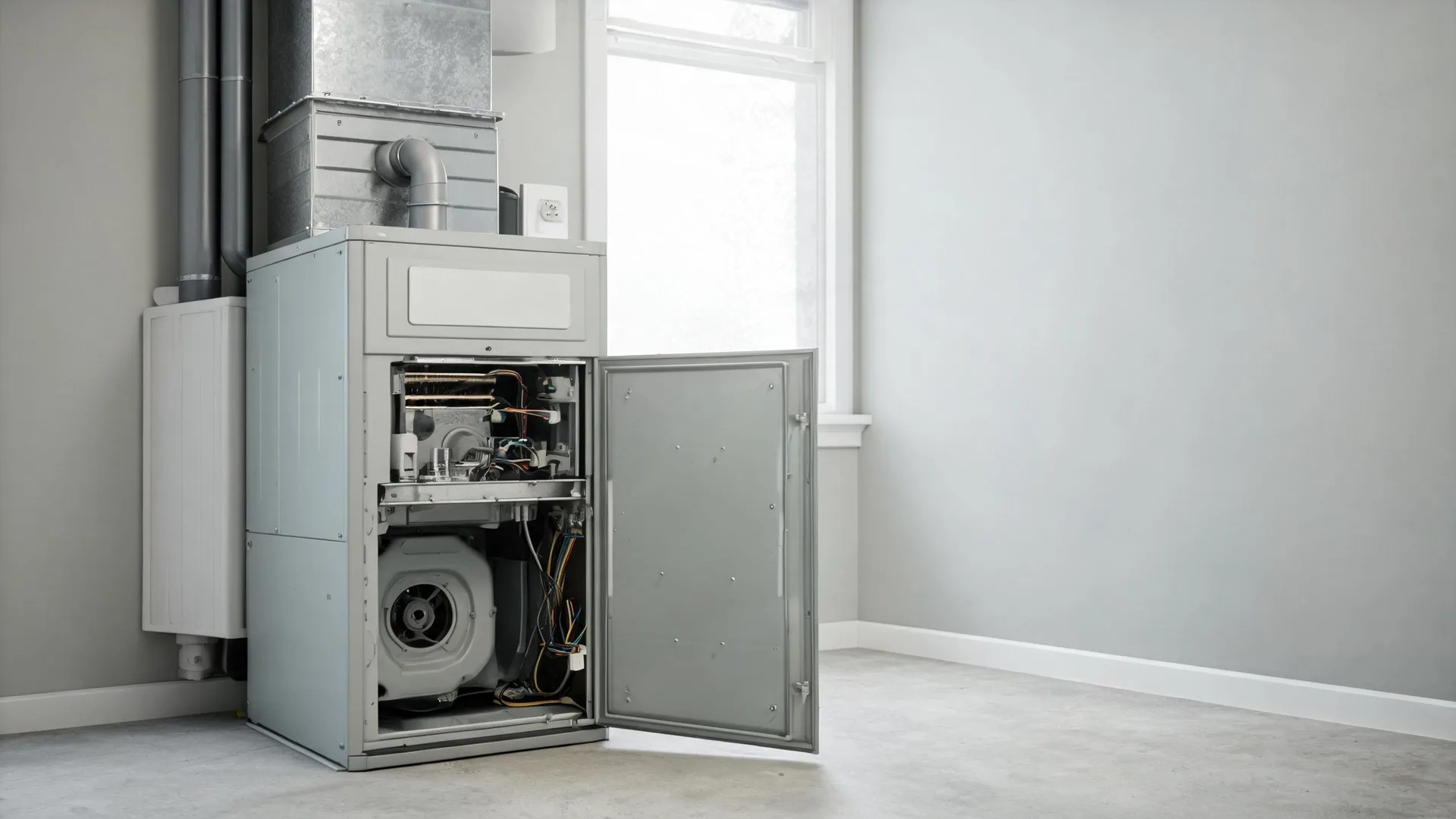
A cracked heat exchanger lets combustion gases mix into the air your blower pushes through the house. Running the furnace on a crack doesn't make the crack bigger overnight, but it does mean every cycle pushes that mix through the ductwork. That's a safety problem, not a wear problem, and it doesn't wait for a convenient time to matter.

Before calling anyone, check the filter. Pull it out and hold it up to a light. If you can't see through it, it's choking the airflow your furnace needs to run right, and that alone causes a lot of the problems people call about. Check that the thermostat is set to heat and the batteries aren't dead, since a dead thermostat looks exactly like a dead furnace. Go to the furnace itself and look for a blinking light near the control board. That blink is a code, and the manual for your model will tell you what it means. If the furnace has a switch that looks like a light switch nearby, make sure it hasn't been bumped off. None of this fixes a cracked heat exchanger or a failed igniter, but it rules out the simple stuff before you pay someone to find it for you.

A repair is worth doing when the part that failed is cheap to replace and the rest of the furnace is sound. An igniter, a flame sensor, a blower motor, these get swapped out and the furnace runs like it did before. Replacement makes sense when the thing that failed is the furnace itself, not a part bolted to it. A cracked heat exchanger is the clearest case. There's no patch for it, so the question stops being about the crack and starts being about the whole unit. The other thing worth weighing is how many parts have already been replaced. A furnace that's had its igniter, its blower, and its control board swapped out one at a time over the years is telling you something about what's coming next. One repair rarely tells you much by itself. A pattern of them does.