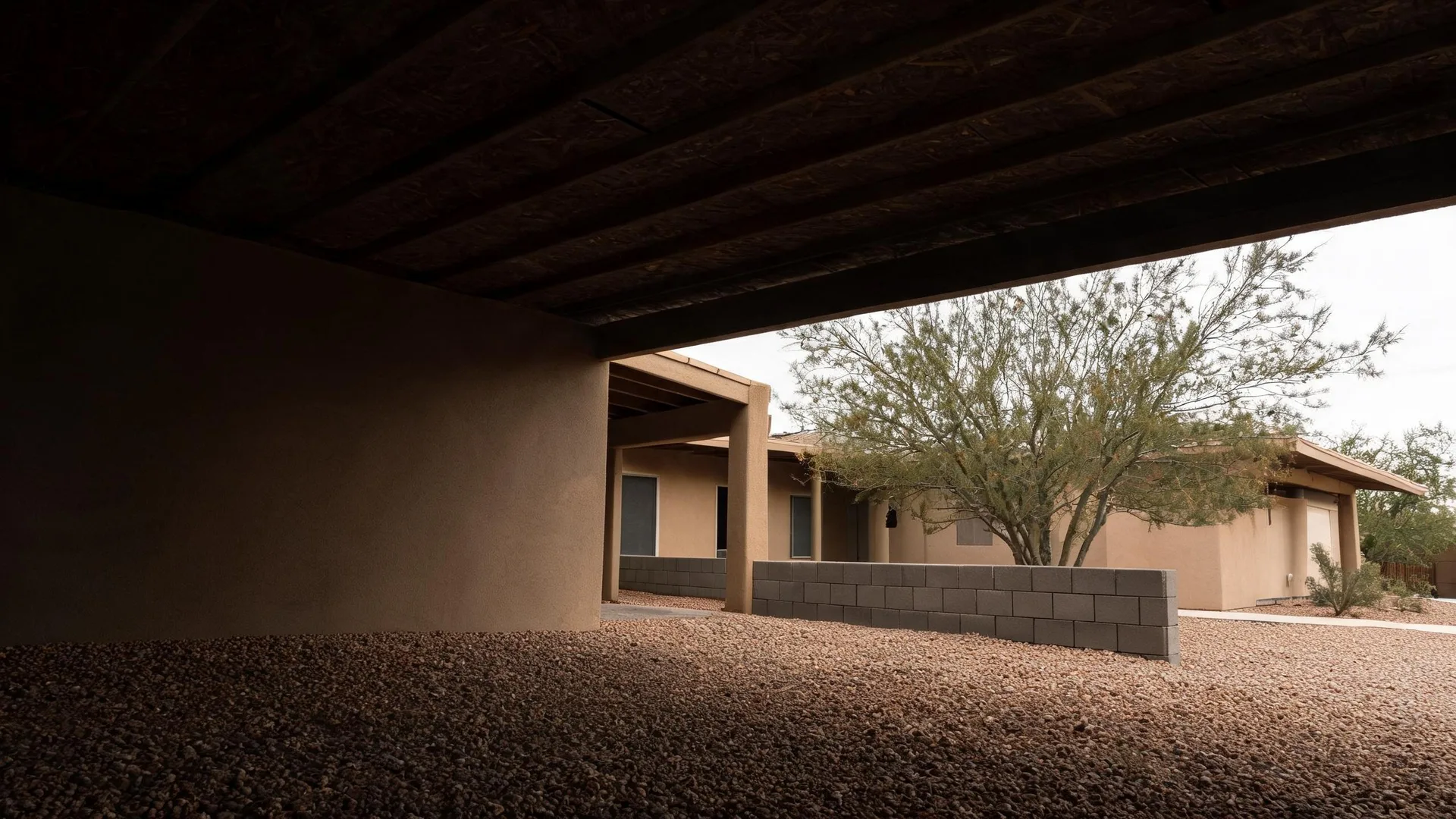

View from under a shaded wood-beamed patio of a single-story stucco house with a gray concrete block wall, gravel ground, and a mesquite-like tree under an overcast sky.

Furnace Repair in Rio Rancho, NM

Tell us about the job

Takes about a minute. No obligation.

RepairFurnace or heatingSandoval County, NM
Step 1 of 2

What ZIP code is the job in?

Furnaces in Rio Rancho run about eight months of the year, October through May. Overnight lows average 19°F through December, January and February, so the furnace is cycling on through the coldest part of the night, every night, most of the winter. That kind of steady demand wears on an igniter or a blower motor faster than it would somewhere milder. Sandoval County has had well over a hundred winter storms in the past decade, and a hard freeze is exactly when a weak part tends to give out. A furnace acting up here usually isn't bad luck. It's the system telling you something wore down earlier than it should have.

8 months
October through May, your furnace is on duty
19°F
the average winter night it heats against
75%
of homes here heat with gas, so most furnaces here burn gas
134 winter storms
in ten years, the nights a failure hurts most
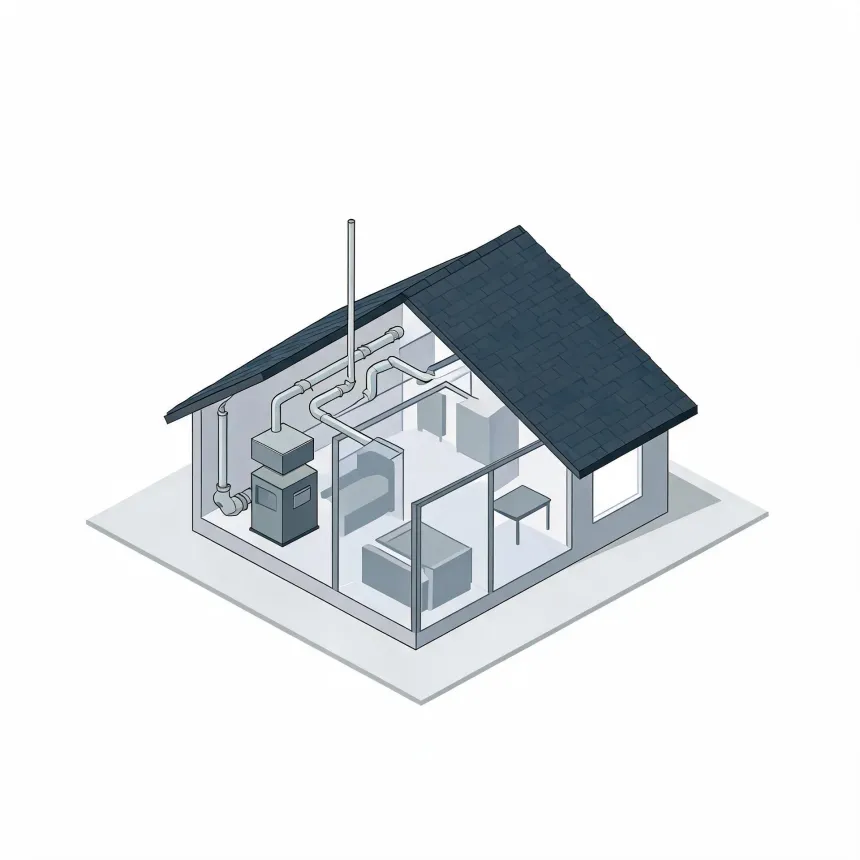
Isometric cutaway illustration of a small house with a dark shingled roof, showing an interior furnace unit, ductwork, and a flue pipe extending through the roof.
Your furnace works hardest from November through March.

NOAA nClimDiv, 1991–2020 normals

Half the houses in Sandoval County were built in 1997 or later.

A furnace that age still has a lot of working life, so fixing it is usually the right call.

Eight months of heat means October is when a weak part fails

Heat runs October through May
Winter nights average 19°F
134 winter storms from 2015 to 2024
Nothing unusual here, just a furnace working its normal winterWinter storms hit Sandoval County 134 times between 2015 and 2024

If your furnace is making noise or short cycling, get it looked at rather than waiting to see if it clears up on its own. A part that's already worn down won't hold up through a hard freeze, and in Sandoval County that freeze can show up overnight. A proper diagnosis finds the actual cause, a cracked igniter, a failing blower motor, a clogged flame sensor, instead of guessing. That matters here because a fix that doesn't address the real problem will fail again at the next cold snap, not months from now. Have it checked before the next storm, not after.

Your furnace likely has years left in it

If your furnace came with the house, it's probably not old enough to be the problem on its own. Get it repaired and keep it running.

Find a contractor
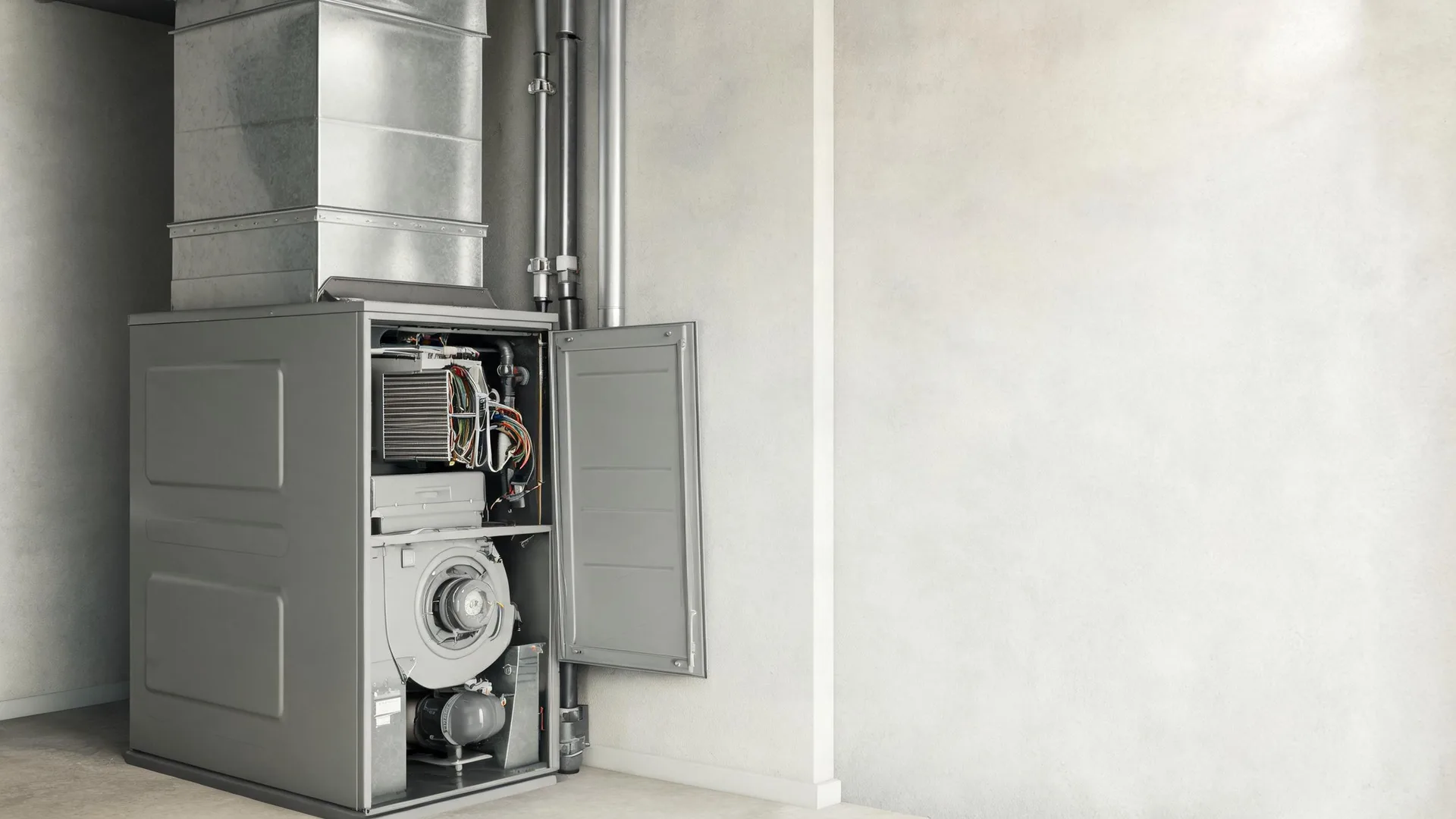
A gray gas furnace with attached ductwork and piping installed in an unfinished concrete basement.

A furnace with years on it still has years left in it

A furnace doesn't usually give out the day it's installed, and it doesn't usually give out right before it's replaced either. Most of its life falls in between, the stretch where every part still works but none of them are new anymore. That's the stretch where repair makes sense. A worn igniter or a failing blower motor is a known, fixable problem, and fixing it gives the rest of the furnace, the heat exchanger, the gas valve, the ductwork, more time doing what it's already doing. Replacement starts to make sense when the failures stop being about one part and start being about the same part failing again after it's already been fixed, or about the heat exchanger itself, which isn't something anyone patches. Short of that, a furnace that's heated a home for years usually has more years left in it than people expect.

What you can look at safely

Check the thermostat first. Make sure it's set to heat, not just on, and the temperature is set above room temperature. Check your air filter and replace it if it's gray or caked with dust, since a clogged filter chokes airflow and can cause the furnace to shut down early. Look at the exterior vent pipe and make sure nothing is blocking it, no snow drift, no bird nest, nothing stuffed against it. If you have a standing pilot light, check that it's still lit. None of this takes tools or special knowledge, just a look.

What to leave alone

Don't open the furnace cabinet or go near the burners, the igniter or the flame sensor. Those parts are either electrically live, carrying gas, or both, and a flame sensor especially is easy to damage just by touching it wrong. If the filter and thermostat check out and the furnace still won't run, or it's making a grinding or banging noise, that's a sign something inside has already failed. At that point it's a job for someone who can take the panel off and test the parts properly.

An unfinished concrete basement containing a gas furnace with sheet-metal ductwork, utility shelving, and exposed overhead joists.

A new furnace would cut about $80 a year off heating for a typical Sandoval County home.

  • A new high-efficiency furnace$340 a year
  • An older furnace$420 a year

Estimates for a typical Sandoval County home, compared with an older unit built to the previous federal minimum, from EIA household energy data, New Mexico fuel prices and NOAA climate normals. Your home will differ.

Repair makes sense when one part has failed and the heat exchanger is sound.

Replacement makes sense when the heat exchanger is cracked or the furnace keeps needing parts.

A diagnostic visit starts before any panel comes off. A tech will ask when the trouble started and what it looked like. Short cycling, no heat at all, a smell, a noise, each one points somewhere different. Then comes a check of the basics, the thermostat wiring, the filter, the vent, before anything gets taken apart. With the cabinet open, testing moves to whatever matches the symptom. A weak flame sensor gets cleaned and checked for the right reading. An igniter gets tested for resistance. A blower motor gets checked for free spin and the right draw. Gas pressure and flame color get a look too, since a yellow or flickering flame points to a combustion problem a visual check alone won't catch. The goal is to find the one part actually causing the trouble, not to replace things until something works.