

View from beneath a dark wooden carport roof across a gravel yard toward a single-story stucco house behind a gray concrete block wall, with a low spreading tree at right.

Furnace Repair in Reserve, NM

Tell us about the job

Takes about a minute. No obligation.

RepairFurnace or heatingCatron County, NM
Step 1 of 2

What ZIP code is the job in?

Your furnace in Reserve runs about nine months a year, September through May. That's most of the calendar, not just the cold snap in January. Overnight lows average 18°F across December, January and February, so the system pushes hard on the coldest nights for weeks at a stretch. Winter storms come through often, heavy snow and ice on top of the usual cold, and the furnace has to keep up through all of it. That kind of use wears down an igniter or a blower motor sooner than it would somewhere milder. When something starts acting up here, it's usually that long season catching up with a part, and it's worth having someone look at the actual cause instead of guessing.

9 months
September through May, your furnace is on duty
18°F
the average winter night it heats against
40 winter storms
in ten years, the nights a failure hurts most
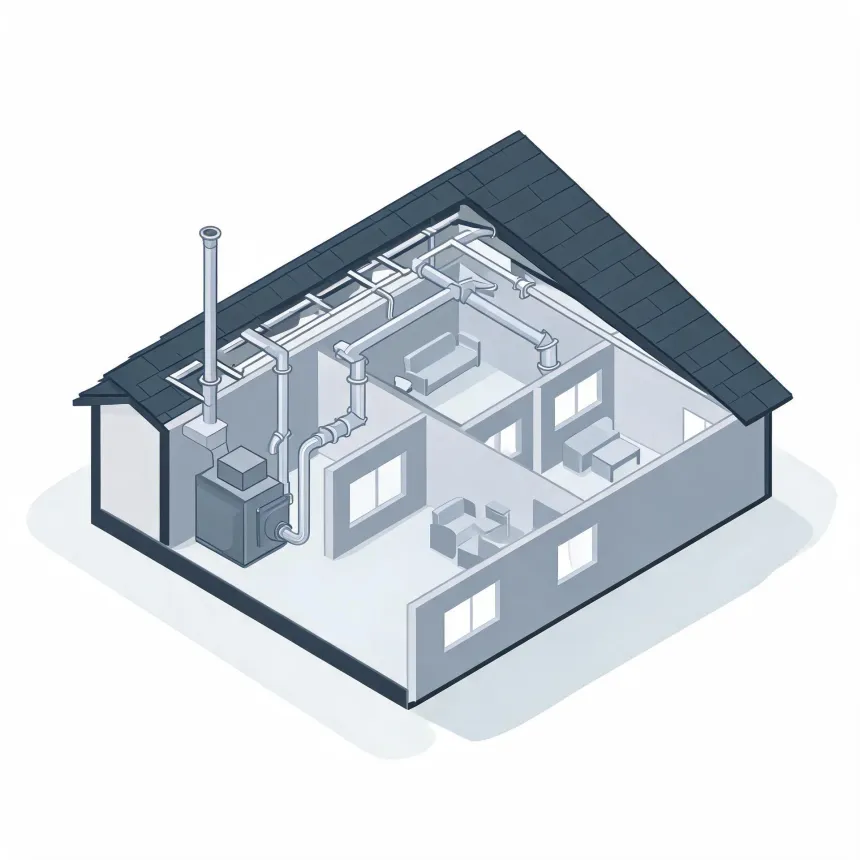
Isometric cutaway illustration of a single-story house showing interior rooms, a furnace unit with flue pipe, and branching ductwork running through the ceiling space under a dark shingled roof.
Your furnace works hardest from November through April.

NOAA nClimDiv, 1991–2020 normals

A furnace that short cycles, running a few minutes then shutting off, is telling you something specific.

A dirty flame sensor or a clogged filter is usually behind that pattern, and it's not something to leave alone.

Nine months of work, starting in SeptemberCatron County furnaces run September through May, so August is the time to catch a weak part before it has to carry the season.

A furnace acting up after a run like that is rarely a mystery once someone opens it up. A cracked heat exchanger looks nothing like a failing igniter, and a weak blower motor needs a different fix than a bad flame sensor. Guessing at the part, or replacing whatever's easiest to reach, tends to leave the real problem in place until the next cold snap brings it back. Someone who checks the actual cause can tell you whether it's a quick repair or something closer to the end of its life, and either way you're not paying to fix the wrong thing.

Get it diagnosed properly

Your furnace works hard here, and that's usually what's behind the problem. Have it diagnosed properly so the fix lasts.

Find a contractor
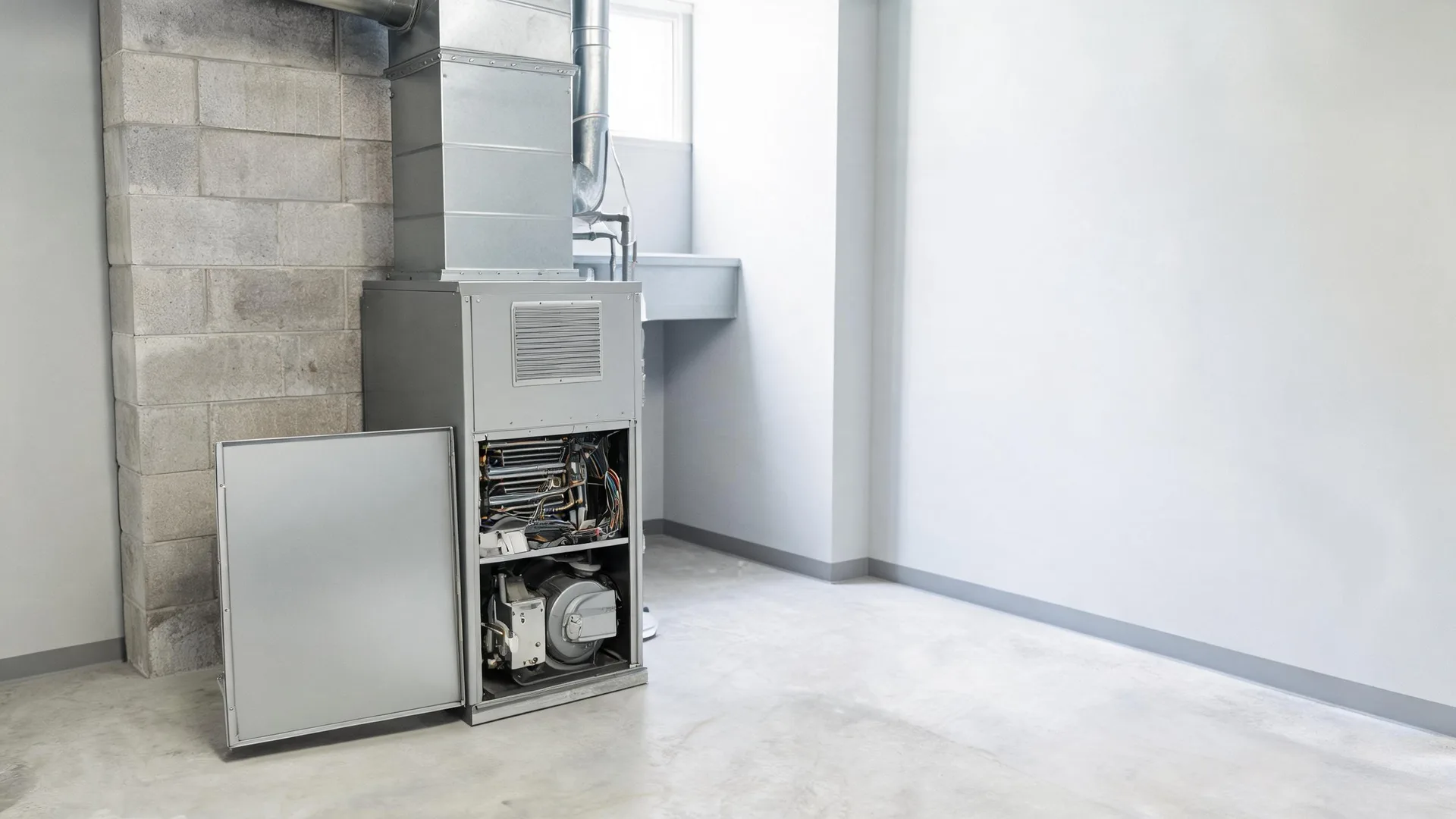
A gas furnace with attached ductwork, gas piping, and condensate lines installed in a concrete-block basement.

What to check before you call

Before anyone comes out, there are a few things worth checking yourself. Start with the thermostat. Make sure it's set to heat, not auto fan, and the temperature is actually set above room temperature. Next, check the filter. Pull it out and hold it up to a light. If you can't see light through it, that's likely choking the airflow and making the furnace work harder than it should. Look at the vents and registers around the house and make sure none are closed or blocked by furniture or rugs. If your furnace has a standing pilot light, check whether it's lit. If it's gone out, there's usually a reset button or a simple relight instructions panel on the unit itself. Check the breaker panel too. A tripped breaker will shut the whole system down and look like a bigger problem than it is. If the furnace is running but blowing cold air, let it run a few minutes longer before assuming something's wrong, some models take a bit to warm up. None of this fixes a cracked heat exchanger or a failing igniter, but it rules out the simple stuff first.

A cracked heat exchanger spreads

A heat exchanger cracks a little at first, usually along a seam from repeated heating and cooling. Run the furnace on it and the metal keeps flexing against that weak point, and the crack opens further. What starts as a hairline split can become a hole that lets combustion gases mix into the air the blower moves through the house.
A struggling blower motor pulls more amperage

A blower motor with worn bearings has to work harder to spin at the same speed. That extra draw heats the motor windings past what they're built for, and heat is what kills a motor. Left running under that strain, a motor that might have been rebuilt ends up needing full replacement.

Most furnace failures trace back to one of a handful of parts, and they tend to fail the same way every time. An igniter glows hot every cycle and goes brittle with age, until one day it doesn't glow bright enough to catch the gas. A flame sensor coats itself in a thin film of carbon over time, and once that film is thick enough the furnace reads no flame even though one's right there. A pressure switch can stick or a drain line can clog in a high-efficiency furnace, and either one is enough to shut the whole system down as a safety measure. Bearings in a blower motor wear from years of spinning, and a motor working against worn bearings runs hotter until it quits. None of these happen because a furnace was mistreated. They happen because the parts have a working life, and a furnace that's run hard uses that life up sooner.

A diagnostic visit starts before any panel comes off. Whoever's looking at the furnace will ask what it's doing. Not heating at all, short cycling, blowing cold, making a noise it didn't used to make. That narrows things down before a single tool comes out. Then the panels come off and they'll check for a flame, watch the ignition sequence start to finish, and test the parts that tend to fail. The flame sensor, the pressure switch, the igniter. A multimeter checks whether a part is getting power and using it the way it should. That tells you a lot more than how the part looks. The furnace usually runs through a full cycle before anyone calls it finished. Some problems only show up once the system has been running a few minutes.