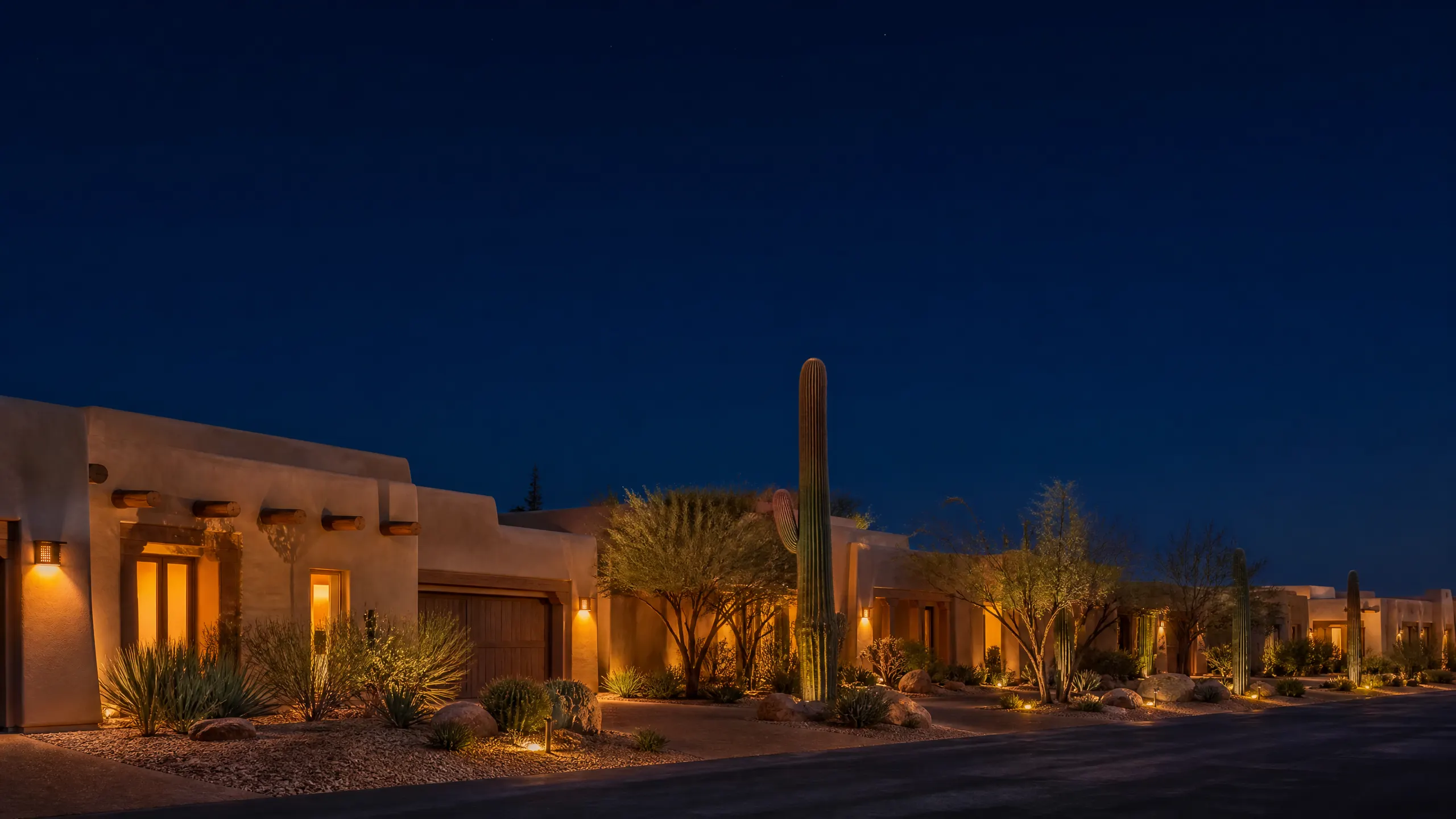




Adobe-style desert homes lit by warm exterior lights at dusk, surrounded by saguaro cacti and native desert plants.

Furnace Repair in Portales, NM

Tell us about the job

Takes about a minute. No obligation.

RepairFurnace or heatingRoosevelt County, NM
Step 1 of 2

What ZIP code is the job in?

Furnaces in Portales get tested the moment they start up in October, and that's usually when a weak part gives out. A system that sat quiet since spring can hide a problem all summer. Heat runs here through April, so whatever goes wrong in these first weeks has months left to get worse, not better. If yours is struggling now, in September, or short-cycling once the weather turns, get it looked at before the load settles in for the season.

7 months
October through April, your furnace is on duty
26°F
the average winter night it heats against
6 winter storms
in ten years, the nights a failure hurts most
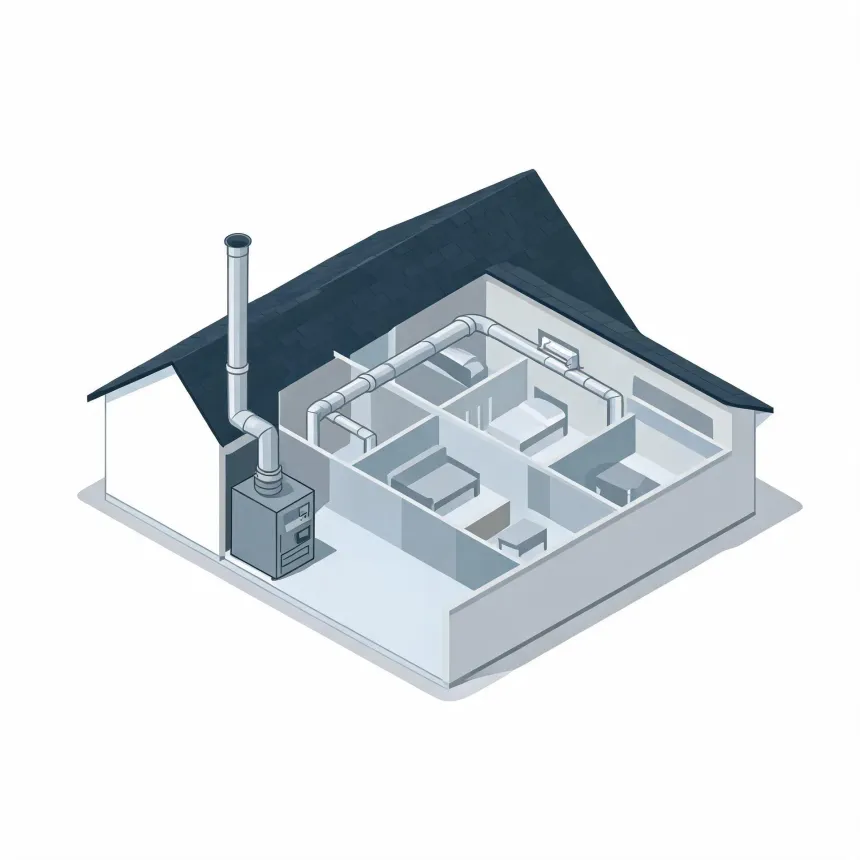
Isometric cutaway illustration of a single-story house with a dark shingled roof, showing interior rooms with beds and furniture, overhead ductwork, and a gray furnace with a tall flue pipe at the exterior wall.
Your furnace works hardest from November through March.

NOAA nClimDiv, 1991–2020 normals

Furnaces in Portales run about seven months straight, October through April.

A part that's failing won't get a break before February, so a repair now has to hold through the whole stretch.

Electricity here runs $41.61 per million Btu, so a furnace working harder than it should is burning money every month it runs.

Heat runs October through April
Winter nights average 26°F
Climate zone 4B
Portales homes vary, but furnace problems mostly don'tHalf the homes here were built in 1977 or earlier, and nearly one in five is a mobile home.

A furnace that's short-cycling or running long to hit the thermostat setting is pulling power the whole time it does it. That cost doesn't wait for a slow month to show up. If something's off, a cracked heat exchanger, a dirty flame sensor, a blower working harder than it should, a technician can find it and fix it before another month of bills shows the damage. Waiting through a few more cold mornings to see if it sorts itself out just adds to a bill that's already running higher than it should.

Get it looked at early

Problems tend to show up in the first weeks of the season, when the load hits a part that was already weak.

Find a contractor
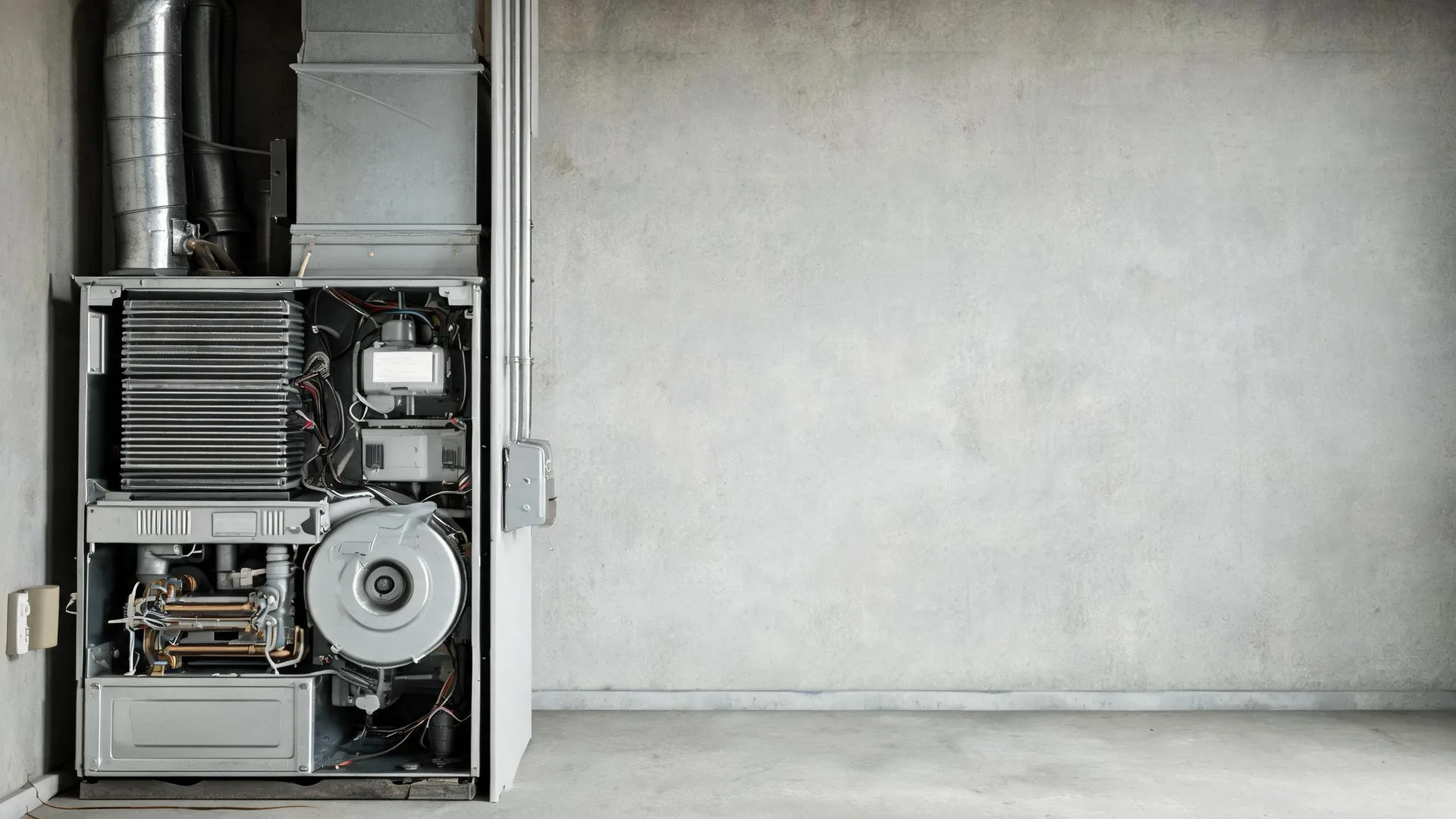
A gray residential gas furnace installed in an unfinished basement, surrounded by ductwork, a metal flue pipe, and a gas supply line.

What to check before you call

Start at the thermostat. Make sure it's set to heat and the set point is above room temperature, and swap the batteries if it uses any. Pull the filter and hold it to a light. If light doesn't come through, the furnace is fighting for air and that alone can bring it down. Walk over to the furnace and look for a light on the control board. Most blink a pattern when something's wrong, and that pattern means something to a technician even before they walk in. Check the switch on the furnace and the one on the wall near it, both have to be on, and that switch gets bumped more than people think. If it's a gas furnace, make sure the valve is open. Check the breaker panel too. A tripped breaker kills the whole system with no warning. Last, listen to how it tries to start. Clicking that won't catch, a hum with no flame behind it, a blower running with no heat coming through the vents, any of that is worth telling the technician before they get there. It points toward the part that failed before they even open the panel.

Listen before you look

A furnace that clicks several times before it catches is losing a part that lights it, usually the igniter or the flame sensor. A low hum with no flame means the igniter isn't glowing hot enough to ignite the gas. These sounds tell a technician what failed before they ever open the cabinet.
Warm air that isn't warm enough

Air blowing from the vents that never gets hot usually means the burners aren't staying lit or the gas valve isn't opening all the way. The blower can run fine while the actual heating part of the system fails, so the vents still move air even though the house doesn't warm up.

A cracked heat exchanger doesn't fix itself by running longer. Heat and cold metal expanding and contracting against each other is what opens that crack wider, so every cycle after the first one makes it worse. A dirty flame sensor works the same way. It sits in the flame doing its job until it doesn't, and a furnace that keeps firing and dropping out is coating that sensor a little more each time it tries. A blower motor straining against a clogged filter runs hotter than it should, and motors that run hot wear out the bearings faster than motors that don't. None of this waits for a slow week to show up. The part that's failing keeps failing on the same schedule the furnace keeps running on, and a furnace that heats a house through the winter doesn't get a slow week.

A furnace is a collection of parts, and they don't all wear out at the same rate. An igniter either glows and lights the gas or it doesn't. It's not worth repairing around once it's cracked or weak, since a new one costs little next to a service call and solves the problem outright. A heat exchanger is a different animal. Once it's cracked, it's done, and the only question is whether the rest of the furnace is worth keeping around it. A blower motor or a control board sits in between. If the rest of the system is sound, replacing that one part makes sense. If a technician keeps finding a new failure every time they come out, that's usually the furnace telling you it's done, one part at a time instead of all at once. A furnace that's needed repeated repairs close together is behaving differently than one that ran quiet for years and then had a single part fail, and that pattern matters more than how old the unit is.