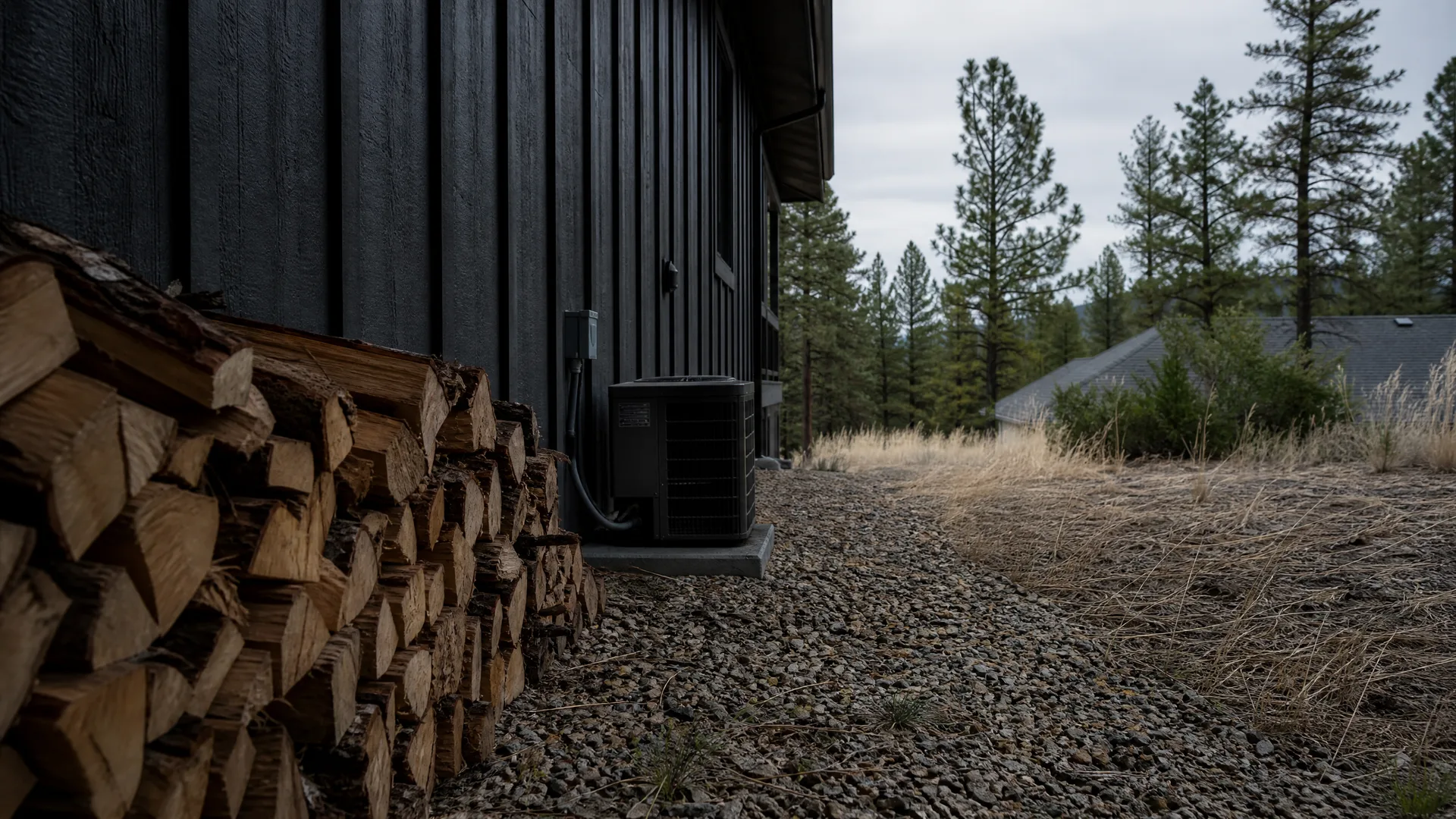

A stacked woodpile beside a dark vertical-board house exterior with an outdoor air conditioning condenser unit on a concrete pad, gravel ground, dry grass and conifer trees under an overcast sky.

Furnace Repair in Los Alamos, NM

Tell us about the job

Takes about a minute. No obligation.

RepairFurnace or heatingLos Alamos County, NM
Step 1 of 2

What ZIP code is the job in?

Furnaces here run nine months of the year, September through May. Overnight lows average 19°F through the worst of winter, so the burner is cycling on hard, cold nights for most of the season. Winter storms roll through on top of that, and the furnace rarely gets an easy stretch. That kind of steady, hard use wears down an igniter or a blower motor sooner than it would somewhere milder. A noise or a short cycle that seems small now is often a part already worn thin from the season's work.

9 months
September through May, your furnace is on duty
19°F
the average winter night it heats against
82%
of homes here heat with gas, so most furnaces here burn gas
31 winter storms
in ten years, the nights a failure hurts most
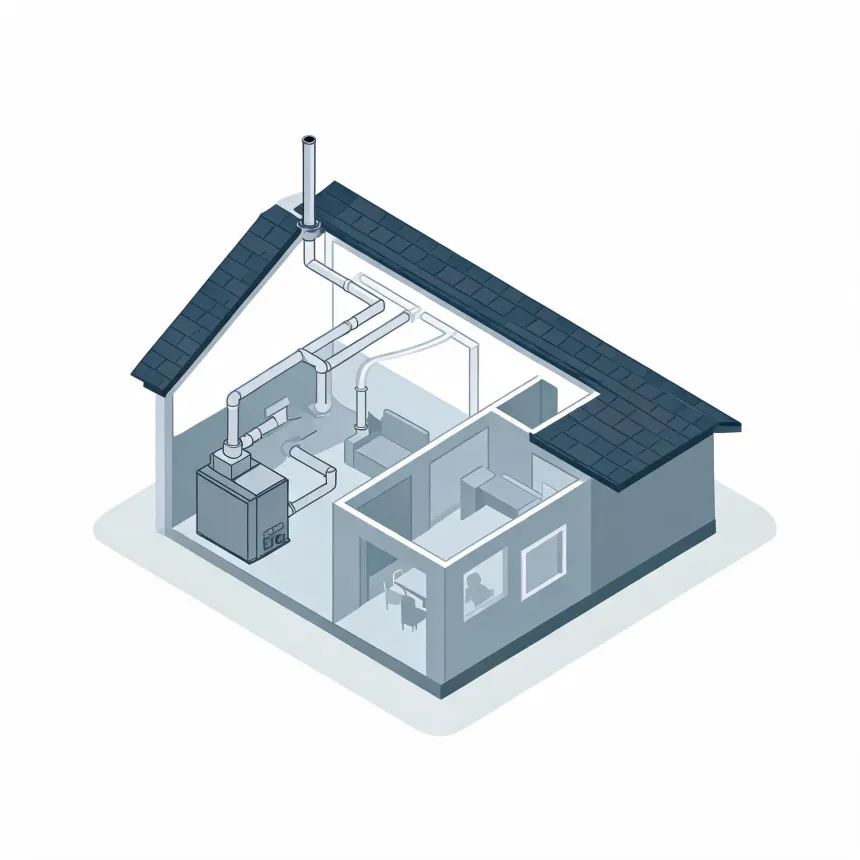
Isometric cutaway illustration of a single-story house showing interior rooms, a furnace unit with connected ductwork, and a flue pipe extending through the dark shingled roof.
Your furnace works hardest from November through April.

NOAA nClimDiv, 1991–2020 normals

Half the homes in Los Alamos County were built in 1974 or earlier, half in 1974 or later.

A furnace acting up isn't about which half your house falls in, it's about a worn part doing a long season's work.

Nine months of heat means September is when a weak part fails first

Heat runs September through May
Winter nights average 19°F
31 winter storms from 2015 to 2024

A furnace that has carried a nine month season does not need a mystery diagnosis, it needs someone to check the parts that take the beating. An igniter that glows weak, a blower motor that hums before it starts, a flame sensor coated with residue, these are the usual suspects on a system run this hard. Guessing which one it is from the symptoms alone tends to miss. A proper check finds the worn part before it fails on a 19°F night, and fixes the thing that is actually going bad instead of the thing that happens to be loudest.

Get it diagnosed properly

Your furnace works hard here, and that's usually what's behind the problem. Have it diagnosed properly so the fix lasts.

Find a contractor
A gray high-efficiency gas furnace installed in an unfinished basement, surrounded by gas lines, a condensate drain, and sheet-metal ductwork.

A furnace does not rest its way through a worn part, it runs through it

A crack in a heat exchanger does not stay a hairline crack. Heat makes metal expand, and a piece that flexes every cycle widens a little more each time it fires. A blower motor with worn bearings is the same story. It runs hotter than it should, strains harder to spin, and that strain is what burns it out for good. Even something as simple as a dirty flame sensor gets worse under load. The residue builds a little more with every cycle until the sensor cannot read the flame at all, and the furnace shuts itself off instead of risking gas with no flame to burn it. None of these get better by running longer. They get worse, faster, right up until the part fails outright instead of just acting up.

Most calls trace back to a few parts

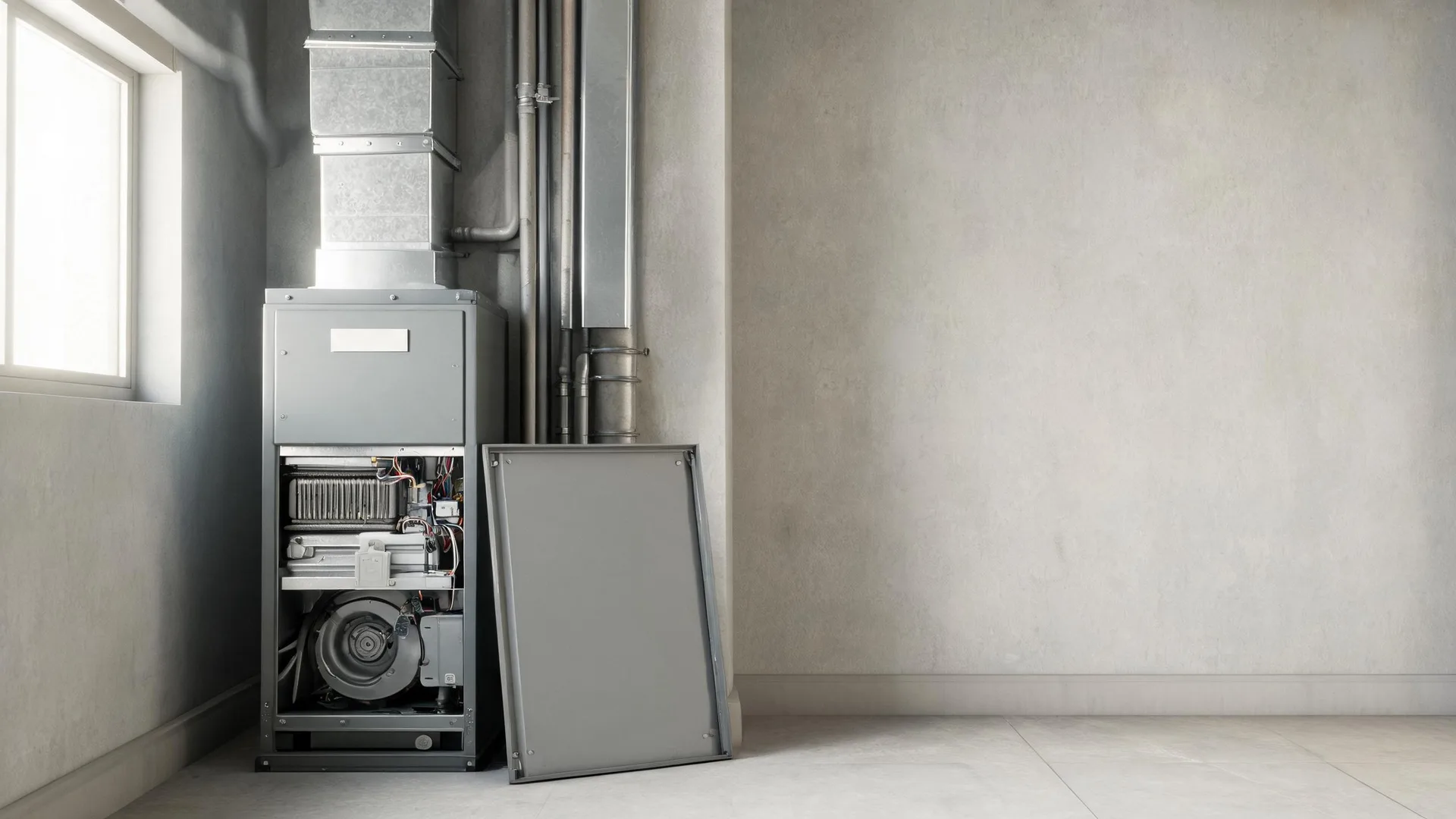
The igniter, the flame sensor, the blower motor and the draft inducer do almost all the work in a gas furnace, and they're almost always where the failure starts. An igniter draws current every single cycle and the element weakens with each use until it stops glowing hot enough to light the gas. A draft inducer motor spins before every cycle to clear the exhaust path, and once its bearings wear, it struggles to reach the speed the control board is waiting for. These parts fail from ordinary use, not from any one bad night.

The symptom doesn't name the part

A furnace that won't stay lit could be a weak igniter, a dirty flame sensor, or a pressure switch stuck from a blocked vent, and each one calls for a different fix. A furnace that clicks but doesn't fire might be a failed igniter or a gas valve that isn't opening. Chasing the wrong part means paying for a repair that doesn't solve anything, so the symptom is where you start, not where you stop.

An unfinished basement featuring exposed ceiling joists, a metal HVAC unit with round ductwork, a hanging light bulb, and scattered boxes and debris along the left wall.

A new furnace would cut about $90 a year off heating for a typical Los Alamos County home.

  • A new high-efficiency furnace$390 a year
  • An older furnace$480 a year

Estimates for a typical Los Alamos County home, compared with an older unit built to the previous federal minimum, from EIA household energy data, New Mexico fuel prices and NOAA climate normals. Your home will differ.

Repair makes sense when one part has failed and the heat exchanger is sound.

Replacement makes sense when the heat exchanger is cracked or the furnace keeps needing parts.

A diagnostic visit starts before any panel comes off. A tech asks what the furnace is doing, when it started, whether it's one bad cycle or every cycle, because that narrows things fast. Then the covers come off and the igniter gets a visual check, glowing or cracked tells its own story. The flame sensor gets pulled and looked at, since a coated sensor looks different from a clean one even before it's tested. Pressure switches get checked against the vent they're reading, and the blower gets watched through a full cycle, listening for the hum or the drag that says the bearings are going. The point is to watch the thing actually fail, or find the part already showing it's about to, rather than replace parts on a guess.