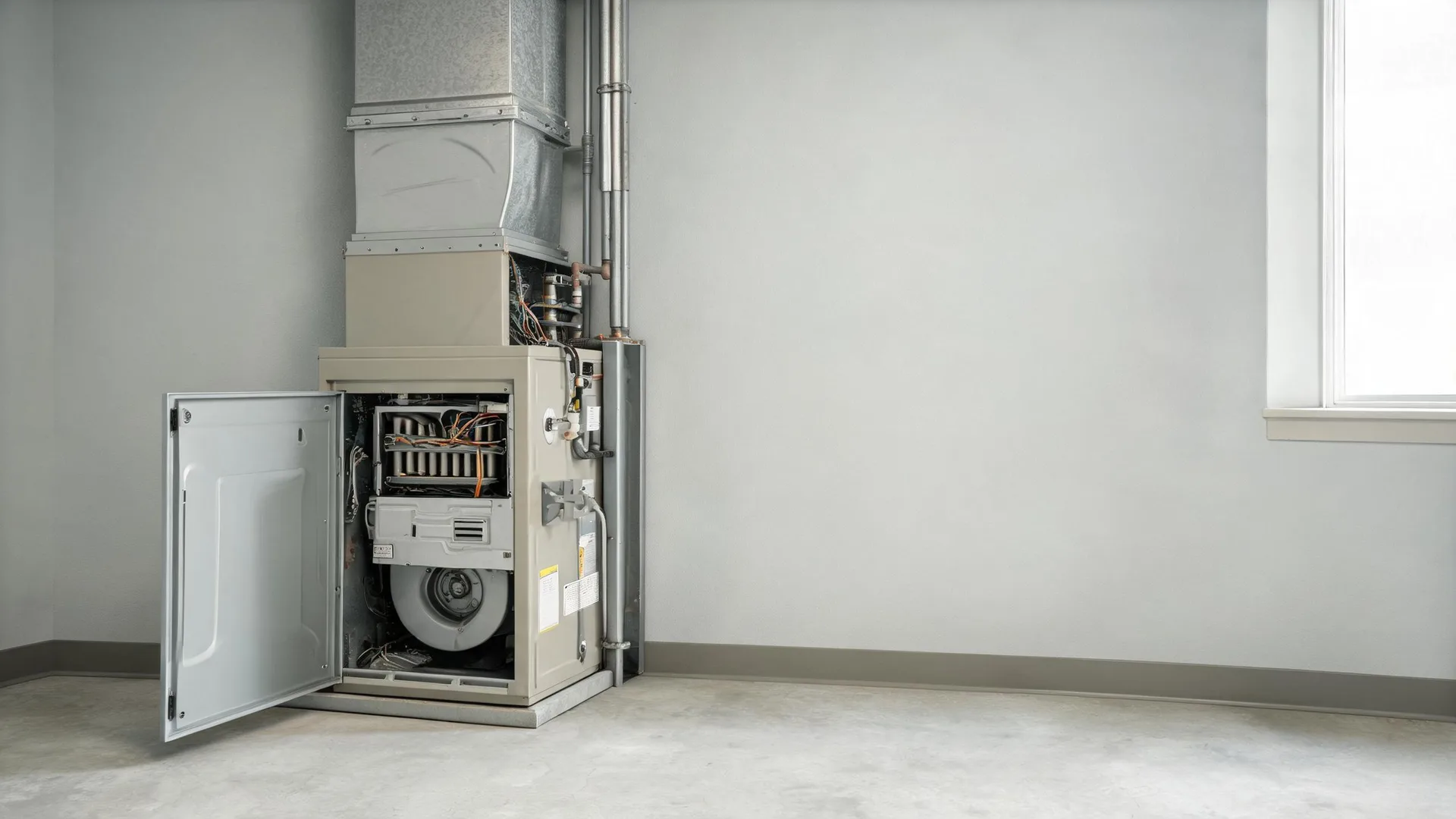
Eight months of heat
Furnaces in Grants run from October through May, and overnight lows average 18°F through December, January and February. That's a long stretch of hard work for an igniter, a blower motor, a flame sensor.
Takes about a minute. No obligation.
Furnaces in Grants run from October through May, and overnight lows average 18°F through December, January and February. That's a long stretch of hard work for an igniter, a blower motor, a flame sensor.
Winter storms, heavy snow, ice and blizzards, hit Cibola County 36 times between 2015 and 2024. A furnace that's already running most of the year gets pushed harder still when a storm sits over the county, and that's often when a weak part finally gives out.
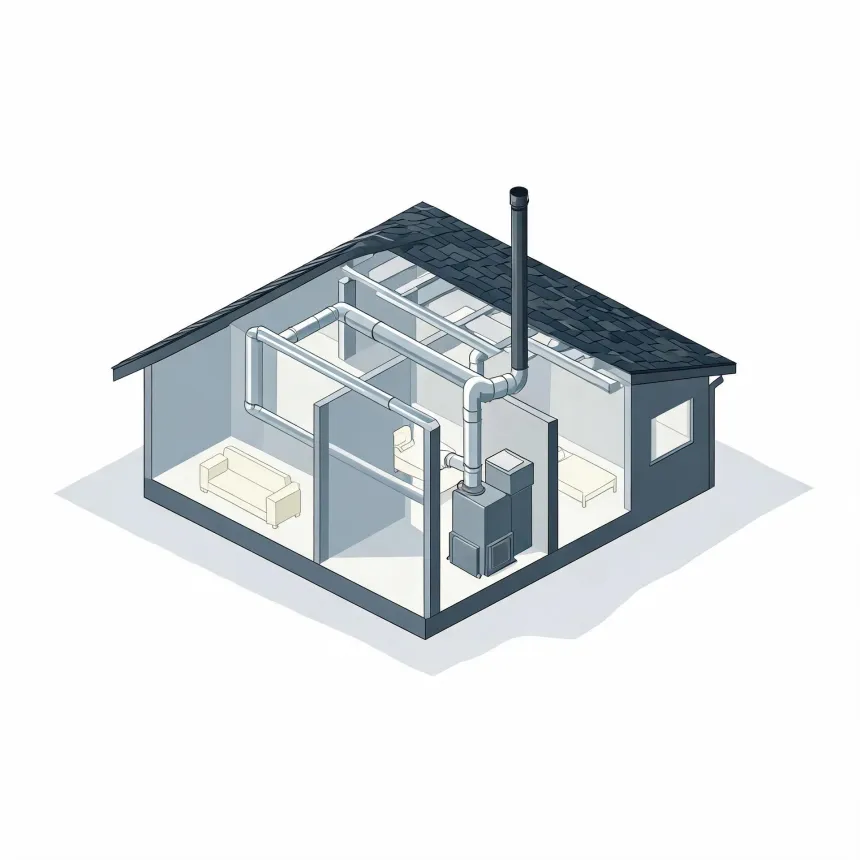
NOAA nClimDiv, 1991–2020 normals
Half the homes in Cibola County were built in 1978 or earlier.
A furnace that came with a house that old has likely been replaced at least once, maybe more, and the one in there now may be closer to its end than you think.




Before a tech repairs anything, ask how old the furnace actually is. If it's original to the house, or close to it, that's worth knowing going in. A repair on a unit that old might buy you one more winter, or it might not, and that changes whether it's worth paying for. If nobody's sure how old it is, a tech can usually read it off the data plate inside the access panel. Worth checking before you spend money on a part for a furnace that's on its way out anyway.
Your furnace works hard here, and that's usually what's behind the problem. Have it diagnosed properly so the fix lasts.
Find a contractor
Most furnace failures start with the igniter. It cycles on every time the furnace calls for heat, heats up, cools down, and that repeated stress eventually cracks it. A flame sensor gets a coating of oxidation over time and stops telling the control board a flame is present, so the furnace shuts off a few seconds after starting. Blower motor bearings wear out from running hour after hour, and you'll hear it before it quits, a grinding or squealing that gets worse. Capacitors that start the blower motor weaken with age and heat, until one day the motor hums but won't turn. Dirty filters strain all of this at once, because a blower working against a clogged filter runs hotter and harder than it should, and that shortens the life of everything downstream of it. None of these parts fail because of one cold night. They fail because they've been doing their job for years.
Make sure the thermostat is set to heat and the setting is actually above room temperature. Check the breaker for the furnace and the switch that looks like a light switch near the unit, sometimes mounted on a nearby wall or joist, since that shuts the whole furnace off if it's bumped. Pull the filter and hold it up to a light. If you can't see light through it, that alone can cause shutdowns, weak airflow or a furnace that runs constantly without warming the house.
A furnace that clicks or tries to start but won't light, or one that shuts off a few seconds after it does, is past what a filter swap or a breaker reset will fix. Any smell of gas, a burning odor, or soot around the access panel means turn it off at the switch and get a tech out rather than opening it up yourself. A grinding or squealing sound from the blower is a bearing giving out, and that gets worse, not better, the longer it runs.
Estimates for a typical Cibola County home, compared with an older unit built to the previous federal minimum, from EIA household energy data, New Mexico fuel prices and NOAA climate normals. Your home will differ.
Repair makes sense when one part has failed and the heat exchanger is sound.
Replacement makes sense when the heat exchanger is cracked or the furnace keeps needing parts.
A repair decision usually comes down to what's failing and what it sits next to. A cracked igniter or a dirty flame sensor is a small, contained fix, and it doesn't say anything bad about the rest of the furnace. A cracked heat exchanger is a different conversation. That part isn't sold on its own in most cases, and a furnace old enough to crack one there is usually old enough that other parts are close behind it. Ask whether this is the first real failure or the latest in a string of them. Ask whether the part being replaced is common and cheap, or tied into the heat exchanger or control board. A furnace that's been reliable and just had one part give out is worth fixing. One that keeps coming back for new reasons is telling you something about the unit as a whole, not just the part in front of you.