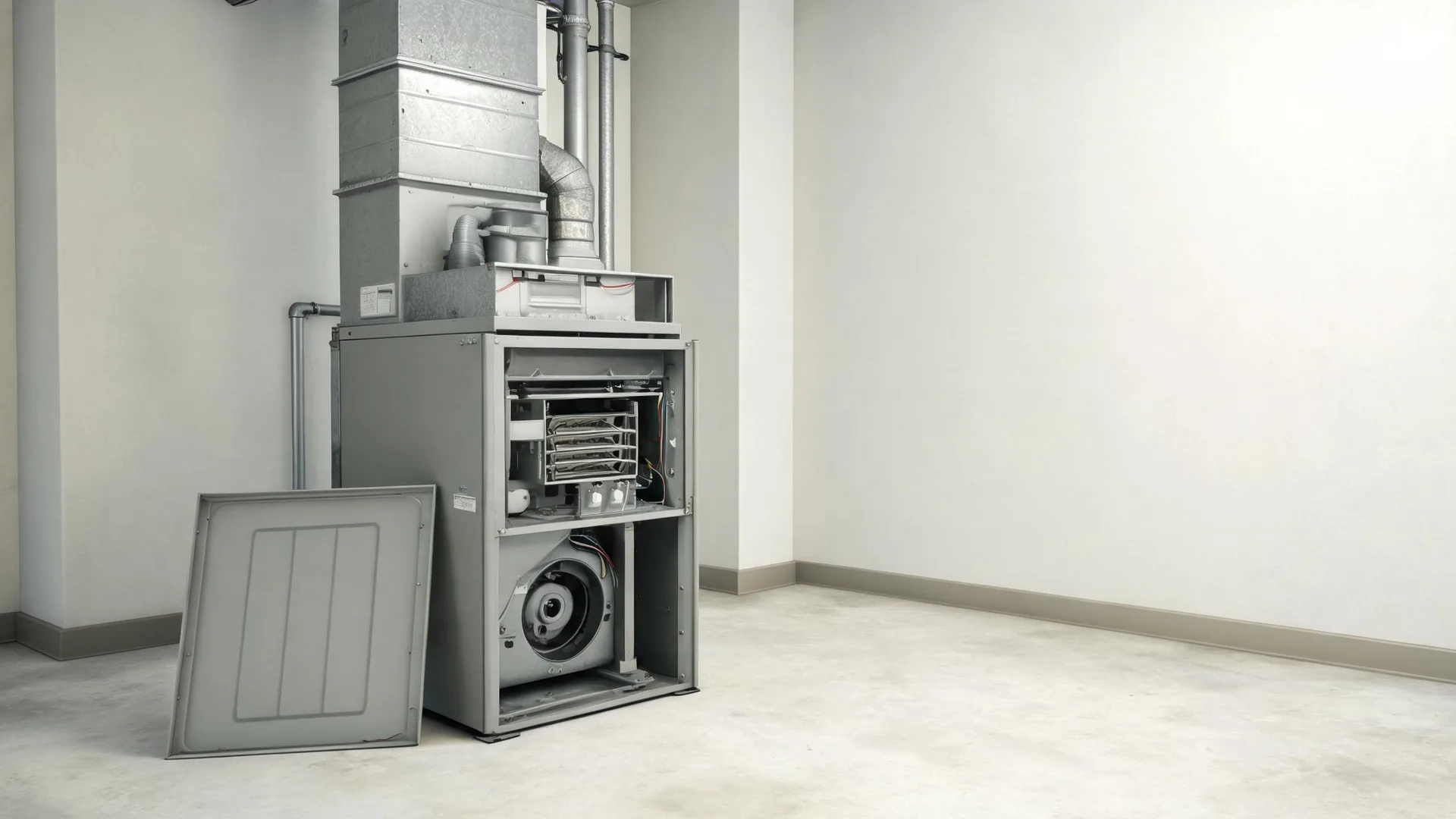
September is the month to get ahead of it
Furnaces here sit idle from spring through summer, then start up again in October. A weak igniter or a failing blower motor usually shows itself the first time the system has to work, not before.
Takes about a minute. No obligation.
Furnaces here sit idle from spring through summer, then start up again in October. A weak igniter or a failing blower motor usually shows itself the first time the system has to work, not before.
Once heat goes on across Fort Sumner, every furnace with a problem that was easy to ignore all summer starts acting up at once. Getting a repair looked at in September means it gets done before that rush, not during it.

NOAA nClimDiv, 1991–2020 normals
Check the thermostat before you check anything else, the batteries, the setting, whether it's calling for heat at all.
A filter clogged with dust will starve the burner of air and can shut the whole system down, so pull it and look.



Half the homes in De Baca County were built in 1977 or later, half before that. The age of the house doesn't tell you the age of the furnace. Whatever's heating your place now was put in whenever it was put in, and that's what matters when something goes wrong, not the year the house went up. About one in five homes here is a mobile home, and furnaces in those are sized for that kind of setup. None of this makes the problem unusual. It's still a thermostat, an igniter, a blower motor, or a filter, checked the same way it would be anywhere else.
Problems tend to show up in the first weeks of the season, when the load hits a part that was already weak.
Find a contractorA furnace that's struggling still tries to do what it's told. If the igniter is weak, the control board asks it to light anyway, and the burner can fail to catch, filling the heat exchanger with unburned gas before the flame sensor shuts things down. That cycle of trying and failing stresses the igniter more each time, until it stops working at all. A blower motor with worn bearings keeps turning even as it struggles, running hotter than it should, and heat is what kills motor windings. A cracked heat exchanger doesn't get smaller under heat, it gets bigger, because metal expands every time the burner fires. None of these get better with use. The part that's already weak is the one doing the work, and it keeps doing that work until it can't.
A furnace lights the same way every time it works. That's usually where it stops working too. A hot surface igniter weakens a little each time it heats up and cools down. One day it doesn't glow hot enough to light the gas. A pilot light can fail the same way if the thermocouple wears out and stops sensing the flame. Either way the furnace tries to start and doesn't.
Dust and dirt build up on the motor and its bearings over years of running. That buildup traps heat the motor would normally shed. The bearings wear, the motor works harder to spin the same blower wheel, and it runs hotter than it was built to. Heat is what finally breaks down the windings inside. By the time it makes noise or won't start, the wear has usually been building for a long time.
A furnace that needs repair usually tells you in sound before anything else. A bang at startup means gas built up before the igniter caught it, and it's worth having looked at soon rather than waited out. A rhythmic squeal or grinding from the blower points to bearings on their way out. Short cycling, where the furnace fires up and shuts off again before the room warms, often comes down to a flame sensor that can't tell the burner is lit, or a blower overheating and tripping a safety switch. Yellow flame instead of blue means the gas isn't burning clean, and that one is not worth waiting on. Cold air out of the vents when the system is running usually means the burner never lit at all, even though the blower still turns.
A diagnostic visit starts before any panel comes off, with the tech asking what the furnace is doing and when it does it. Does it happen on startup, partway through a cycle, or only after it's run a while. That narrows down a lot before any tool comes out. Next comes a look at the thermostat call, the igniter or pilot, and the flame itself, checking the color and whether it holds steady. The panels come off to check the blower, the wiring, and the flame sensor, often cleaning the sensor on the spot since a coated one can look like a bigger problem than it is. Pressure switches and safety controls get checked too, since those are what shut a furnace down to protect it, and a tripped one is a symptom, not the cause. By the end, the tech should be able to point to the one part that's failing and explain what it's doing wrong, not just that something is.