A multi-story timber-frame and stone house glows with warm interior and exterior lighting on a dark residential street, with mountain peaks and pine trees visible in the background.

Furnace Repair in Farmington, NM

Tell us about the job

Takes about a minute. No obligation.

RepairFurnace or heatingSan Juan County, NM
Step 1 of 2

What ZIP code is the job in?

The tech checks before touching anything

A diagnostic visit starts with questions. What was the furnace doing before it quit. What sound or smell showed up. Whether the thermostat screen shows anything odd. Then the tech pulls the panel and tests the parts that actually cause no-heat calls. The igniter. The flame sensor. The pressure switch. The control board. Each one gets checked with a meter, not a guess.
The reader finds out what's actually wrong

The point of the visit is a straight answer. Which part failed. Why it failed. Whether it's a part worth replacing or a sign the furnace is near the end of its life. A cracked heat exchanger means a different conversation than a bad igniter. So does a control board that's already failed once before.

8 months
October through May, your furnace is on duty
20°F
the average winter night it heats against
63%
of homes here heat with gas, so most furnaces here burn gas
30 winter storms
in ten years, the nights a failure hurts most
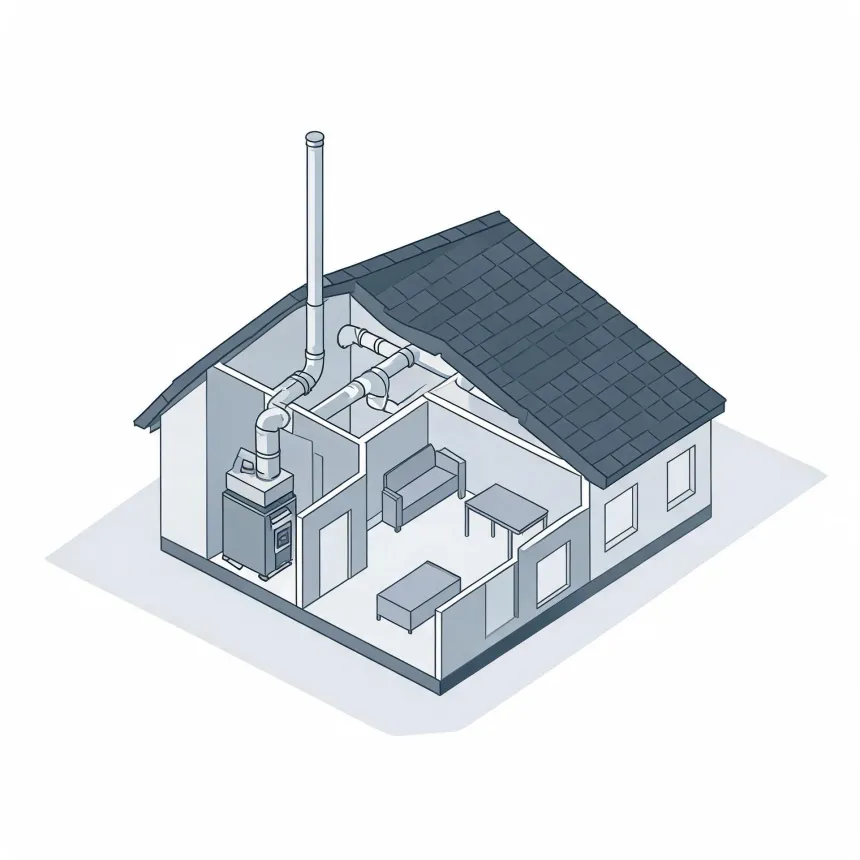
Isometric line illustration of a cutaway single-story house with a shingled roof, showing an interior furnace connected to ductwork and a tall vertical flue pipe, plus simple furniture in the adjacent room.
Your furnace works hardest from November through March.

NOAA nClimDiv, 1991–2020 normals

A furnace won't tell you what's wrong over the phone, but a few checks narrow it down fast.

Check the thermostat, the filter and the switch on the furnace door before you pick up the phone.

Eight months of heat means the furnace gets tested hard in the first cold weeks

Heat runs October through May
Winter nights average 20°F
30 winter storms from 2015 to 2024
Farmington furnaces fail for ordinary reasonsHalf the homes in San Juan County were built in 1986 or earlier, old enough for original parts to be near the end

Furnace runs about eight months a year in San Juan County, October through May. That's most of the year, not a quick stretch in January. Overnight lows average 20°F through December, January and February, so the furnace is working against real cold for the whole winter, not just on the coldest nights. This county has also seen its share of winter storms, heavy snow, ice, blizzards, over the past ten years, and the furnace doesn't get to skip those days. A part that's been carrying that kind of load for years is the first place to look when something breaks.

Get it looked at early

Problems tend to show up in the first weeks of the season, when the load hits a part that was already weak.

Find a contractor
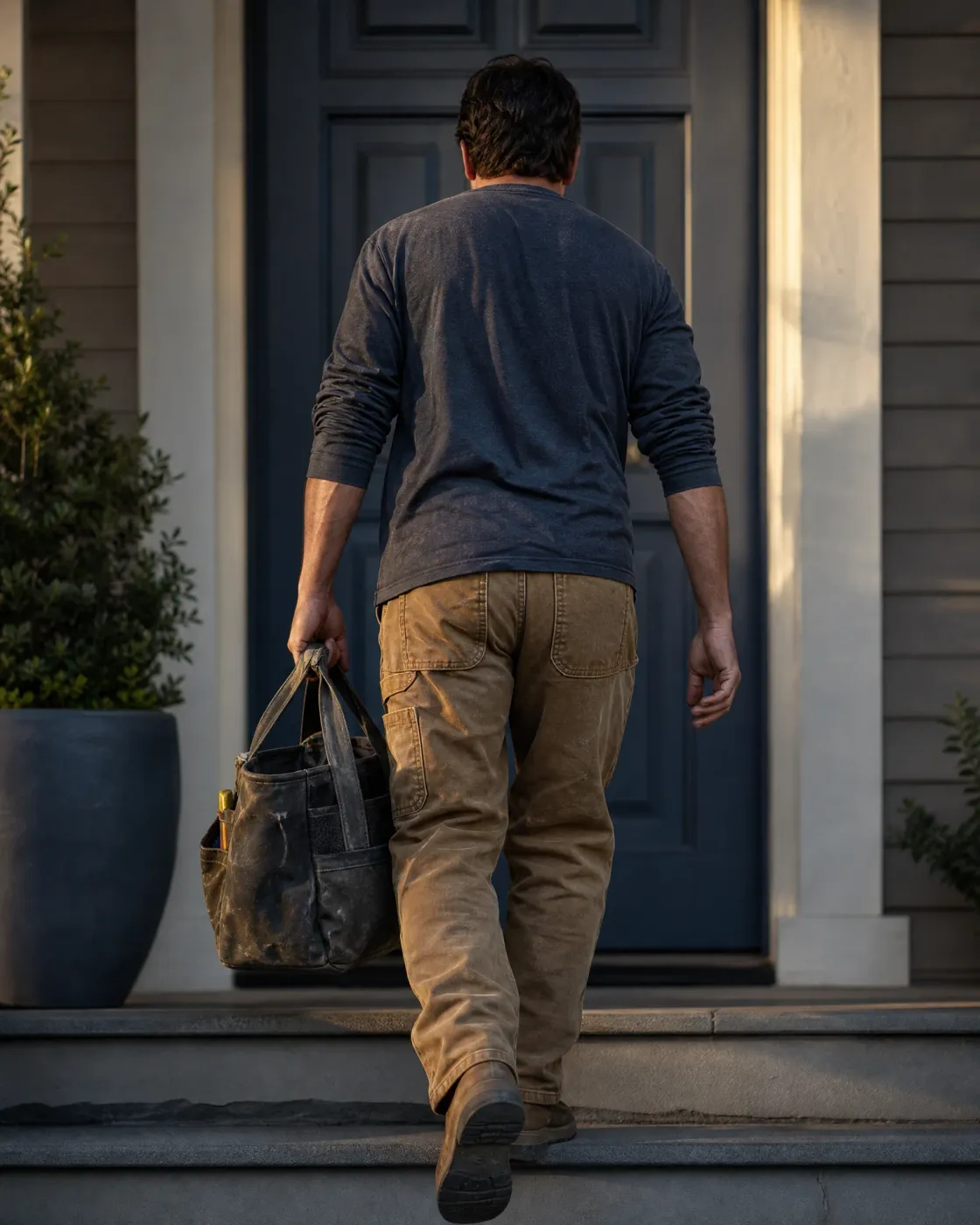
A man in a dark long-sleeve shirt and tan work pants, seen from behind, carries a worn canvas tool bag up concrete steps toward a dark blue front door.
A gray high-efficiency gas furnace installed in an unfinished basement, surrounded by gas lines, a condensate drain, and sheet-metal ductwork.

The furnace usually tells you before it quits

A furnace rarely quits without warning first. Short cycling is one of the clearest signs, the burner firing up and shutting off again before the house gets warm. A furnace that runs a long time without the air ever feeling warm enough is losing the fight even while it's working. Listen for sounds that weren't there before. A scrape, a rattle, a boom when the burner lights instead of a soft whoosh. A burner flame that's flickering yellow instead of steady blue is telling you something about combustion, not just the way it looks. Dust blowing harder than usual from the vents belongs on the list too, and so does a faint burning smell the first time it fires after sitting idle all summer. None of these mean the same thing every time. But every one of them is worth a look before the part actually fails.

A cracked heat exchanger gets worse with every cycle

Metal that's already cracked flexes more as it heats and cools, and the crack grows. Left alone, it can start pulling exhaust into the air the furnace is supposed to be warming instead of venting it outside.

A dirty flame sensor turns into a bad igniter

A sensor coated in residue can't tell the control board the flame caught, so the board shuts the gas off as a safety move. Run it through enough of those cycles and the igniter doing the work of lighting that gas wears out faster than it should.

An unfinished basement featuring a grey forced-air furnace with metal ductwork, concrete block walls, exposed wooden joists, and a single hanging bare bulb.

A new furnace would cut about $70 a year off heating for a typical San Juan County home.

  • A new high-efficiency furnace$330 a year
  • An older furnace$400 a year

Estimates for a typical San Juan County home, compared with an older unit built to the previous federal minimum, from EIA household energy data, New Mexico fuel prices and NOAA climate normals. Your home will differ.

Repair makes sense when one part has failed and the heat exchanger is sound.

Replacement makes sense when the heat exchanger is cracked or the furnace keeps needing parts.

Repair or replacement comes down to what failed and what it's sitting next to. An igniter, a flame sensor, a pressure switch, these fail on their own and get swapped without touching anything else. The furnace around them doesn't care how old it is. A cracked heat exchanger is a different kind of answer, because that part isn't sold separately from the rest of the furnace's age. If the control board has already failed once, a second failure is a pattern, not bad luck. The question worth asking isn't just what broke, it's whether the furnace has been reliable up to now or whether this is the latest in a string of calls.