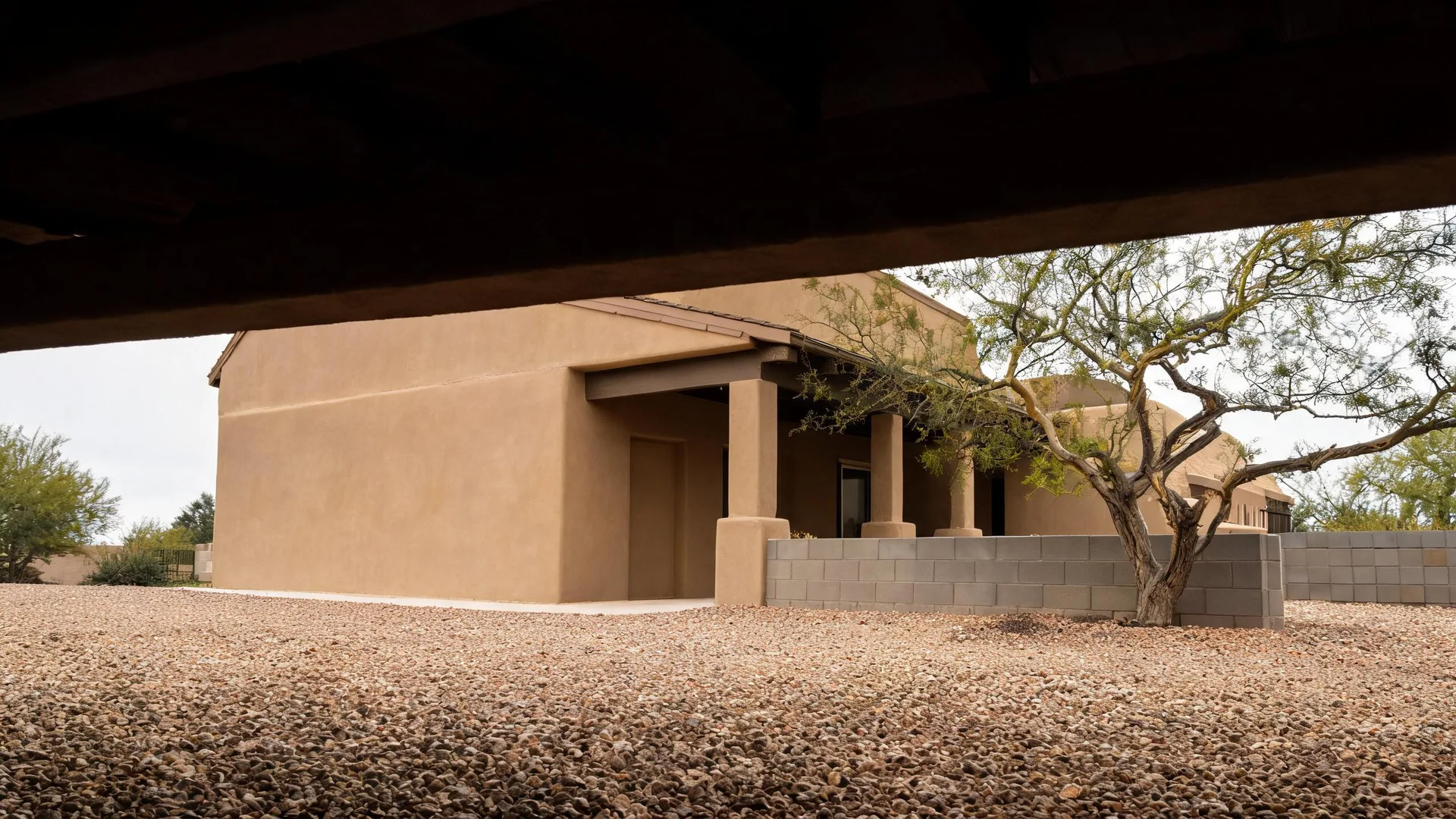
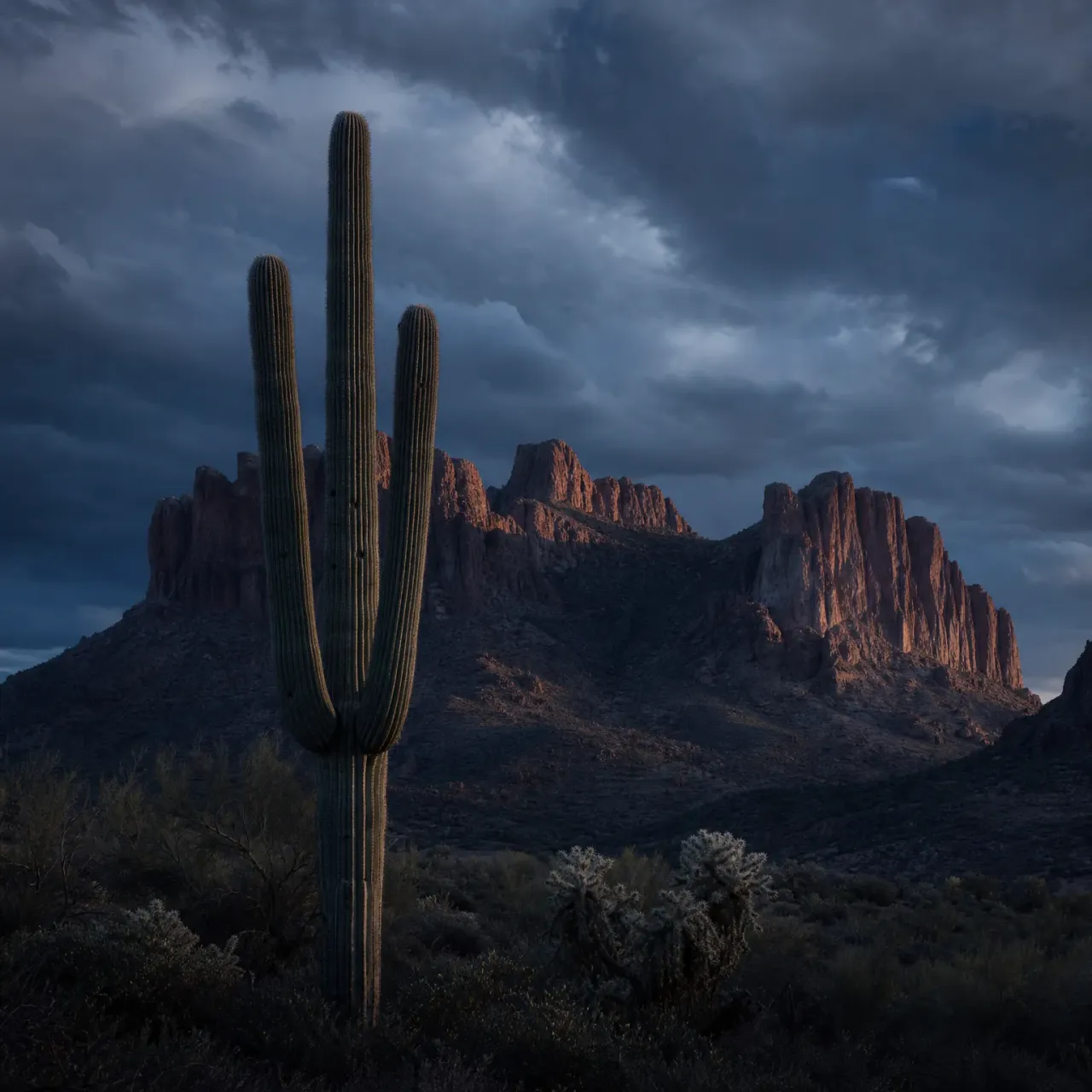

A single-story tan stucco house with a covered porch and concrete block wall, viewed from beneath a dark roof overhang across a gravel yard with a bare-branched tree.

Furnace Repair in Clayton, NM

Tell us about the job

Takes about a minute. No obligation.

RepairFurnace or heatingUnion County, NM
Step 1 of 2

What ZIP code is the job in?

Your furnace here runs about eight months a year, October through May. Overnight lows average 20°F through December, January and February, so once it kicks on it rarely gets a real rest. Union County has seen heavy snow, ice and blizzards often enough that on those nights the furnace runs close to flat out. That kind of workload wears parts sooner than it would somewhere milder. If yours is acting up, it's worth having someone trace the actual cause rather than patching the symptom, so the fix holds through the next storm.

8 months
October through May, your furnace is on duty
20°F
the average winter night it heats against
59%
of homes here heat with gas, so most furnaces here burn gas
30 winter storms
in ten years, the nights a failure hurts most
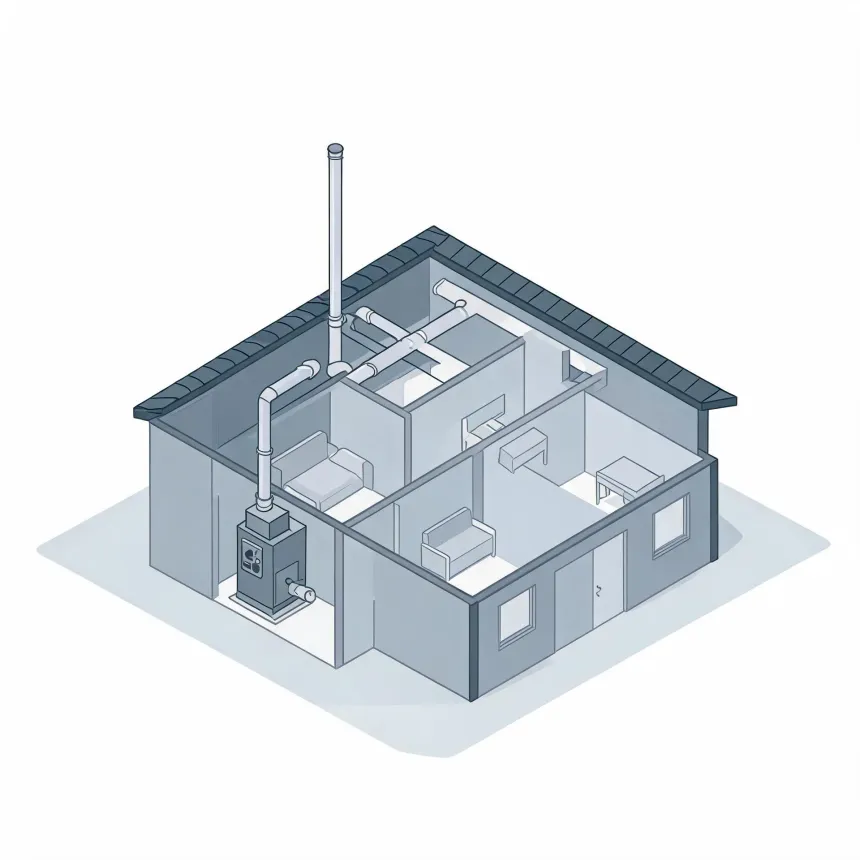
Isometric grayscale illustration of a cutaway single-story house showing interior rooms with furniture, a furnace unit connected to ductwork and a tall vertical flue pipe extending above the roof.
Your furnace works hardest from November through March.

NOAA nClimDiv, 1991–2020 normals

Half the homes in Union County were built in 1961 or earlier.

A furnace that old has likely already outlived the repair it needs, and that's worth knowing before paying for one.

Eight months of heat starts in October, and that's when a weak part gives out

Heat runs October through May
Climate zone 4B
Winter nights average 20°F
Clayton weather asks a lot of an old furnace30 winter storms have hit Union County between 2015 and 2024

A furnace that's struggling on a blizzard night isn't hiding what's wrong. A cracked heat exchanger, a weak igniter, a blower motor losing strength, those show themselves fastest under the hardest load, and this county gives a furnace plenty of hard loads. When someone comes out to look at it, they should be checking the part that actually failed, not just resetting the system and leaving. A repair that only addresses the symptom tends to show the same problem again on the next cold snap. Tracing it back to the actual part means the fix is still holding when the temperature drops again in January.

Find out how much life is left before you pay for the repair

If your furnace came with the house, it may be older than the fix is worth. Ask whoever comes out to tell you straight. Is this worth repairing, or close to done.

Find a contractor
A gas furnace with attached ductwork, gas piping, and condensate lines installed in a concrete-block basement.

Most failures are a part that wore out doing exactly what it's built to do

An igniter wears down just from doing its job, heating up and cooling off every single cycle, until one day it doesn't glow hot enough to light the gas. A flame sensor gets a film over it from normal combustion and starts telling the control board no flame is there even when there is, so the furnace shuts itself down as a safety move. Blower motor bearings dry out over years of running and start pulling harder to spin, until the motor finally gives out. Capacitors that help start the blower lose their charge slowly and then fail all at once. A heat exchanger can crack from years of heating and cooling, and that one is not a part you patch. None of these fail because a furnace is old on paper. They fail because of how many times they've been asked to start, run, and shut off again.

What you can check safely

Look at the thermostat first. Make sure it's set to heat and the set temperature is actually above room temperature. Check the furnace switch, the one that looks like a light switch near the unit or on it, and make sure nothing bumped it off. Check the filter by pulling it out and holding it up to a light. If you can't see light through it, that's choking off airflow and can make the furnace shut down on its own. Check the breaker panel for a tripped breaker. If the furnace uses a standing pilot, look for a small steady flame through the viewing window.

What to leave alone

Don't open the burner compartment or touch the gas valve. Don't take apart the igniter or flame sensor to clean or test them. Don't keep resetting the system over and over if it shuts off again each time, that usually means a safety control is doing its job and stopping it on purpose. If you smell gas, don't flip any switches at all, get out and call the gas company from outside the house.

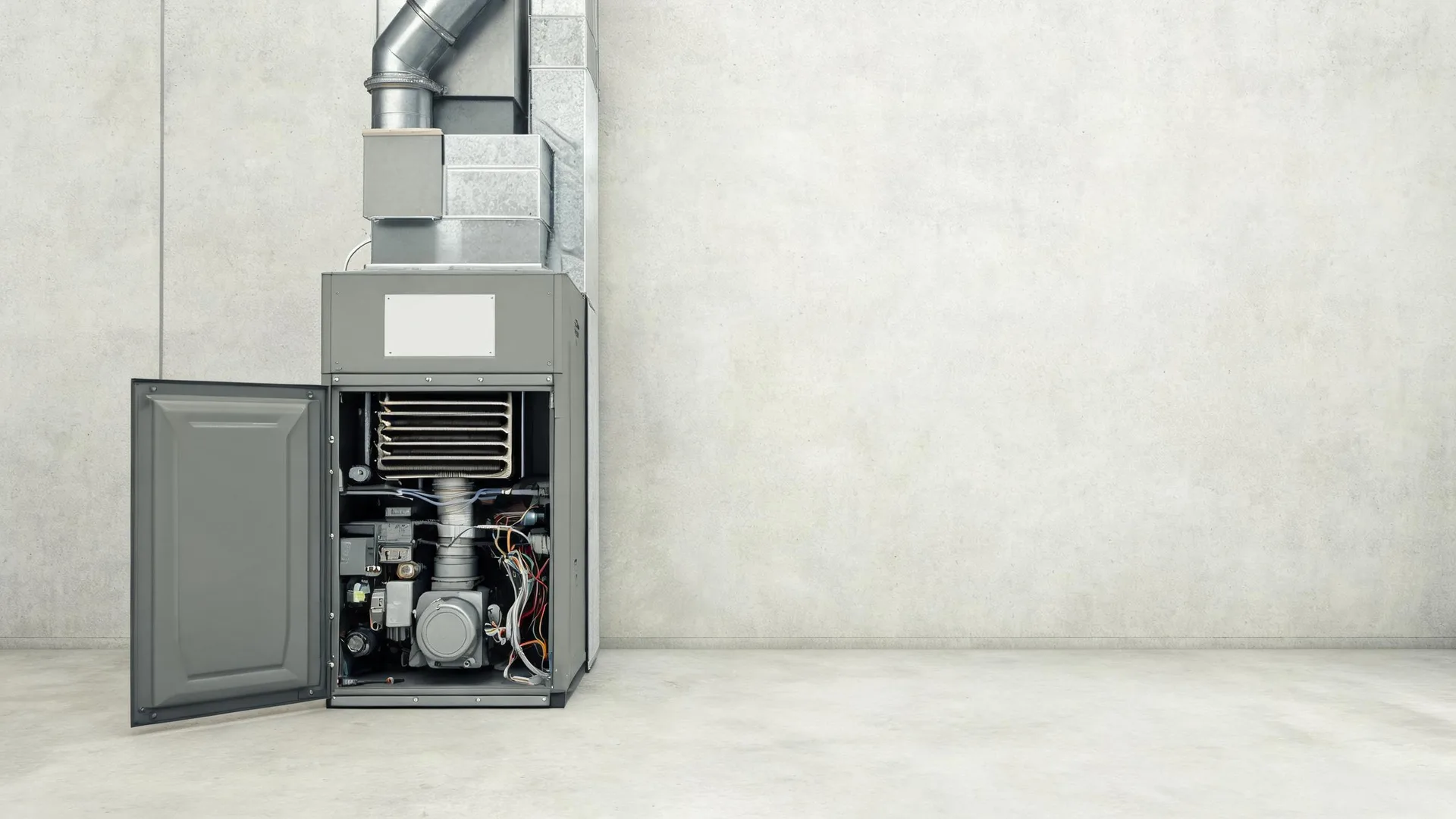
A gray forced-air furnace with ductwork stands in an unfinished concrete basement surrounded by storage items and clutter.

A new furnace would cut about $70 a year off heating for a typical Union County home.

  • A new high-efficiency furnace$310 a year
  • An older furnace$380 a year

Estimates for a typical Union County home, compared with an older unit built to the previous federal minimum, from EIA household energy data, New Mexico fuel prices and NOAA climate normals. Your home will differ.

Repair makes sense when one part has failed and the heat exchanger is sound.

Replacement makes sense when the heat exchanger is cracked or the furnace keeps needing parts.

Whoever shows up should ask what the furnace was doing before it quit, and what the thermostat read at the time. That history points the visit in the right direction. From there it's a sequence of checks, not a guess. Power at the control board, a flame signal, the pressure switch, the limit switch, each one ruling something in or out. A tech working the problem correctly can usually show you the failed part, not just describe it or swap something and hope. If someone wants to replace a part without testing it first, ask what the test showed. The visit should end with you knowing exactly what failed and why, not just that the furnace runs again for now.