Your furnace runs about seven months here, October through April. One checkup a year, done before that stretch starts, covers it. There's nothing about Truth or Consequences that wears a furnace down faster or asks more of it than furnaces anywhere else. Overnight lows average 27°F in December and January, cold enough that you want the furnace working right when you need it, not cold enough to call for anything extra. Get it looked at once, before October, and that's the maintenance this furnace needs.
Furnaces in Sierra County start working in October.
Book the checkup in September, before that first month asks anything of it.
Gas heats half the homes here, which means the burner
49.2% of homes heat with gasHeat runs October through AprilWinter nights average 27°F
A furnace doesn't know how old the house around it is. What matters is whether anyone's kept up with the one inside. Half the homes in Sierra County were built in 1983 or earlier, and in a house that age it's worth finding out if the furnace came with it or if someone swapped it out since. Mobile homes make up 41.4% of the housing here, and a furnace in one gets the same visit as any other. None of that changes what the checkup covers or how often it needs doing. Once a year is still the job.
A furnace that's about to need help usually says so first. Listen for a boom when it lights, louder than a soft whoosh. That points to delayed ignition and a dirty burner. Watch the flame if you can see it. It should be steady and blue, not yellow or flickering. Short cycling, where it kicks on and off every few minutes instead of running a full stretch, is another sign. So is a blower that keeps running after the heat's done. Rooms that used to feel even and now don't, one cold while another's fine, often trace back to a clogged filter or a crack in the heat exchanger rather than anything about the room itself. Any smell of exhaust inside the house is not a maintenance item. Shut the furnace off and get it looked at right away. A checkup catches most of this before it turns into a symptom you notice on your own.
The filter is doing more than cleaning air
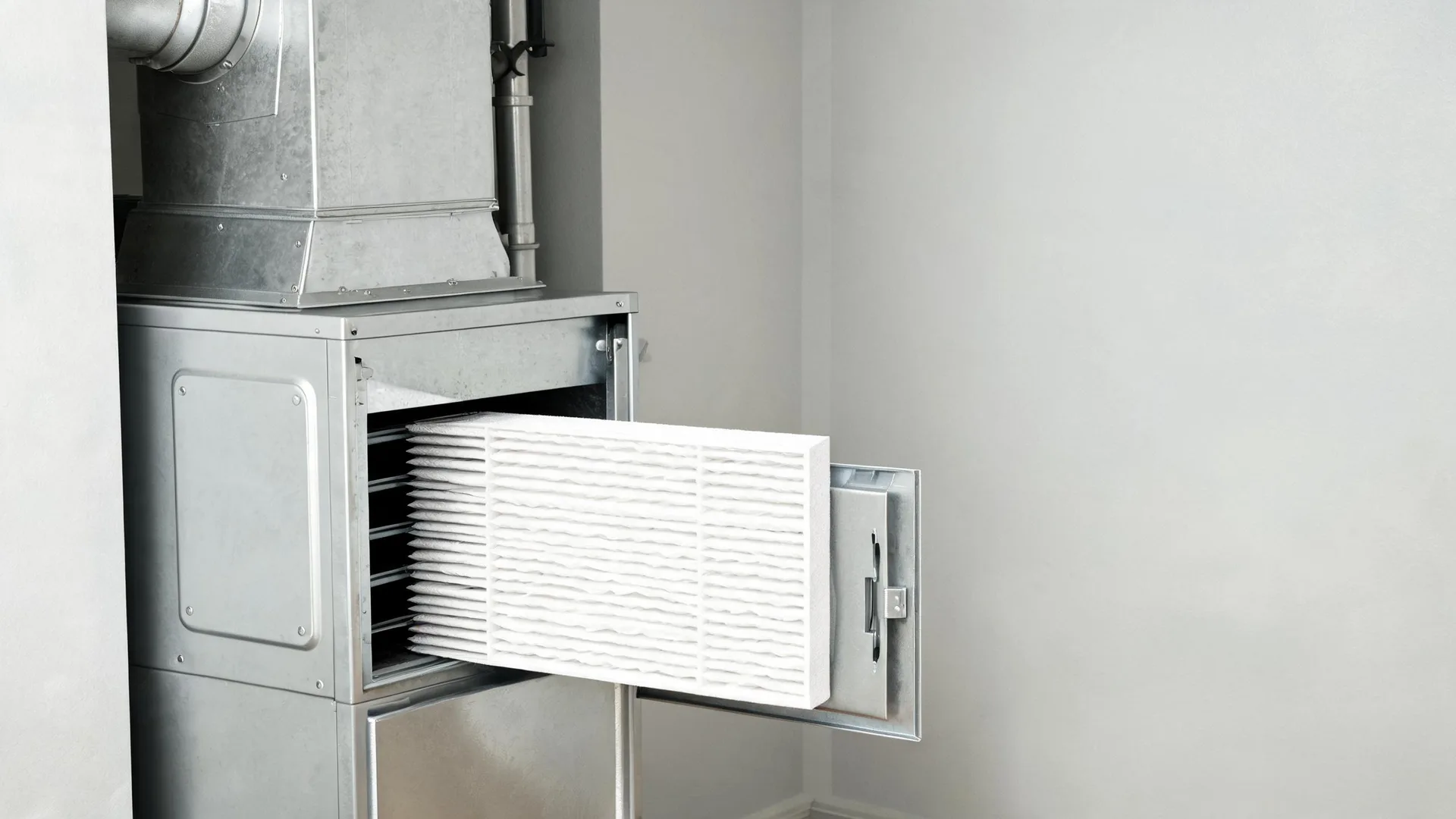
A furnace filter blocks the airflow the burner needs to run right. Once it's packed with dust, the blower has to work harder to pull air through, and the heat exchanger can run hotter than it's built for. That's what leads to the cracks and the short cycling. Checking it isn't about dust in the house. It's about keeping air moving the way the furnace expects.
The drain line only matters if your furnace has one
High-efficiency furnaces pull extra heat out of the exhaust, and that process makes condensation, which needs somewhere to go. If that drain line clogs, the furnace shuts itself down rather than let water back up into places it shouldn't be. An older style furnace without that second heat exchanger doesn't have this part at all, so there's nothing to check there. Worth knowing which kind is in the house before anyone assumes a drain is the problem.
A quick visit checks that the furnace lights and makes heat, then moves on. A thorough one opens the cabinet and looks at the burner flame, not just the room temperature. It checks the flame sensor for corrosion, since a weak signal there causes the furnace to shut off minutes into a cycle. It tests the limit switch, the part that shuts the burner down if the air isn't moving fast enough past the heat exchanger. It checks the inducer motor and the pressure switch that depends on it, because a furnace that can't prove it's venting right won't fire at all. A thorough check also means pulling the igniter out to look at it rather than just listening for the click. Ask what got checked, not just what got cleaned.
A real tune-up starts before the burner ever lights. The tech pulls the filter and checks it, then looks at the blower wheel for the kind of dust buildup that throws it out of balance. The burner assembly comes apart enough to see the flame directly, not just hear it catch. Combustion gets tested with a meter, not a guess, because a furnace can look fine and still be burning dirty. The heat exchanger gets inspected for hairline cracks, usually with a camera or a light, since that's not something you catch by ear. Gas pressure gets checked at the valve and adjusted if it's drifted off spec. The last step is running the whole cycle through, start to shutdown, watching how it behaves rather than just confirming it comes on.