November starts the season here
Furnaces in Hobbs come on in November and stay on through April. That is six straight months of work, and the first cold snap is when a weak igniter or a cracked heat exchanger shows up.
Takes about a minute. No obligation.
Furnaces in Hobbs come on in November and stay on through April. That is six straight months of work, and the first cold snap is when a weak igniter or a cracked heat exchanger shows up.
A furnace sitting unused since spring will not show its problems until it has to run. Having it looked at in October means any repair happens before you need the heat, not during the first cold week of November.
A Hobbs furnace runs six months a year, November through April, not year round.
Six months of ignition cycles still wear an igniter and a heat exchanger, so a yearly check is what keeps a furnace here going.

Lea County sees its share of wind and hail, but none of that adds wear to a furnace sitting in a closet or a utility room. One check a year, timed before the furnace has to carry the cold months, is what keeps it going.
Find a contractorSkip the yearly check and the furnace does not fail right away. Dust builds on the burners and the flame goes from a steady blue to one that is ragged and yellow at the edges, burning dirtier and hotter than it should. The flame sensor picks up a coat of residue and starts missing the flame it is supposed to detect, so the furnace shuts itself down mid-cycle. The igniter draws full power every start, and a hairline crack that would have been caught on a bench becomes an igniter that fails outright on the coldest morning of the year. None of this shows while the furnace sits idle. It only shows under load, which means the first real cold snap is when you find out what was neglected.
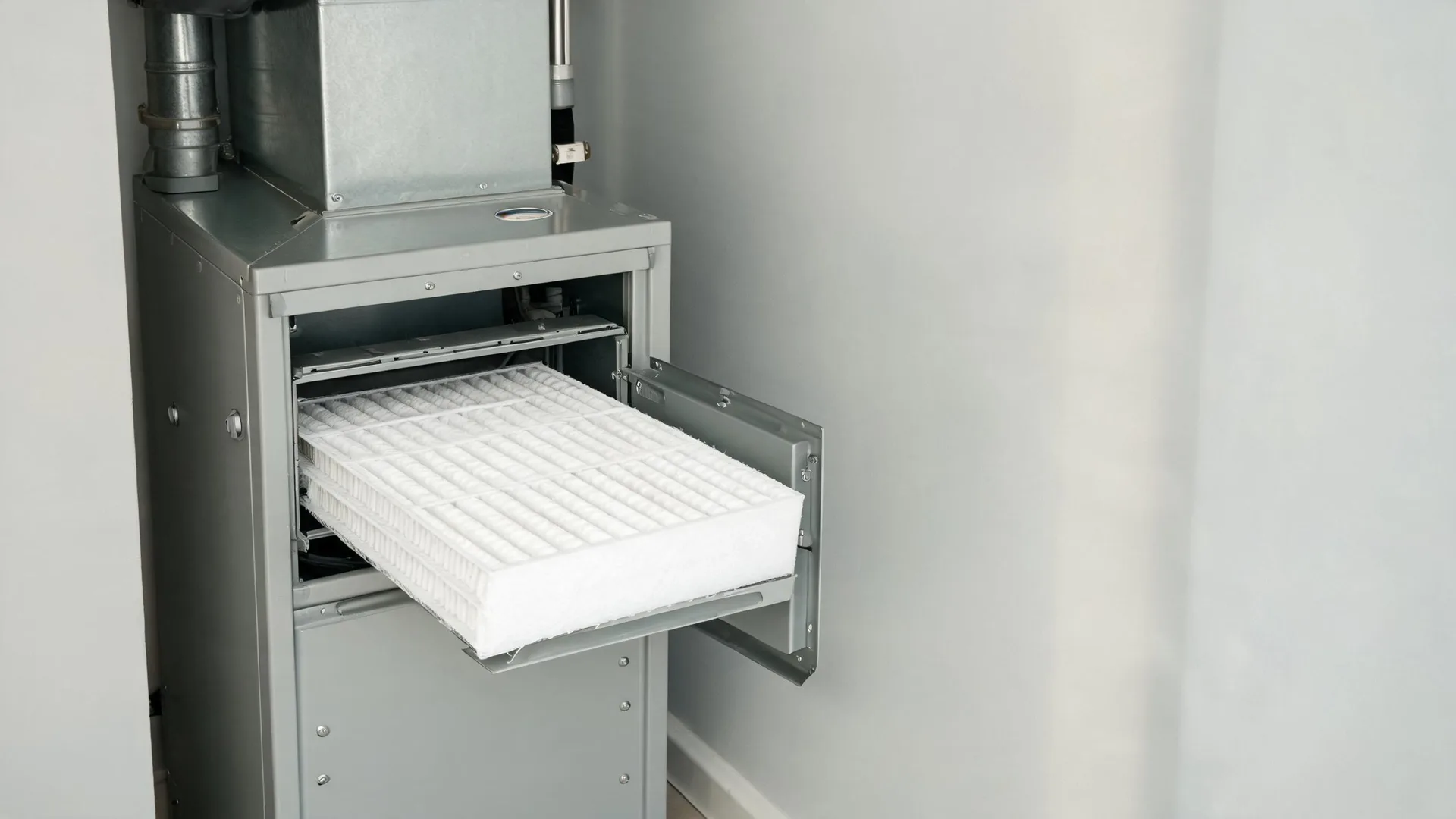
Air has to pass through that filter every time the blower runs. Let it clog and the furnace pulls harder to move the same air, which strains the blower motor and can crack a heat exchanger from the heat that should have vented out. A filter is the cheapest part of this system and the one most likely to cause damage to the rest of it if it is ignored.
A high-efficiency furnace pulls so much heat from its exhaust that it condenses into water, and that water needs a clear drain line to leave the house. Let that line clog and the furnace either shuts itself down to protect against a flood or lets water back up into the cabinet. It is a small plastic tube, easy to check and easy to forget.
A yearly check gets inside places a filter swap never touches. A technician pulls the burner assembly and looks at the flame pattern up close, checking for the uneven, lifting flame that means the burners need cleaning. The heat exchanger gets inspected for hairline cracks that a visual glance from across the room would never catch, the kind that can let combustion gas mix into the air moving through the house. Amp draw on the blower motor gets tested against what that motor is supposed to pull, which catches a motor on its way to failing weeks before it quits. The flame sensor gets cleaned of the residue that builds up invisibly and makes a furnace shut down mid-cycle for no reason a homeowner can see. None of this shows up by looking at the furnace or feeling the air coming out of the vents.
A tune-up also covers what happens outside the furnace cabinet. The technician checks the gas pressure at the manifold, since too high or too low throws off the flame and wastes fuel either way. The vent pipe gets checked for a solid connection and a clear path outside, because a furnace that cannot vent properly pushes combustion gas back where it shouldn't go. Electrical connections get tightened, since a loose wire at the control board causes the kind of intermittent fault that looks like something else entirely until someone finds the real cause. The thermostat gets checked against the furnace's actual behavior, not just its display, to make sure the call for heat and the response match up. A furnace can run and still be doing any of this wrong, and none of it shows until something downstream fails.