

Three adobe-style desert homes with warm landscape lighting, surrounded by saguaro cacti and desert vegetation under a deep blue dusk sky.

Furnace Maintenance in Grants, NM

Tell us about the job

Takes about a minute. No obligation.

Tune-up, service, or cleaningFurnace or heatingCibola County, NM
Step 1 of 2

What ZIP code is the job in?

A quick tune-up gets you a filter swap and a glance at the flame. A thorough one gets you numbers. The tech should pull the burners and clean them, check the flame sensor instead of just wiping it, and measure the temperature rise across the heat exchanger to confirm it falls where it should. They should test the draft at the vent, check gas pressure at the manifold, and inspect the heat exchanger for cracks with a light or camera, not just a glance. You should hear what the amp draw on the blower motor was, not just that it was checked. If the visit takes less time than it takes to explain what was found, something got skipped.

Furnaces in Grants start working hard the day they kick on in October.

Get yours checked in September, before that first cold morning asks everything of it.

Half the furnaces here are older too, and age is what maintenance checks for

Half the homes here were built by 1978
Heat runs October through May
Winter nights average 18°F
A gas furnace needs more than a filterUtility gas heats 42.2% of homes in Cibola County, more than any other fuel.

Eight months of heat a year is a long season for a furnace to carry. December through February, the overnight low here averages 18°F, and that's the stretch where a weak igniter or a dirty flame sensor turns into a no-heat call at the worst time. Cibola County has had dozens of winter storms over the past decade, heavy snow and ice that can knock out power or keep a tech from reaching you fast. A furnace that's been checked before the season runs through those nights without asking anything of you. One that hasn't is a gamble on whether it still can.

Book the check now, before winter makes the call for you

Half the homes in Cibola County were built in 1978 or earlier, which means plenty of furnaces have been quietly aging right alongside them. A yearly check is how you find out if yours is still running the way it should, before a cold night makes that decision for you.

Find a contractor
A gray residential gas furnace installed in an unfinished basement, surrounded by ductwork, a metal flue pipe, and a gas supply line.

The parts that fail don't announce it first

A flame sensor can look clean and still be failing. The rod develops a thin oxide coating from normal combustion, invisible to the eye, that keeps it from reading the flame properly. A furnace running on a weak sensor will still fire today and still fire tomorrow, right up until the morning it doesn't. Same with the heat exchanger. A hairline crack won't smoke or smell or make a sound. It just sits there until it's bigger. Running hours don't wear a furnace out evenly. The igniter cycles on and off every single call for heat, so it takes more stress per hour than a part that just spins or sits open. The longer a furnace runs each day, the more those cycles add up, and the sooner a marginal igniter or sensor shows its age.

A dirty filter works the whole system harder

When a filter clogs, the blower has to pull harder to move the same air. That strain shows up at the heat exchanger too, because restricted airflow means less air crossing it to carry heat away. A furnace can run too hot on the inside while the house still feels cold.
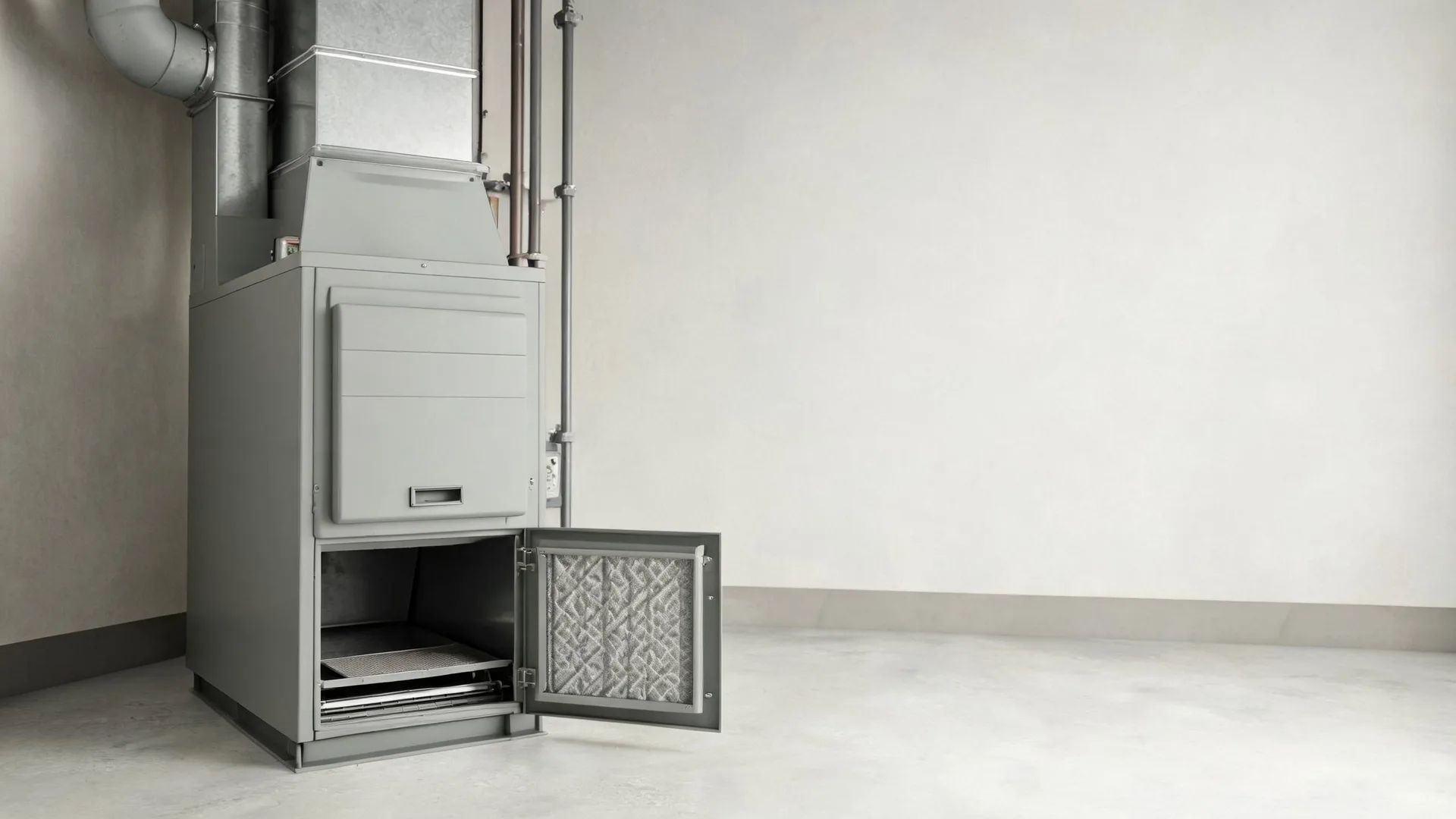
The drain only matters on certain furnaces, but it matters a lot

A high-efficiency furnace produces condensate that has to leave through a drain line. If that line clogs with algae or sediment, the furnace will shut itself down rather than let water back up into the cabinet. Checking that the line runs clear is part of a real tune-up, not an extra.

Between visits, the filter is the one thing worth checking yourself. Hold it up to a light. If you can't see through it, swap it. A furnace draws return air constantly while it runs, so a filter clogs faster than people expect, especially with pets in the house. Keep the area around the furnace clear too. It needs room to pull air in, and anything stacked against the cabinet can block that. Beyond that, leave it alone. Opening the cabinet to look at the burners or the flame sensor yourself does more harm than good if you don't know what you're looking at, and the igniter is fragile enough that a fingerprint on it can shorten its life.

A real tune-up ends with the furnace actually firing and running through a full cycle while the tech watches it, not just a visual check with the power off. That's when a cracked heat exchanger or a weak igniter shows itself, under the conditions it actually has to work in. The tech should also check the thermostat calls for heat correctly and that the blower comes on and off at the right points in the cycle, not just early or late. Belts aren't part of this. Furnace blowers are direct-drive, so there's no belt to inspect or replace, whatever an old checklist might still say. The combustion air intake and the vent pipe outside deserve a look too, since anything nesting in or blocking either one changes how the furnace burns gas. A tune-up that skips the actual firing of the furnace isn't a tune-up. It's an inspection of a furnace that was never asked to prove it still works.