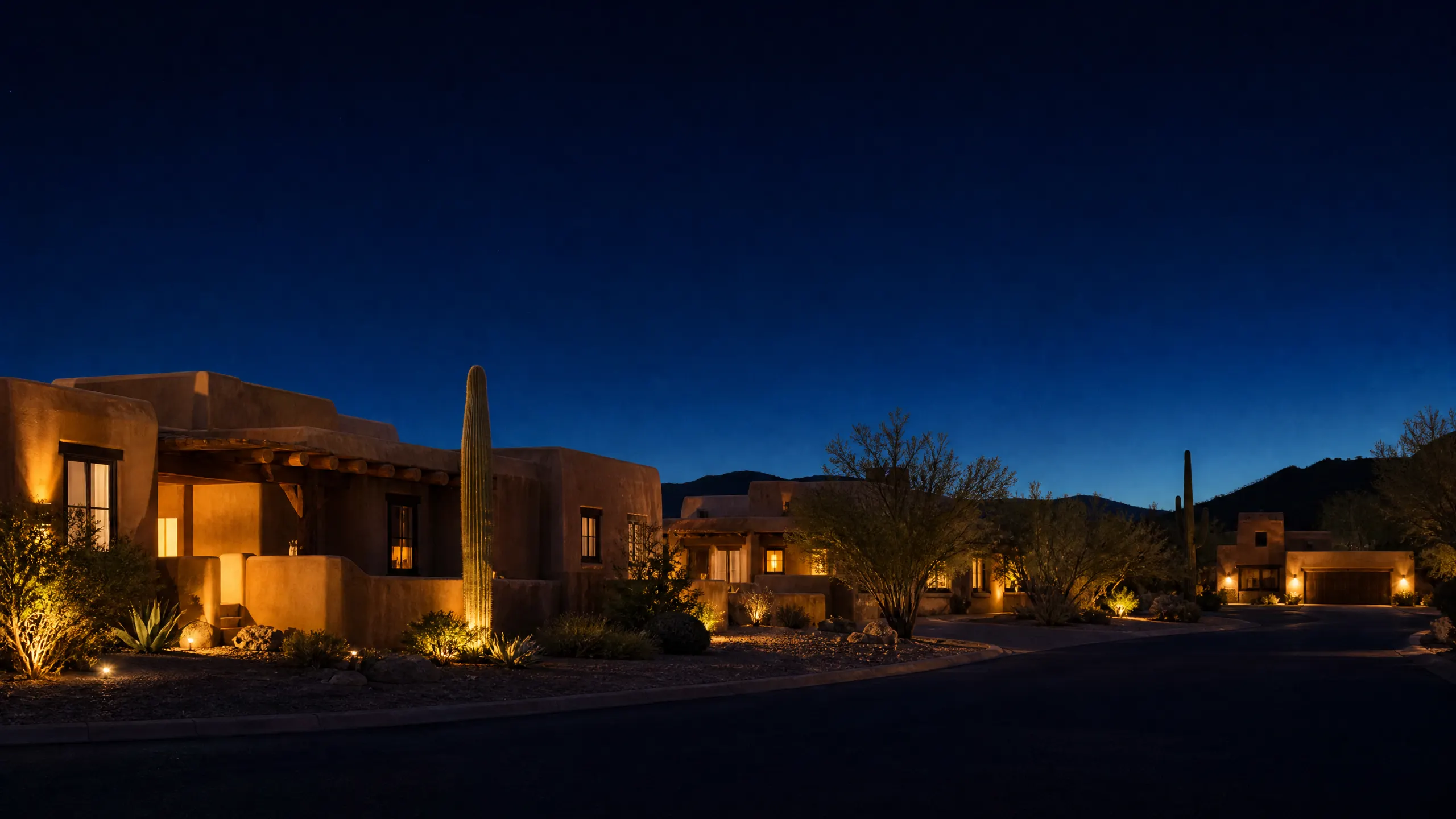
Three adobe-style desert homes with warm landscape lighting, surrounded by saguaro cacti and desert vegetation under a deep blue dusk sky.

Furnace Maintenance in Carlsbad, NM

Tell us about the job

Takes about a minute. No obligation.

Tune-up, service, or cleaningFurnace or heatingEddy County, NM
Step 1 of 2

What ZIP code is the job in?

November starts the five-month stretch

Furnaces in Eddy County switch on in November and keep running through March. That first cold snap is when your furnace finds out if it's ready, not a good time to find a cracked heat exchanger or a bad igniter.
October is the month to get it checked

Have your furnace looked at in October, before it has to carry the load. A tech can catch a weak part while it's still sitting idle, instead of after it's failed on a November night.

Five months of heat a year is a light load on a furnace.

Carlsbad furnaces still need a yearly check, because age and neglect cause more trouble here than hard use does.

Half these furnaces are older. That's the part worth checking.

Half the homes here were built by 1980
Heat runs November through March
Winter nights average 31°F

Eddy County gets its share of rough weather. 344 severe weather events hit the county over ten years, most of it wind. Wind and hail go after the roof, the siding, the AC unit sitting outside. The furnace sits inside, usually in a closet or attic, and runs the same whether that year brought four tornadoes or none. A power outage is the one thing that stops it cold, since both the blower and the ignition run on electricity. That's a reason to know where your breaker panel is, not a reason to check the furnace more than once a year. The schedule holds. One visit before the cold sets in, same as anywhere else this machine runs.

If your furnace runs on gas, maintenance means more than a filter

Gas heats 40.3% of homes in Eddy County, electricity heats more at 54.6%. If yours is one of the gas furnaces, the yearly check is not just a new filter. A tech needs to look at the burner, the venting and the safety controls that shut the furnace down if something goes wrong. Get that looked at before it has to carry the winter load.

Find a contractor
A man seen from behind in a dark sweatshirt and tan work pants climbs porch steps toward a gray paneled front door, carrying a canvas tool bag in his right hand, with a potted shrub to the left.
A gray high-efficiency gas furnace installed in an unfinished basement, surrounded by gas lines, a condensate drain, and sheet-metal ductwork.

Light duty, once a year

Five months of work a year is not much for a furnace to do. One check in the fall is enough to keep it running that whole stretch without trouble.

Change the filter

A dirty filter chokes airflow across the heat exchanger, and that's the one part you can check yourself without opening anything up. Hold it to the light. If you can't see through it, put a new one in. A furnace with restricted airflow runs longer to hit the same temperature and puts more strain on the blower motor.

Know what's not yours to touch

The burner, the flame sensor and the gas valve need a trained eye, not a homeowner's. If you smell gas, hear a new noise, or see the flame burning yellow instead of blue, that's a reason to call, not a reason to open the cabinet. Between visits, the filter is the job. Everything past it waits for the tech.

A quick visit gets you a new filter and a glance at the flame. A thorough one gets you a look inside the burner compartment, where the burner and heat exchanger actually live. The tech should pull the panel and check the flame sensor and igniter for wear, not just confirm they're there. They should check the flue and venting for a solid connection, since a loose joint lets exhaust go where it shouldn't. The safety controls that shut the furnace down when something's wrong need to be tested, not assumed to work. If the visit ends with a new filter and nothing else, ask what got checked underneath it.

A full tune-up starts before the burner ever lights. The tech checks that the thermostat calls for heat correctly. Then the furnace goes through its startup sequence and gets watched the whole way through. The inducer motor kicks on first, then the igniter, then the burner. The igniter should glow steady and the flame should catch clean, with no delay. Amp draw on the blower motor gets checked against what the motor is rated for, since a motor pulling too much current is a motor on its way to failing. The heat exchanger gets inspected for cracks or corrosion, because that's the part keeping combustion gases out of the air moving through your house. A combustion test reads what's actually coming out of the flue, not just what the flame looks like.