

A gas furnace with sheet-metal ductwork and PVC pipes installed in an unfinished basement.

Furnace Maintenance in Alamogordo, NM

Tell us about the job

Takes about a minute. No obligation.

Tune-up, service, or cleaningFurnace or heatingOtero County, NM
Step 1 of 2

What ZIP code is the job in?

Furnaces in Otero County run from October through April, about seven months out of the year. The rest of the time the system sits idle. One check-up before October is enough to catch a weak igniter or a dirty flame sensor before that first cold night. Overnight lows average 28°F through December, January and February, so a furnace that quits on a bad night is a real problem, not just an inconvenience. There's nothing about the winters here that wears a furnace down faster than normal. A yearly check before the season starts is all this needs.

October is when your furnace in Otero County starts working full time.

Get it checked before then, so a weak igniter or dirty flame sensor doesn't wait for that first cold night to show up.

One tune-up before October covers it

Half the homes here were built by 1984
Heat runs October through April
Winter nights average 28°F

A technician opens the cabinet and checks things you'd never see from the thermostat. The flame should burn steady blue. If it's flickering yellow or orange, that's incomplete combustion, and it means the burner needs cleaning. The flame sensor gets wiped down too, since a coating of residue on it will make the furnace shut off seconds after it starts, even though the igniter is working fine. Belts aren't part of this, most furnaces run the blower motor direct off the shaft, but the motor bearings and the blower wheel get checked for wear and dust buildup that throws the airflow off. The heat exchanger gets inspected for cracks, since a cracked one can let exhaust mix into the air moving through your ducts. None of this shows up by looking at the unit from across the room, and none of it shows up until the furnace is asked to run.

Your gas furnace needs more than a filter change

Over half the homes in Otero County heat with gas. That means a burner, a flue and a set of safety controls, not just a motor and a filter. A gas furnace that's never been checked can develop a cracked heat exchanger or a dirty flame sensor without any sign of it until the night you need it. Getting the burner and venting looked at now is what this system actually needs, more than a new filter.

Find a contractor
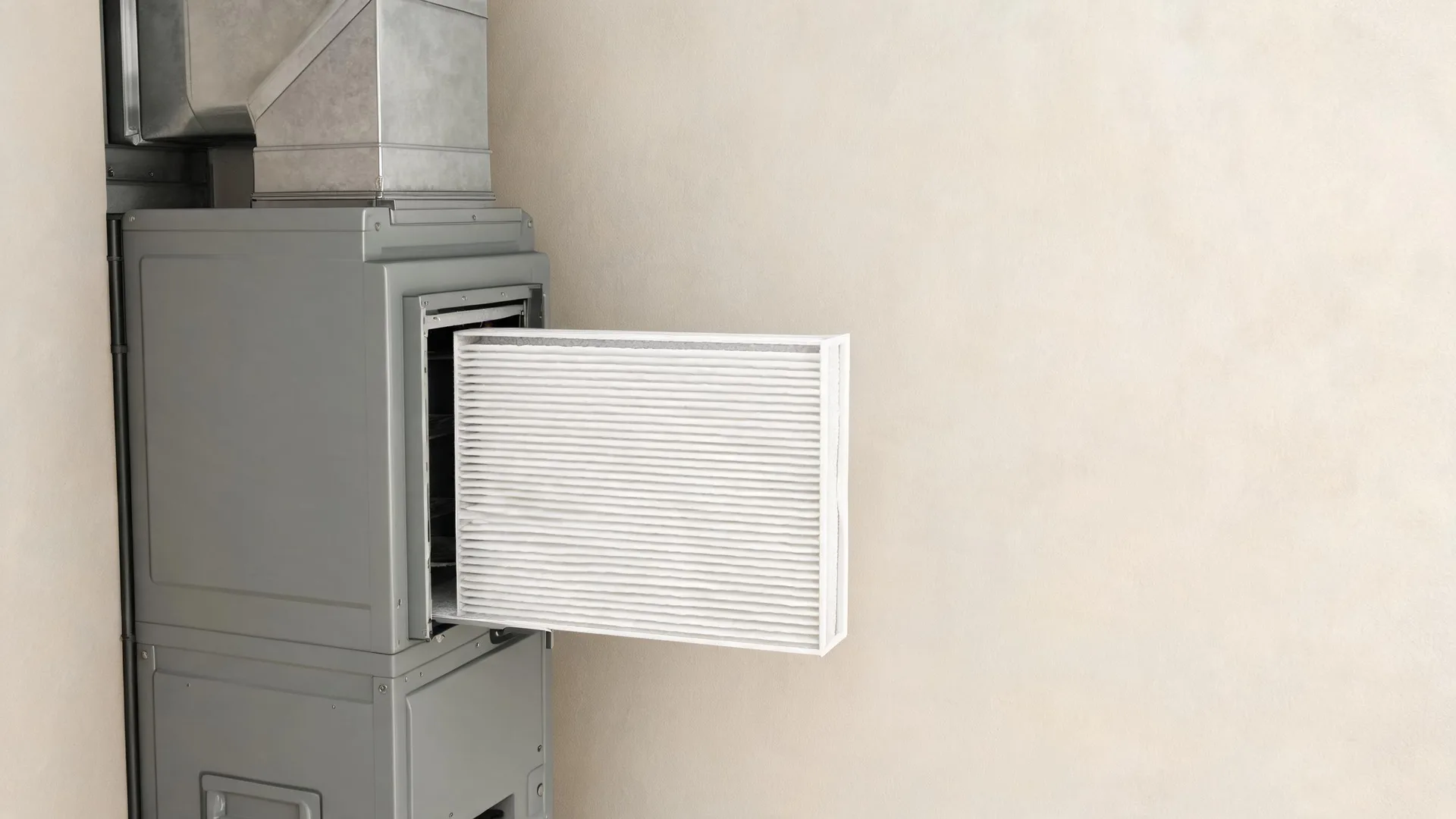
A gray residential gas furnace installed in an unfinished basement, connected to sheet-metal ductwork and PVC pipes.

The furnace usually tells you first

A furnace gives you warning before it quits, if you know what to watch for. A burner that used to light with one soft thump and now takes several tries is losing its spark or its gas pressure, either one worth a look. Short cycles, where the furnace fires up and shuts off again almost right away, usually trace back to a flame sensor that can't hold a signal anymore. A blower that runs louder than it used to, or rattles on startup, is telling you the wheel or the bearings are wearing. Rooms that used to heat evenly and now run cold in one corner can mean a duct problem, but it can also mean the blower isn't moving the air it used to. None of these stop the furnace cold. They just make it work harder, for longer, until the night it doesn't start at all.

Dust and wear don't announce themselves

A furnace that sits all spring and summer collects dust on the blower wheel and in the burner assembly without anyone knowing. None of that shows up when the system is off. It shows up as a weak flame or a sluggish blower the first night the thermostat calls for heat, and by then you're troubleshooting in the cold instead of catching it on your own schedule.
Small problems turn into part replacements

A flame sensor with a little residue on it just needs a wipe down. Left alone, the furnace starts short cycling, and that constant on off strain can take the igniter with it. What would have been a quick cleaning turns into swapping a part, because nobody looked at it while it was still a small problem.

The filter is the one part of this job you can do yourself, and it matters more than people think. A dirty filter chokes airflow, and a furnace that can't pull enough air back across the heat exchanger runs hotter than it should. That heat has to go somewhere, and over time it can crack the exchanger itself, which is a part nobody wants to replace. A clogged filter also lets dust past it, and that dust settles on the blower wheel and in the burner assembly where it throws off the burn. The drain only matters on a high-efficiency furnace, the kind that condenses exhaust into water as it runs. If that drain line clogs, the furnace either shuts itself down on a safety switch or backs water up where it shouldn't be. Coils come into it too on a furnace paired with central air, since a dirty coil makes the whole system work harder across both seasons, not just one.

A tune-up also means checking the gas pressure where it enters the burner. Too low and the flame starves, too high and it can scorch the heat exchanger from the inside. The igniter gets tested under load, not just looked at, since some fail only once they've warmed up. Thermostat wiring and the limit switch get checked too, because the limit switch is what shuts the furnace down if it starts to overheat, and a stuck one either shuts the system off too soon or not soon enough. Venting gets a look along its whole run, not just at the furnace, since a blocked or disconnected section anywhere along the way sends exhaust somewhere it shouldn't go. Each of these takes a few minutes to check and a lot longer to figure out once it's failed on a cold night.