


Furnace carbon monoxide signs in New Mexico

RepairFurnace or heatingNew Mexico
Step 1 of 2

What ZIP code is the job in?

A furnace that's cracked a heat exchanger or burning dirty can put carbon monoxide into your house, and the signs are easy to miss because they look like a cold or just being tired. Watch for soot around the furnace cabinet, a yellow flame instead of blue at the burner, or a pilot light that keeps going out. Inside the house, headaches or nausea that show up when the furnace runs and ease off when you leave are a warning, not a coincidence. New Mexico homes heating with gas all winter depend on that furnace venting properly, and a blocked flue or a failing heat exchanger won't always announce itself with a smell. A carbon monoxide detector catches what your nose can't. If yours has tripped, or you're seeing these signs, the furnace needs a look before you run it again.

A gray residential furnace with two panel doors stands against a plain light wall in a concrete-floored room, connected to metal ductwork and white and copper pipes.

Why a blue flame matters

A gas furnace burning correctly shows a steady blue flame at the burners. Yellow or flickering means the fuel isn't burning all the way, and that incomplete burn is what produces carbon monoxide. You can check this yourself by looking at the burner flames when the furnace kicks on, without opening anything up. If what you see is yellow, orange, or the flame seems to lift off the burner, that furnace needs a look before you run it again.

A gray high-efficiency furnace with white PVC venting pipes stands against a plain wall in a basement, connected to sheet-metal ductwork on a concrete floor.

The heat exchanger's job

Your furnace burns gas in a sealed chamber called the heat exchanger, which keeps combustion gases separate from the air that gets blown through your ducts and into your rooms. A crack in that metal lets carbon monoxide mix into the air your house breathes instead of venting outside. Heat exchangers crack from years of heating and cooling as the furnace cycles on and off, and a crack can be too small to see without the furnace apart. That's why soot stains or a strange smell near the cabinet are worth acting on.

Furnace Signs vs Body Signs

Furnace Signs

  • A yellow or flickering flame at the burners instead of steady blue means the gas isn't burning all the way.
  • Soot stains around the furnace cabinet or on the wall nearby point to incomplete combustion inside.
  • A furnace that runs longer than it used to, or short-cycles on and off, can mean the heat exchanger is cracked.
  • Excess moisture on windows near the furnace closet, or a strange smell when it kicks on, is worth checking out.
  • Rust or streaking on the flue pipe going outside means exhaust isn't venting the way it should.

Body Signs

  • Headaches that show up only when the furnace is running, and ease once you're outside or the furnace shuts off, are a warning sign.
  • Dizziness, nausea, or feeling unusually tired in rooms near the furnace can mean carbon monoxide, not a cold.
  • Everyone in the house feeling sick at the same time, rather than one person catching something, points away from illness.
  • Pets acting lethargic or sick before anyone else notices symptoms is a sign worth taking seriously.
  • Symptoms that fade when you leave the house and come back when you're home again are not a coincidence.
A gray high-efficiency furnace with white PVC vent pipes stands beside sheet-metal ductwork and a water heater in an unfinished basement with concrete walls and wood framing.

Burning clean

This is what a furnace in good shape looks like. The flue runs straight out through PVC pipe, the cabinet is clean, and the burners inside are getting enough air to burn all the way. No soot, no stray smell, no reason to think twice walking past it.


A beige gas furnace with a metal flue pipe stands in a basement against concrete block walls, beside sheet-metal ductwork, copper and white plastic pipes, and a water heater at right.

Worth a second look

An older furnace like this one works harder to move air and burn fuel clean. Check the flue pipe for rust or gaps, and look at the wall and floor nearby for soot. If the furnace runs long and the house still feels cold, that's worth checking too.

Why does your furnace room smell a little off

You might not smell gas at all. What you notice first is usually smaller: a headache after the furnace has been running a while, a staleness in the air near the vents, or a faint smell like something is scorching even though nothing looks burned. Condensation on the inside of windows near the furnace, or a window that won't stop fogging, can mean the same thing. None of this proves carbon monoxide by itself, which is why it gets explained away as dry winter air or a cold coming on. Left alone, a furnace burning unsafely doesn't fix itself. It keeps putting exhaust into the house every time it runs, and that risk sits with whoever is home longest, often overnight while everyone is asleep.

A smiling man with dark curly hair in a navy t-shirt sits on a gray couch indoors, with a large-leafed plant and a window in the background.
A bearded man in a plaid flannel shirt stands in a kitchen looking out a window toward snow-covered shrubs, with a steaming mug on the windowsill and potted plants on a shelf behind him.

Hand off the furnace problem

Fill out one short form instead of calling around.

You only hire the pro if you want to.

A carbon monoxide alarm that sounds once and stops might have caught a short run of bad combustion, and that's worth a service call, not a shrug. A furnace that keeps setting it off is actively poisoning the air in your house right now.

You don't have to figure out which one you're dealing with before you get help. Send the form once and the work of finding a licensed contractor in New Mexico, the calls, the explaining the problem twice, is off your plate.

A smiling man in a gray long-sleeved shirt stands in a kitchen looking to the side, with open shelves of dishes, a white mug on the counter, a potted plant, and a view through a doorway into a living room.
A smiling bearded man in a green sweater sits at a white marble kitchen island with a mug, potted plant and bowl of fruit, in a bright white interior with open shelving and an arched doorway.
A smiling man with dark curly hair and a beard, wearing a dark green knit sweater, stands at a white marble kitchen counter with a dark blue mug, with open shelving, pendant lights and a houseplant behind him.
A smiling man in a green ribbed sweater stands behind a wooden table holding a ceramic mug of coffee in a kitchen with white subway tile, shelves of potted plants, and a bowl of fruit.

Start with the inducer motor. It has to pull exhaust out through the flue before the burners light, clearing the way so nothing lingers in the cabinet. If it's weak, gas sits there instead of leaving. Next is the heat exchanger, the part that's supposed to keep combustion gas separate from the air your blower sends through the house. A crack in it means that separation is gone. The flue matters too. A bird nest or a section of pipe that's collapsed sends exhaust back down into the furnace room instead of outside. Burners play a part as well. When they're dirty, the flame can't get enough air, and a flame starved of air burns yellow and leaves carbon monoxide behind. The limit switch watches for overheating, nothing more. It won't catch a leak from a cracked exchanger. And a detector only tells you what's in the air right now. If it's been quiet, that's not proof the burn has been clean.

How a furnace actually leaks CO

  • A cracked heat exchanger forces carbon monoxide into the air your blower pushes through the ducts instead of venting it outside.
  • The inducer motor is supposed to pull exhaust out through the flue before the burners even light, so a weak or failing one lets gas linger in the cabinet.
  • A blocked flue, from a bird nest or collapsed pipe, sends exhaust back down into the furnace room instead of outside.
  • Dirty burners starve the flame of air, and a flame that can't get enough air burns yellow and leaves carbon monoxide behind instead of finishing the job.
  • The limit switch is meant to shut the furnace down if it overheats, but it does nothing to stop a leak if the exchanger itself has already failed.
  • A carbon monoxide detector measures what's in the air right now, not what the furnace produced an hour ago, so a quiet alarm doesn't mean a clean burn.
A beige high-efficiency furnace in an unfinished basement, with white PVC vent pipes, a yellow gas line, metal ductwork, and exposed wood framing on a concrete floor.
A high-efficiency furnace like this vents through PVC pipe and burns clean when the inducer and heat exchanger are both doing their job.
An older beige furnace with two louvered vent panels stands on a concrete basement floor, connected to galvanized ductwork and a metal flue pipe, with gas piping and flexible conduit on the wall behind.
An older furnace with a galvanized flue depends on that metal pipe holding a tight seal all the way up, and rust or a loose joint is where exhaust starts finding its way back into the house.

Winter nights average 23°F statewide

On a 23°F night your furnace runs long stretches to keep up, cycling on and off for hours at a stretch. Every one of those cycles means another chance for a cracked heat exchanger or a weak inducer motor to let exhaust leak instead of vent. That's more hours a night for carbon monoxide to build if something's already wrong.

NOAA nClimDiv 1991-2020 county normals weighted by homes

A closed laptop and a cream mug of coffee on a coaster sit on a dark wooden table, with a potted plant at left and a kitchen counter, tiled backsplash and shelf of ceramics in the background.

What this means in your house, this winter

A furnace closed up in a utility closet or a garage doesn't give the leak anywhere to go. Carbon monoxide builds in that small space first, then moves through the house on the air your blower is already pushing. If your bedroom is near a return vent, you're breathing whatever the furnace is putting out all night, every night it runs.

Finding out what's wrong means someone has to look at the heat exchanger, the inducer motor, and the flue connection, and that's not something to leave to the next contractor who has an opening in three weeks. Skip the part where you're calling around New Mexico asking who does furnace repair, explaining the yellow flame and the soot stains over and over to whoever picks up. Send the details once. The search for someone qualified becomes somebody else's job, not yours.

A living room corner with a beige upholstered armchair holding navy and striped cushions, a small round wooden side table with a carved bowl and a potted green plant, a framed landscape picture on a pale wall, built-in shelving, and a curtained window.
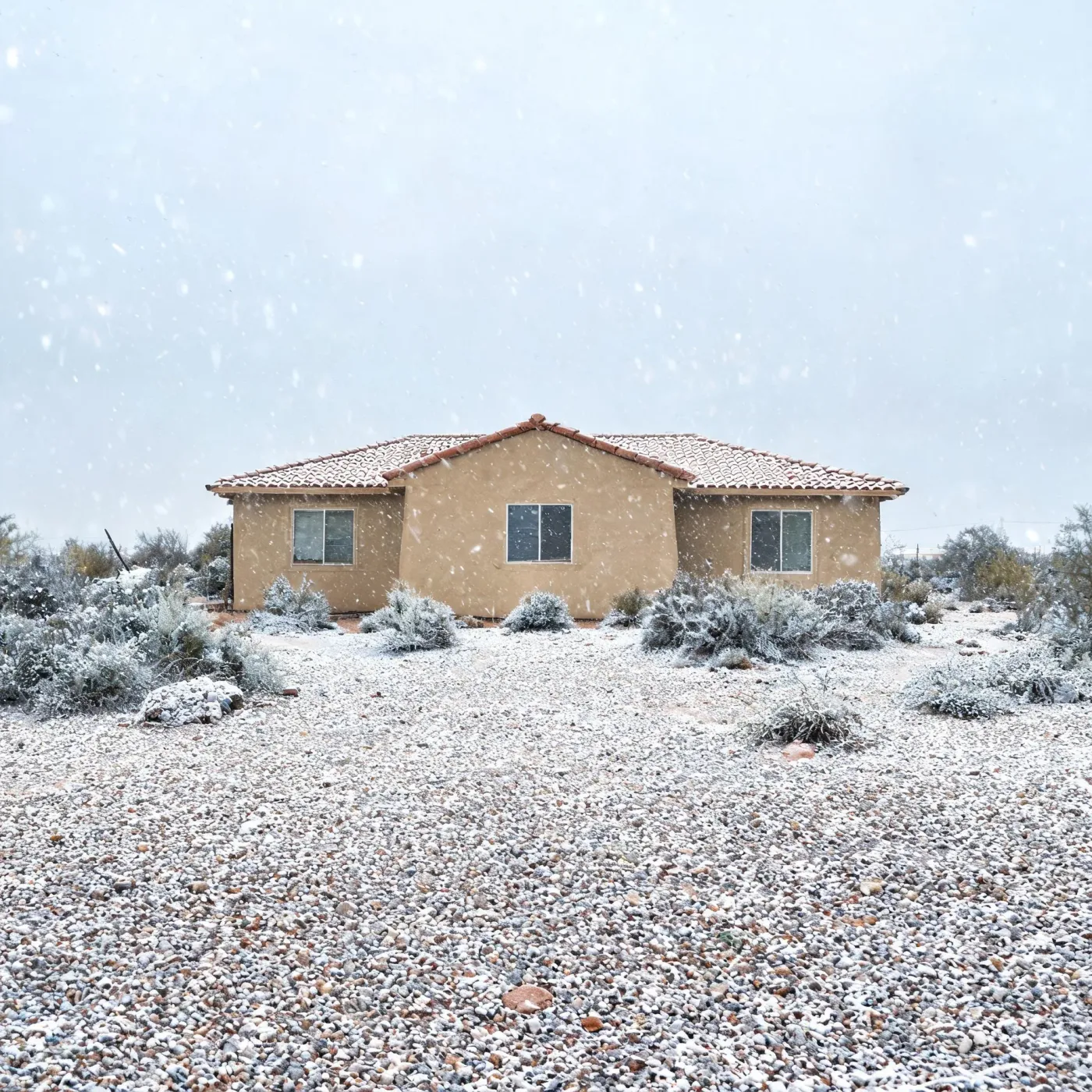
A single-story tan stucco house with a tile roof stands behind snow-dusted desert shrubs and a gravel yard during falling snow.

Winter nights average 23°F statewide, according to NOAA climate records. That kind of cold means your furnace isn't just kicking on for an hour in the evening. It's running most of the night to keep the house at temperature, burner cycling on and off over and over until morning. Each restart is a chance for the flame to light rough for a few seconds before it settles, and a furnace with a cracked heat exchanger or a struggling inducer motor does its worst venting right in those moments. More hours running means more exhaust passing through whatever's already weak in the system, which is why a furnace that seemed fine in October can start showing problems by January.

NOAA nClimDiv 1991-2020 county normals weighted by homes

An older gas furnace with two louvered front panels stands on a concrete basement floor beside galvanized sheet-metal ductwork, pipes, and a weathered concrete wall.
Before you get your furnace repair
A gray high-efficiency furnace in a basement, connected to sheet-metal ductwork on the left and white PVC vent pipes above, with black gas and drain piping and an exposed wood-stud wall with OSB sheathing on the right.
After you get your furnace repair

Where this leaves you

  • A steady blue flame, no soot, and no headaches near the vents mean your furnace is burning clean right now.
  • A yellow flame, soot on the cabinet, or a furnace that runs longer than it used to are signs worth a service call, not a wait.
  • A carbon monoxide alarm that's gone off even once means the furnace needs a look before it runs again.
  • New Mexico winters push furnaces hard, and every extra hour of runtime is another chance for a cracked heat exchanger or weak inducer motor to leak instead of vent.
  • Sending the form means someone else takes over finding a licensed contractor, instead of you calling around and explaining the same problem twice.
  • The furnace itself still needs a real inspection to know which of these signs applies to your system.

A furnace that burns clean shows it: steady blue flame, no soot on the cabinet, no headaches or staleness near the vents. A furnace that doesn't burn clean shows that too, if you know where to look. Yellow flame instead of blue. Soot stains. Runtimes that stretch longer than they used to. A carbon monoxide alarm that's gone off, even once and even if it stopped. Any one of those is a reason to get the furnace looked at before it runs again, not a reason to wait and see if it happens twice.

New Mexico winters are cold enough that your furnace isn't cycling on for a few minutes and shutting off. It's running long stretches to hold the house at temperature, and every one of those cycles is another chance for a cracked heat exchanger or a weak inducer motor to leak exhaust instead of venting it outside. That's the mechanical part. The part you can act on is simpler: notice the signs, and get someone qualified to check the furnace itself, because no amount of watching the flame through the cabinet window tells you what's happening inside the heat exchanger.

Sending the form here means you're not the one searching contractor listings, calling a handful of them, explaining the yellow flame and the soot and the headache near the vents to each one, then comparing what they quote you. That part is handled once you send it. Finding out what's actually wrong with the furnace still takes a real inspection, and that part is next.

A dark wood cabinet with a paneled door and a ceramic pot of green foliage on top stands in a beige-walled room with white baseboard, a window at left, hardwood floor, and a patterned area rug.
A dark wood glass-front cabinet holding folded towels, woven baskets and a ceramic vase stands in a bathroom corner beside a window, with a potted fern and stacked towels on top and a freestanding tub partly visible at left.
A woven basket holding a green cushion and a cream fringed knit throw sits on a wood floor in a room corner beside a window and a dark wooden cabinet.
Corner of a room with a dark wood cabinet topped by a round vase, a linen curtain at a window, white baseboard, oak plank flooring with sunlight patches, and a woven jute rug in the foreground.
A dark wood sideboard against a pale wall holds a shallow stone bowl and a round ceramic vase with leafy branches, with sunlight from a curtained window falling across the wall, wood floor and woven rug.

Let someone else find the pro

Explain the job once and skip repeating it on every call.

Answer a few questions

Asking costs nothing, and the choice to hire stays yours.