




An unfinished basement featuring a forced-air furnace, exposed wooden ceiling joists, bare concrete walls, and miscellaneous items including cardboard boxes and coiled cables on the floor.

Furnace Installation in Ruidoso, NM

Tell us about the job

Takes about a minute. No obligation.

New system or replacementFurnace or heatingLincoln County, NM
Step 1 of 2

What ZIP code is the job in?

Most houses in Lincoln County heat with utility gas, 62.4% of them. A gas furnace is the common replacement here, and parts and venting for one are easy for a contractor to source and size correctly. Electricity comes in a distant second at 15.1%, and propane heats 6.8%, usually where gas lines don't reach. If your home already has a gas line run to it, staying with a gas furnace is usually the straightforward path. If you're on propane or electric heat now, switching fuels is still possible, but it changes what has to be installed alongside the furnace.

7 months
October through April, your furnace is on duty
24°F
the average winter night it heats against
62%
of homes here heat with gas, so most furnaces here burn gas
80% AFUE
the federal minimum any new unit must meet
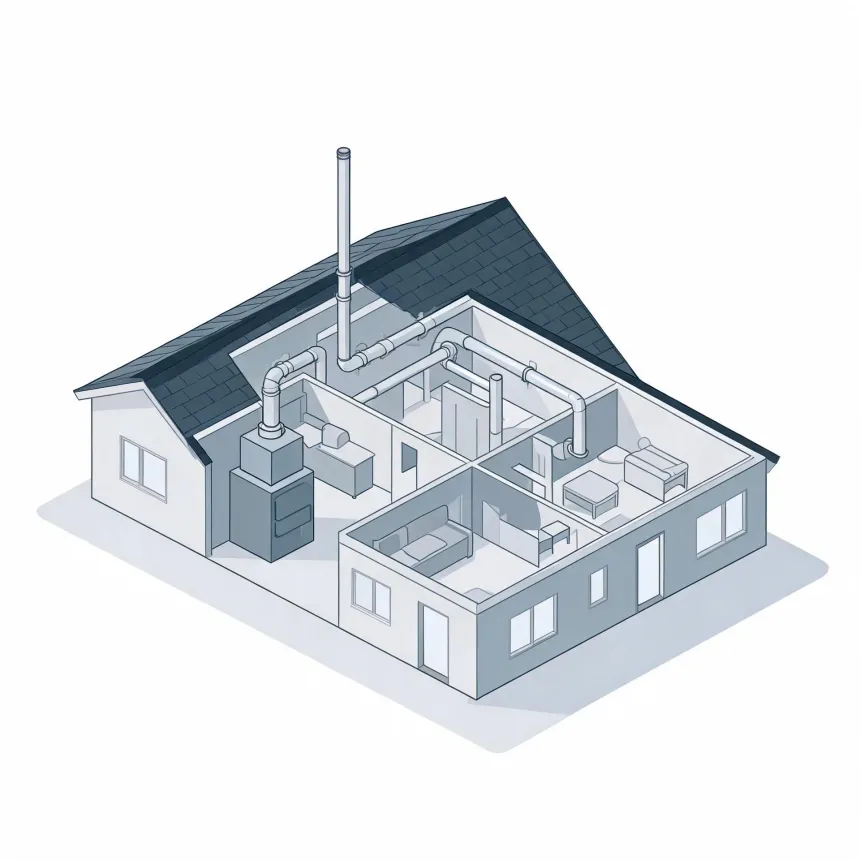
Isometric cutaway illustration of a single-story house showing interior rooms with furniture, a furnace unit connected to ductwork and a tall flue pipe extending through the roof.
Your furnace works hardest from November through March.

NOAA nClimDiv, 1991–2020 normals

Furnace sizing here follows the same rules as anywhere else at this altitude and climate.

A correctly sized standard furnace will get your home through a 24°F night without any upgrade to a bigger unit.

Get a new furnace in before October, not after the first cold snap

Heat runs October through April
Winter nights average 24°F
30 winter storms from 2015 to 2024
Built for a county that loses power13% of New Mexico homes lost power for a day or more in 2024, and a standard furnace install here plans for that.

Half the homes in Lincoln County were built in 1985 or earlier, half later, and that split doesn't change what furnace goes in. A standard gas furnace is built to the same spec no matter the age of the house it's going into. What does matter is a mobile home, and close to a quarter of the housing stock here is one. Mobile homes need a furnace rated for manufactured housing, not a standard model meant for site-built construction, and the two aren't interchangeable. If your home is a mobile home, tell the contractor before they quote the job so they bring the right unit.

Here, the right furnace beats the most efficient one

Gas here runs $8.83 per million Btu, cheap enough that a high-efficiency furnace takes a lot longer to earn back the extra cost. A correctly sized standard furnace heats this house through its coldest nights. It's also built to keep running through the power outages this county sees. That's the furnace to install, sized right and set up to last, not the priciest model on the sheet.

Find a contractor
A gray gas furnace with attached ductwork and piping installed in an unfinished concrete basement.

The install matters more than the model number

A furnace gets compared on paper, but most of what matters is in how it's installed and what it's paired with. Ask what the contractor is basing the size on, not just the square footage but a load calculation that accounts for windows, insulation and layout. An oversized furnace cycles on and off more than it should, and that short cycling wears the heat exchanger and ignition system faster than steady running does. Ask what stage of heat the unit runs, since a single stage burner fires at full blast every time while a modulating one eases into it, and that changes how evenly the house heats. Ask about the blower motor too, whether it's fixed speed or variable speed, because that changes both comfort and how hard the motor works over the years. And ask what happens to the old venting and ductwork, since a new furnace connected to old, leaky ducts won't perform the way the spec sheet promises.

Sizing comes from a load calculation, not a guess

A contractor works out furnace size from how much heat the house actually loses, factoring in window area, insulation and ceiling height, not just square footage. Houses the same size can need different furnaces if one has more glass or less insulation. Skip this step and the number on the furnace is just a guess with a sticker on it.

A mismatched furnace shows up in how the house feels

Too small and the furnace runs flat out on the coldest nights and still can't keep up. Too big and it blasts the house with heat, shuts off fast, then fires up again soon after. That short cycling is hard on the heat exchanger and the ignition system, and it wears them out faster than steady running would.

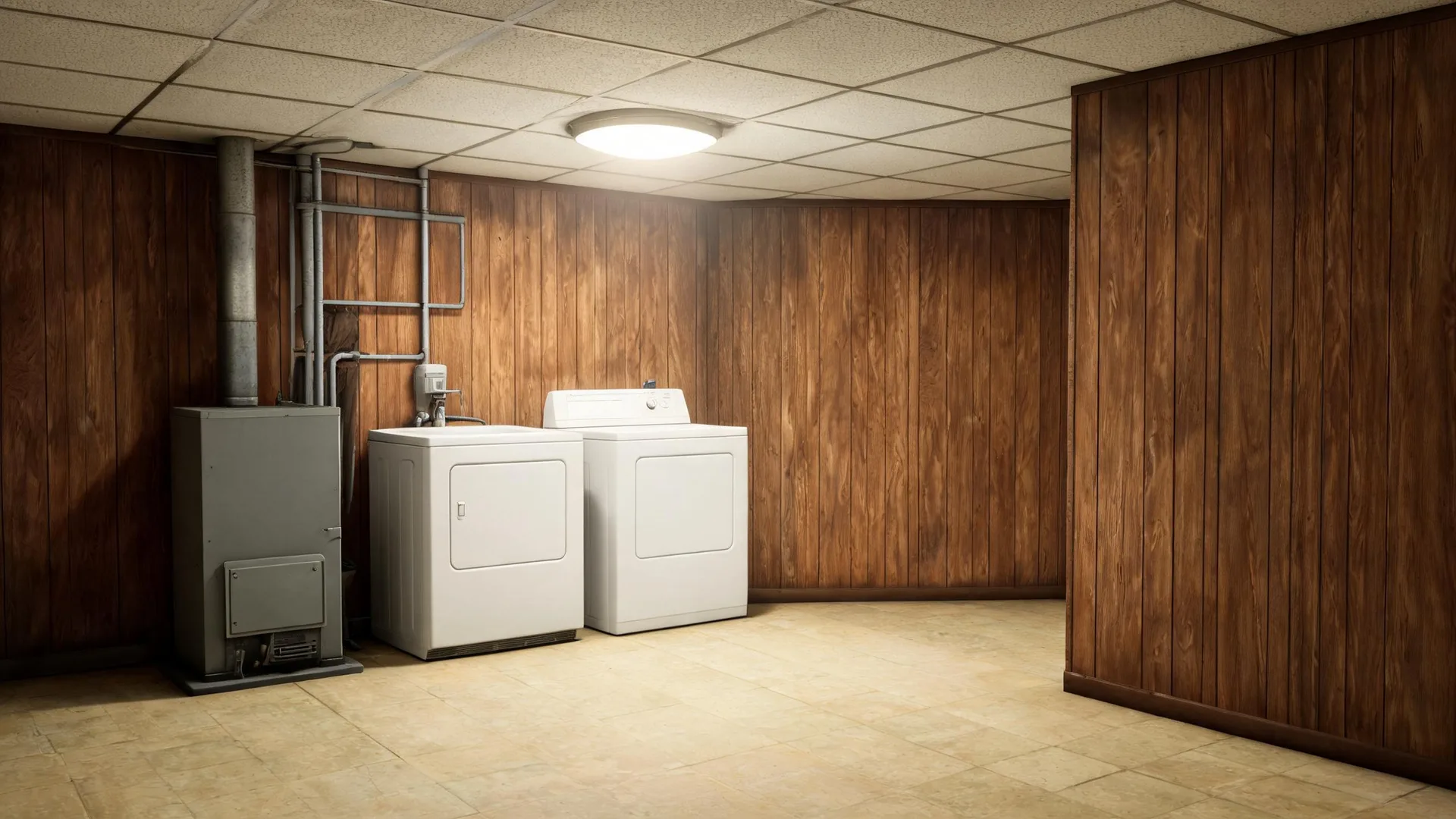
A gray forced-air furnace with metal ductwork stands in an unfinished basement with exposed wooden joists, concrete walls, and a single hanging light bulb.

A high-efficiency gas furnace would save about $50 a year to run in Lincoln County compared with a gas furnace.

  • A high-efficiency gas furnace$260 a year
  • A gas furnace$310 a year

Estimates for a typical Lincoln County home, from EIA household energy data, New Mexico fuel prices and NOAA climate normals. Your home will differ.

Installation day starts with the old furnace coming out. Anything about the venting or gas line that doesn't meet current code comes out too, and that part often takes longer than people expect, especially if the flue needs to be resized for the new unit. Setting the new furnace is the fast part. It gets leveled, the gas line gets connected, the wiring gets run, the duct trunk gets hooked up. Then comes the part that decides how well it runs for years afterward. The contractor checks gas pressure at the manifold. They check the temperature rise across the heat exchanger against the rating plate on the furnace. They check static pressure in the ductwork. Each of those has a range the furnace is built to run inside, and a reading outside that range gets adjusted before the job is called done. Last comes combustion testing, where a probe in the flue checks what's actually coming out of the furnace. A furnace that passes is burning gas the way it should. One that doesn't needs another look before anyone leaves.