

View from a shaded covered patio with exposed wood beams toward a single-story tan stucco house, a gray concrete block wall, a gravel yard, and a mesquite-like tree under an overcast sky.

Furnace Installation in Rio Rancho, NM

Tell us about the job

Takes about a minute. No obligation.

New system or replacementFurnace or heatingSandoval County, NM
Step 1 of 2

What ZIP code is the job in?

Most homes in Sandoval County heat with gas, 75 percent of them. A gas furnace draws from the same line the old one used, so the install usually means swapping the unit itself rather than running new fuel supply. Electricity heats about 13 percent of homes here, and LP gas covers most of what's left. If your home already has a gas line to the furnace, staying with gas is the straightforward path. Switching fuel types is possible, but it's a bigger job than a straight swap.

8 months
October through May, your furnace is on duty
19°F
the average winter night it heats against
75%
of homes here heat with gas, so most furnaces here burn gas
80% AFUE
the federal minimum any new unit must meet
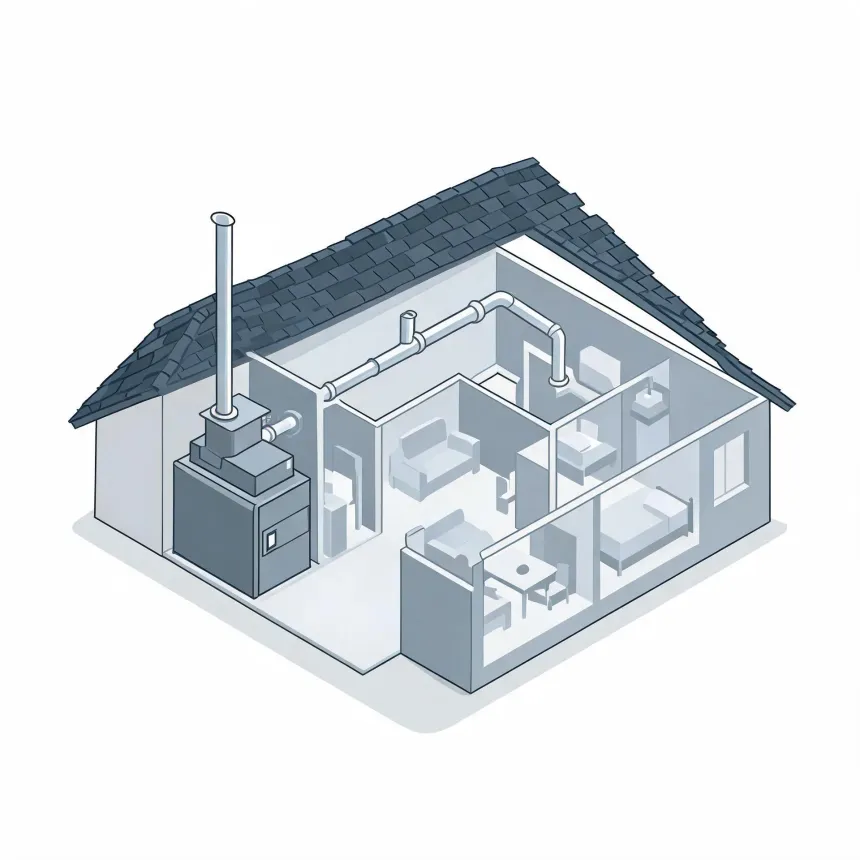
Isometric cutaway illustration of a single-story house showing interior rooms with furniture, ceiling ductwork, and a large furnace unit with a tall flue pipe in a corner room.
Your furnace works hardest from November through March.

NOAA nClimDiv, 1991–2020 normals

Furnaces in Sandoval County run October through May, close to eight months.

A new furnace here spends most of the year working, so size it for this place, not the lowest bid.

Gas here runs $8.83 per million Btu, so a high-efficiency model earns its keep slower than in costlier states

Heat runs October through May
Winter nights average 19°F
134 winter storms from 2015 to 2024

A standard furnace, properly sized, is the right call here. Sandoval County logged 134 winter storms between 2015 and 2024, more than any other severe weather type in the county, so cold snaps are the main thing a new system has to stand up to. That doesn't argue for oversizing or for a premium efficiency tier. Wind, hail and the occasional tornado show up in the county's weather record too, but none of that changes what a furnace needs to do or how big it needs to be. Size the unit to your home's heat loss, not to the weather headlines, and it will carry you through the winters here the same as anywhere else in the state.

Have it in before October

Heat starts in October here. Put the new furnace in during September and the install happens on a day you picked, not a day the first cold snap picked for you.

Find a contractor
A gray residential gas furnace installed in an unfinished basement, connected to sheet-metal ductwork and PVC pipes.

This furnace runs most of the year. Make sure it's sized from a calculation, not a guess.

Get the load calculation done room by room before anyone quotes a unit size. Eight months of runtime means the furnace cycles on and off for most of the year, and an oversized unit short cycles through all of it, never running long enough to heat evenly or wear in the way it's built to. Ask whoever bids the job to show their numbers, not just hand you a tonnage.

Matched to the house, not the old unit

A furnace gets sized off a room by room heat loss calculation, the kind that counts windows, wall area, ceiling height and insulation, not off whatever size was in there before. The old unit might have been wrong from the day it went in. Square footage alone doesn't tell the story either, homes the same size can lose heat at very different rates depending on how they're built.

What the wrong size feels like

Too big and the furnace blasts the air warm, shuts off, and leaves the house swinging between too hot and too cold, because it never runs long enough to even out room to room. Too small and it runs constantly in the coldest stretches and still can't keep up. Either way you feel it standing at the register, not on a spec sheet.

An unfinished concrete basement containing a gas furnace with sheet-metal ductwork, utility shelving, and exposed overhead joists.

A high-efficiency gas furnace would save about $70 a year to run in Sandoval County compared with a gas furnace.

  • A high-efficiency gas furnace$340 a year
  • A gas furnace$410 a year

Estimates for a typical Sandoval County home, from EIA household energy data, New Mexico fuel prices and NOAA climate normals. Your home will differ.

Install day starts with the old furnace coming out, duct connections, gas line, flue and all. Whoever's doing the work should check the ductwork while it's exposed, since a new furnace moving air through undersized or leaky ducts won't heat the way it's supposed to no matter how well it's sized. The gas line gets connected and pressure tested before anything is fired up. Venting gets checked too, high-efficiency furnaces vent differently than standard ones, and the flue has to match what the new unit needs. Once it's set, the installer runs it through a full cycle, checks the temperature rise against what the manufacturer specs, and confirms the thermostat is talking to the system the way it should. A furnace that's installed right gets fired up and tested the same day, not left for you to find out if it works once it turns cold.