Most of Raton heats with gas
Utility gas heats 59.2% of occupied homes in Colfax County. Bottled or LP gas heats another 19.2%. A gas furnace is what most installers here spend their time on.
Takes about a minute. No obligation.
Utility gas heats 59.2% of occupied homes in Colfax County. Bottled or LP gas heats another 19.2%. A gas furnace is what most installers here spend their time on.
If your old furnace ran on gas, a new gas furnace can usually connect to the same line and vent. Switching fuels is a bigger job, since it means new gas, electric or venting work the old system never needed.
NOAA nClimDiv, 1991–2020 normals
The AFUE number on the label tells you how much of the fuel it burns turns into heat for the house.
A higher AFUE means less gas goes out the flue doing nothing, which matters more the longer your winters run.




Heat goes on in September here and stays on through May. That's nine months leaning on this furnace. If it's going to fail, the signs tend to show up before it's running every day, not after. August is the window to replace it on your own schedule. A furnace put in during August gets its first run on a mild day, so any adjustment happens before the cold sets in and you need the heat to work.
A standard size and efficiency fit fine here. There's no local reason to go bigger or pricier.
Find a contractorNine months a year is most of the furnace's life spent running, not resting. Add the cold it's running against, nights averaging 17°F through December, January and February, and the furnace is working against a bigger gap, every one of those nights. Sizing it right matters more here than somewhere it only runs a few months. Too small and it never catches up on the coldest nights. Too big and it short cycles, wearing parts faster than the nine months already do. Get the load calculated for your house rather than guessing off the old unit's size.
A furnace rated higher doesn't heat the house faster or better. It just burns more fuel moving through its cycle. The right size is the one that matches how much heat the house loses on the coldest night, not the biggest unit that fits in the closet.
A load calculation looks at wall area, window area, ceiling height and insulation, and works out how much heat the house actually loses. That's what sizing is built on, not a guess and not the old unit's rating carried over unchecked. It's how an installer confirms the standard size on this page is the right one for a given house, not just an assumption.
Estimates for a typical Colfax County home, from EIA household energy data, New Mexico fuel prices and NOAA climate normals. Your home will differ.
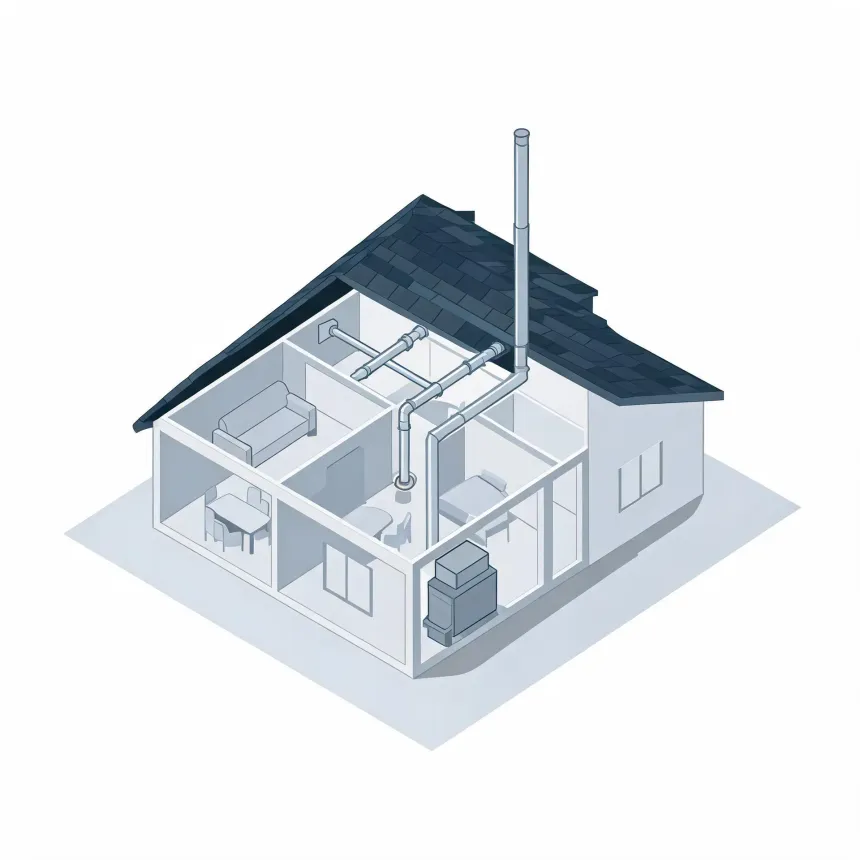
The old furnace comes out first, and the ductwork and gas line get looked over before the new one goes in. A tech checks the vent for the right size and slope, since a mismatched vent causes problems that have nothing to do with the furnace itself. The gas line gets pressure tested. The electrical connection gets checked too, and if there's a condensate line, it gets run somewhere that won't freeze or back up. Once the furnace is set and connected, it gets fired up and run through its paces, checking ignition, airflow, and the rise in temperature from the air going in to the air coming out. That rise has to land in the range the manufacturer specifies, not just somewhere close to it. Expect some noise and some testing before anyone calls the job done.