



View from under a wood-beamed patio roof across a gravel yard toward a stucco house wall and a concrete block boundary wall, with a large gnarled tree beyond.

Furnace Installation in Lordsburg, NM

Tell us about the job

Takes about a minute. No obligation.

New system or replacementFurnace or heatingHidalgo County, NM
Step 1 of 2

What ZIP code is the job in?

Your furnace in Lordsburg only has to work November through April. That's six months of the year it can sit idle, and even on the coldest nights it's not fighting much. Overnight lows average 29°F through December, January and February, nothing close to what furnaces in colder states deal with. That kind of mild workload means you don't need to pay for the highest efficiency furnace on the lot. A mid-range, reliable unit sized right for your house will do the job for years without ever being pushed hard.

6 months
November through April, your furnace is on duty
29°F
the average winter night it heats against
80% AFUE
the federal minimum any new unit must meet
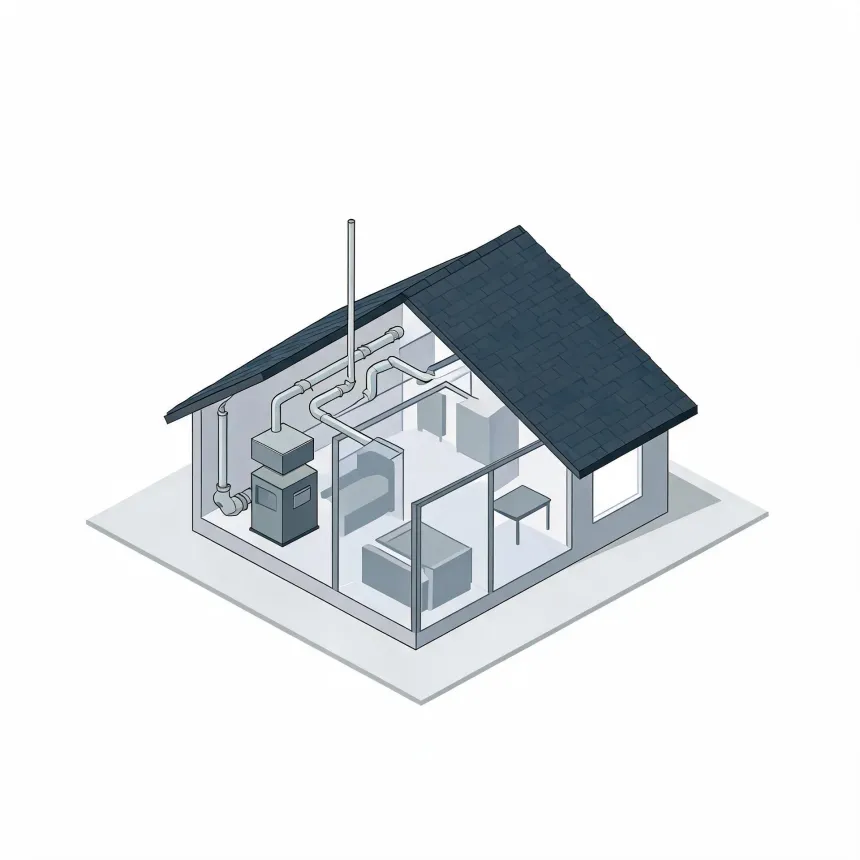
Isometric cutaway illustration of a small house with a dark shingled roof, showing an interior furnace unit, ductwork, and a flue pipe extending through the roof.
Your furnace works hardest from November through March.

NOAA nClimDiv, 1991–2020 normals

Heat season starts in November here.

Get a new furnace in before October and the install happens on your timeline, not during the first cold snap.

Six months of light duty means a mid-range furnace is money kept in your pocket, not a corner cut

Heat runs November through April
Winter nights average 29°F
Climate zone 3B

Size it to the house you have

Before anything gets installed, have the contractor size it to the house you actually have. A furnace that's too big or too small for an older home will run worse than one matched to it, no matter how good the unit is. If your house still has its original ductwork, say so. That's part of what the new furnace has to work with.

Find a contractor
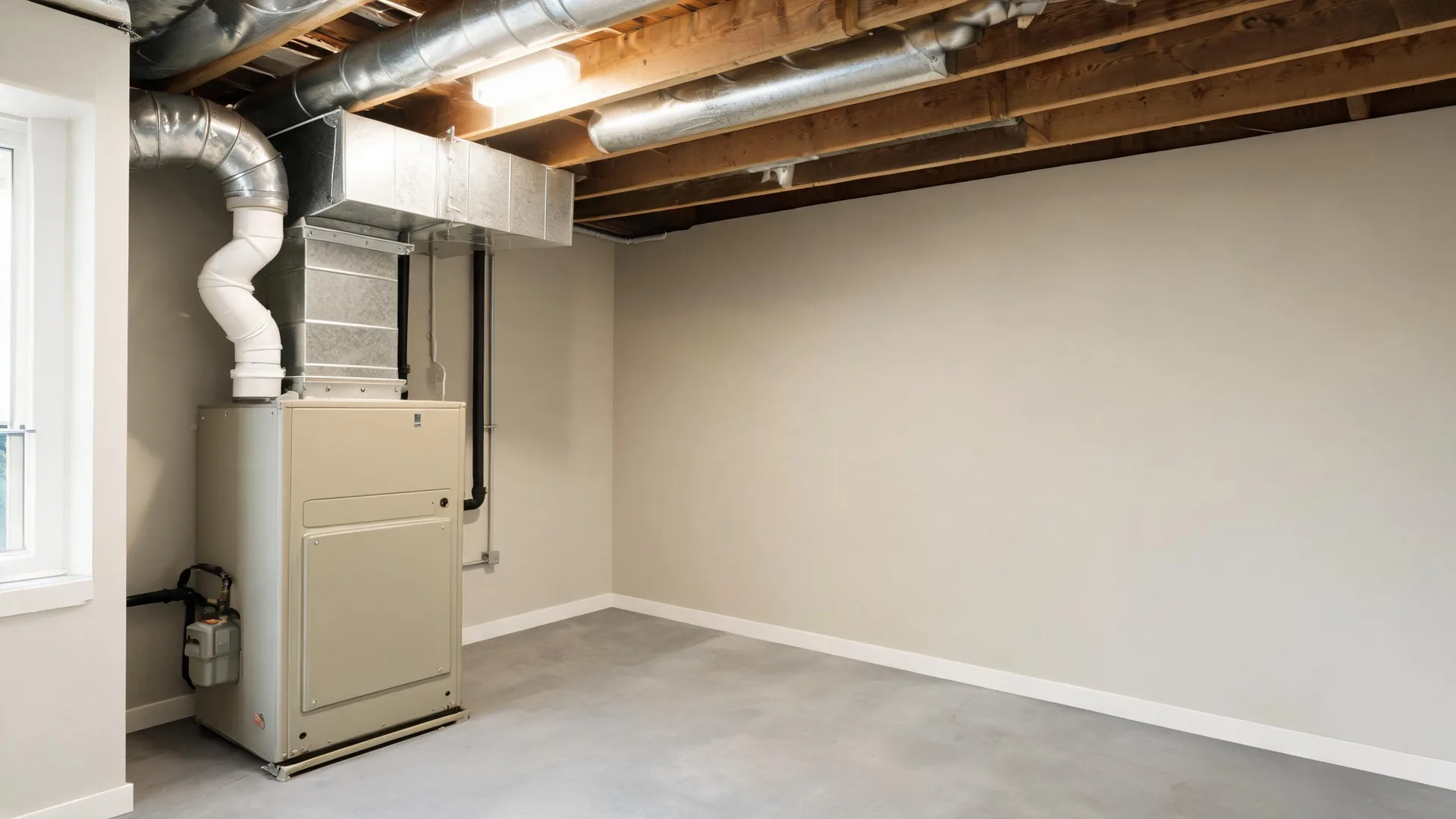
A gray residential gas furnace installed in an unfinished basement, connected to sheet-metal ductwork and PVC pipes.

Taking out what was there

The old furnace does not get hauled off still running. Whoever installs the new one disconnects the gas line, pulls the vent connection, and takes the unit out before the replacement goes in. If it is a gas furnace, the gas line gets capped off safely the moment it is no longer in use. Any old ductwork connections at the furnace get checked too, since the new unit has to seal to them properly or air leaks right there before it even reaches a room. None of this is optional work tacked onto the job. It is part of what has to happen for the new furnace to run safely and vent correctly from day one.

The size is the price

A furnace is priced by how much heat it can put out, and the right size is set by the house, not by what was there before. Going bigger than the house needs doesn't buy you anything. It just costs more up front and cycles on and off more than it should.
What the venting allows

Furnaces vent differently depending on how they're built, and the venting has to match what the house can actually accommodate. A furnace that needs a different vent path than the house already has means extra work before the unit itself even gets set in place.

The efficiency rating on a furnace tells you how much of the fuel it burns turns into heat for the house, and how much goes out the vent unused. A higher rating means less of what you pay for escapes as exhaust. That number matters more in a house where the furnace runs hard for months at a stretch, because every bit of waste repeats itself over and over through the season. Where the furnace only has to work a few mild months, the gap between a mid-range unit and the highest-rated one on the lot closes fast, since there's less total runtime for the difference to show up in. The rating also affects how the furnace vents. Higher-efficiency units pull enough heat out of the exhaust that it vents through plastic pipe instead of metal, which changes what the installer has to run to the outside wall. That's a real difference in the install, not just a number on a sticker.

On install day the old furnace comes out first and the new one goes in the same visit, start to finish. The installer sets the furnace, runs the gas line back to it, connects the ductwork, and attaches the vent pipe. Once it's in place and sealed, it gets fired up and checked while running. That means watching the flame, checking the heat rise coming out of the vents, and making sure the system reaches the temperature it's supposed to and holds there. The gas line gets tested for leaks before anyone calls the job done. A furnace that looks installed but hasn't been run and checked under its own fire isn't finished yet.