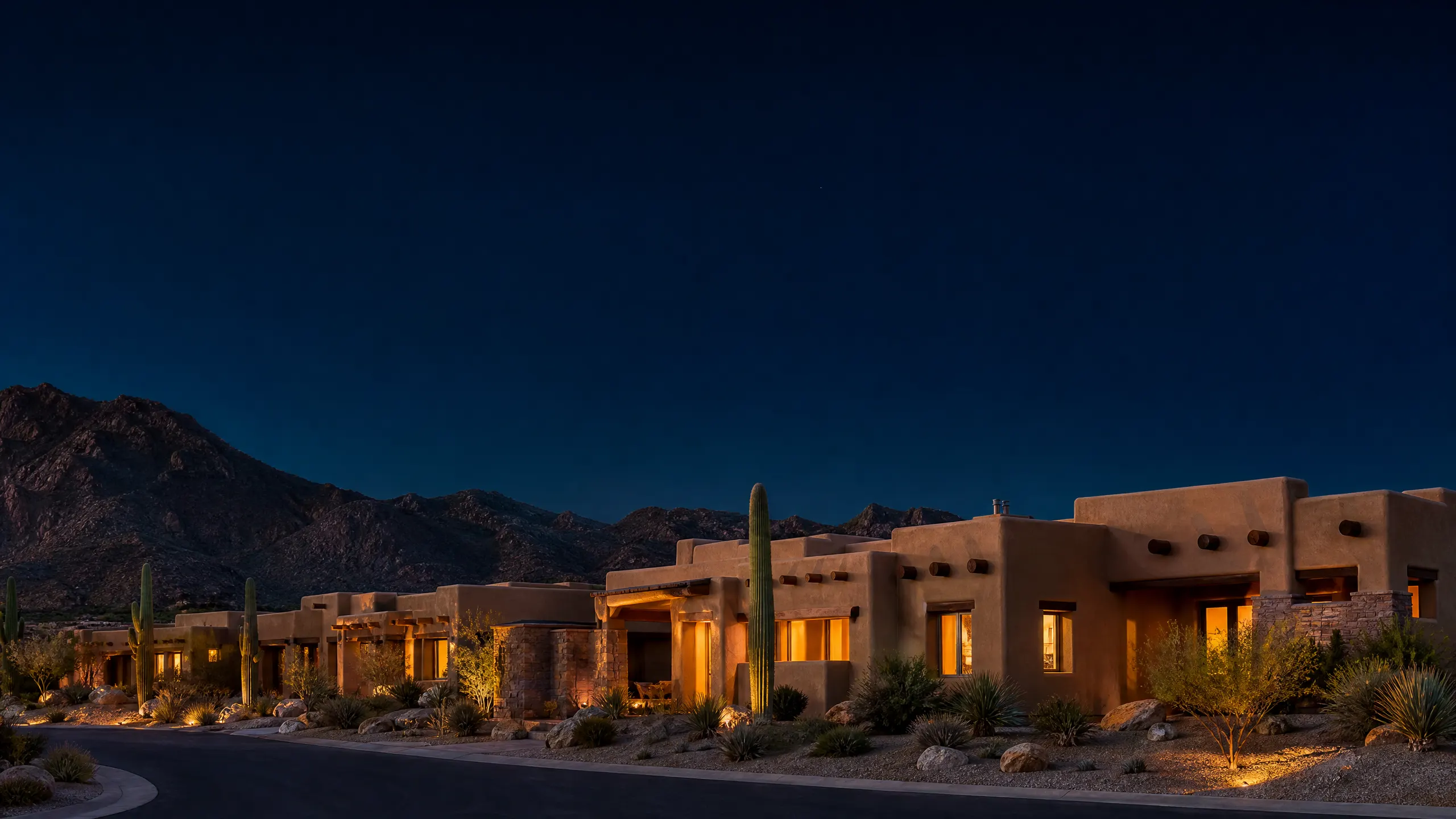





Adobe-style desert homes lit by warm outdoor lighting at dusk, with saguaro cacti in the foreground and a rocky mountain range behind them.

Furnace Installation in Las Vegas, NM

Tell us about the job

Takes about a minute. No obligation.

New system or replacementFurnace or heatingSan Miguel County, NM
Step 1 of 2

What ZIP code is the job in?

A furnace here runs eight months a year, October through May. That's most of the year, not a season. Overnight lows average 22°F through December, January and February, so it's working against real cold most of that time, not just running long. Winter storms hit this county often, heavy snow, ice, wind, and the furnace has to keep up through all of it with no real break. A furnace sized wrong for your house will struggle with that kind of demand, and the strain shows up sooner than it would somewhere milder. Get the size and the installation right from the start.

8 months
October through May, your furnace is on duty
22°F
the average winter night it heats against
80% AFUE
the federal minimum any new unit must meet
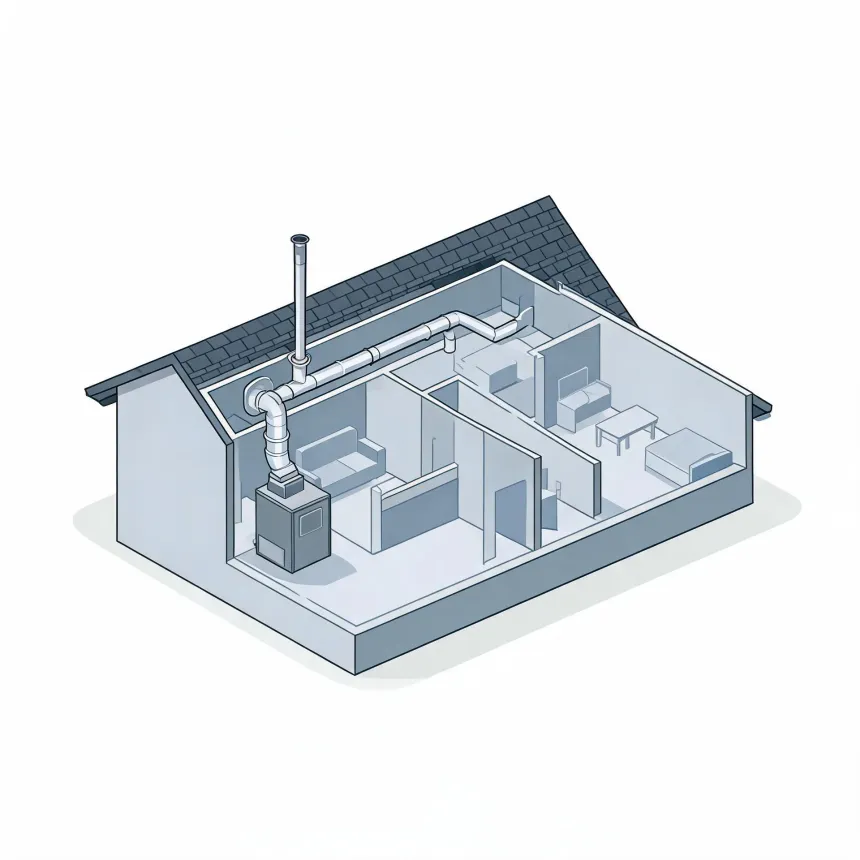
Isometric cutaway illustration of a single-story house showing interior rooms with furniture and a furnace connected to ductwork and a vertical flue pipe extending through the roof.
Your furnace works hardest from November through March.

NOAA nClimDiv, 1991–2020 normals

Half the homes in San Miguel County were built in 1979 or earlier.

Install a furnace in a house that age, and it has to match the house, not a standard box size.

None of this calls for oversizing, just the right size done right

421 severe weather events from 2015 to 2024
13% of homes statewide lost power a day or more in 2024
222 damaging wind events from 2015 to 2024
Replace it before OctoberFurnace season runs October through May here, so September is the month to get it done.

Gas heats more homes in San Miguel County than anything else, 31.1 percent. Electric heat is next at 18.0 percent, and propane covers another 18.6 percent. If your house already has a gas line run to it, a gas furnace is the straightforward replacement, and most contractors here install them often enough to know the work cold. If you're on propane, the furnace works the same way, just fed from a tank instead of a line. Matching what's already there is usually the simpler path, unless there's a specific reason to switch fuels.

Here, fit and sizing matter more than the efficiency rating

Natural gas ran $8.83 per million Btu in New Mexico last year, cheap compared to most of the country. That changes what's worth paying for. A high-efficiency furnace will cost more up front and take longer to earn that back here than it would somewhere with pricier gas. What matters more is a furnace sized right for your house and installed to hold up through a Las Vegas winter. Get that part right first.

Find a contractor
A gas furnace with attached ductwork, gas piping, and condensate lines installed in a concrete-block basement.

Size it to the house you have, not the one next door

A load calculation before installation catches what a standard box size misses, older additions, rooms closed off from the original layout, the kind of changes a house picks up over decades. If your home came with ductwork already in place, have it checked along with the furnace. Ducts sized for a different unit or a different layout waste the heat a correctly sized furnace produces.

The ductwork and venting decide as much as the furnace does

A furnace connects to the supply and return ducts already running through the house, and to a vent that carries exhaust out, either through a chimney or straight out a sidewall depending on how efficient the unit is. If those connections need rework to fit the new furnace, that work adds to the job. A straightforward swap where the new unit matches the old one's fuel type and vent style goes faster than one where the venting has to change.

Bigger isn't the upgrade it sounds like

A furnace too large for the house cycles on and off more than it should, which wears the ignition system faster and leaves rooms feeling uneven anyway. The right size comes from a load calculation, not the size of the unit being replaced. Installing the correct size sometimes costs less than defaulting to a bigger one, since the furnace, the ductwork modifications, and the labor all scale with it.

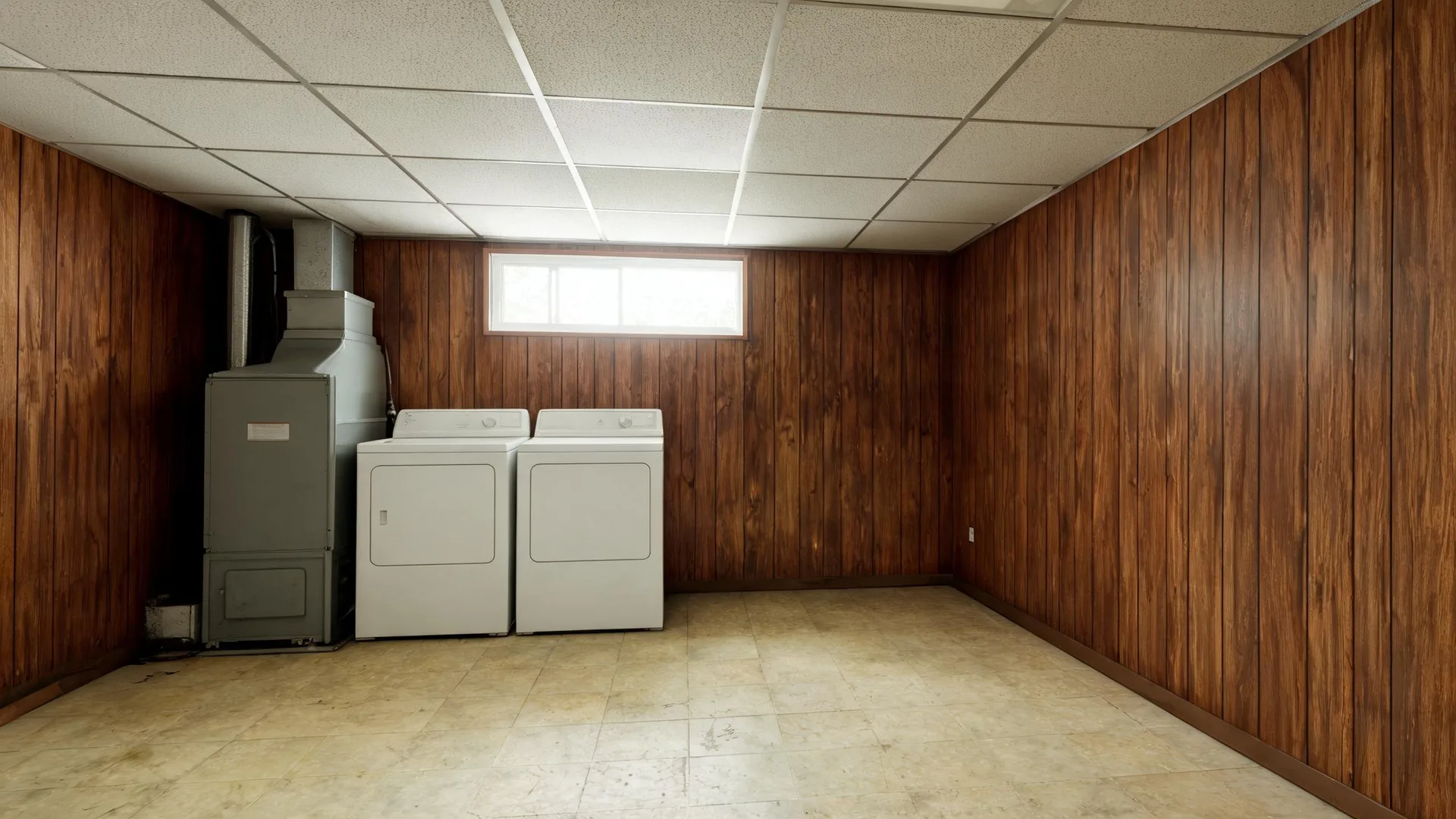
An unfinished basement featuring concrete block walls, exposed floor joists, a bare concrete floor, and a forced-air furnace with a large metal exhaust duct in the corner.

A high-efficiency gas furnace would save about $60 a year to run in San Miguel County compared with a gas furnace.

  • A high-efficiency gas furnace$290 a year
  • A gas furnace$350 a year

Estimates for a typical San Miguel County home, from EIA household energy data, New Mexico fuel prices and NOAA climate normals. Your home will differ.

The old furnace comes out first, then the new one gets set in place, connected to the ducts, the gas line, the vent, and the wiring that runs the thermostat and the blower. Each connection gets tested before the job is called done, not just the furnace firing up. A tech checks the gas pressure at the manifold, checks for leaks at every joint, and runs the system through a full cycle to see that the burners light clean and the blower moves air the way it should. The vent gets checked too, since exhaust has to clear the house completely, with nothing backing up into the living space. None of that shows on the furnace itself once the panels go back on, but it's the part that decides whether the install holds up or causes problems a year in.