80 percent AFUE is the floor here
Wagon Mound sits in climate zone 5B, where heating carries most of the load. Any non-weatherized gas furnace installed has to hit at least 80.0 percent AFUE, the minimum that's applied since November 2015.
Takes about a minute. No obligation.
Wagon Mound sits in climate zone 5B, where heating carries most of the load. Any non-weatherized gas furnace installed has to hit at least 80.0 percent AFUE, the minimum that's applied since November 2015.
Furnaces built on or after December 18, 2028 will have to reach 95.0 percent AFUE. If you're installing before then, ask what AFUE the unit is rated for now, since it sets how much of your gas bill turns into heat rather than going out the flue.
NOAA nClimDiv, 1991–2020 normals
Furnace season starts in September here.
Install in August and the new furnace is already broken in before it has to work.



A standard-size furnace sized to the house fits fine here. Half the homes in Mora County were built in 1983 or earlier, half in 1983 or later. That's an ordinary spread, not a sign of drafty old construction that needs oversizing to compensate. A contractor sizing the unit will run a load calculation on the house in front of them, not on the county. One thing worth checking if you're in a mobile home. About a quarter of the homes in Mora County are manufactured housing, and those need a furnace listed for mobile home installation. That's a different certification than a standard furnace, not a different size or efficiency tier.
Mora County has seen 76 winter storms between 2015 and 2024, the kind that knock out power and leave a furnace to catch a cold house back up. None of that changes what furnace this house needs. A standard size and efficiency rating still fits here. What matters is getting that size right and getting it installed before the cold sets in.
Find a contractor
This furnace runs nine months a year, longer than most of the country gets out of theirs. That runtime adds up fast on a unit sized wrong. A load calculation on this house, not a guess based on square footage, is what tells a contractor the right size to install. Get that right before the first cold night in September and the furnace is working with the house instead of against it for the next nine months.
The rating tells you what share of the gas burned turns into heat in the house versus what goes out the flue. A higher number means less fuel wasted for the same amount of heat delivered. It says nothing about how much heat the furnace can put out. A big house still needs a furnace sized to its load, and the AFUE rating rides along separate from that.
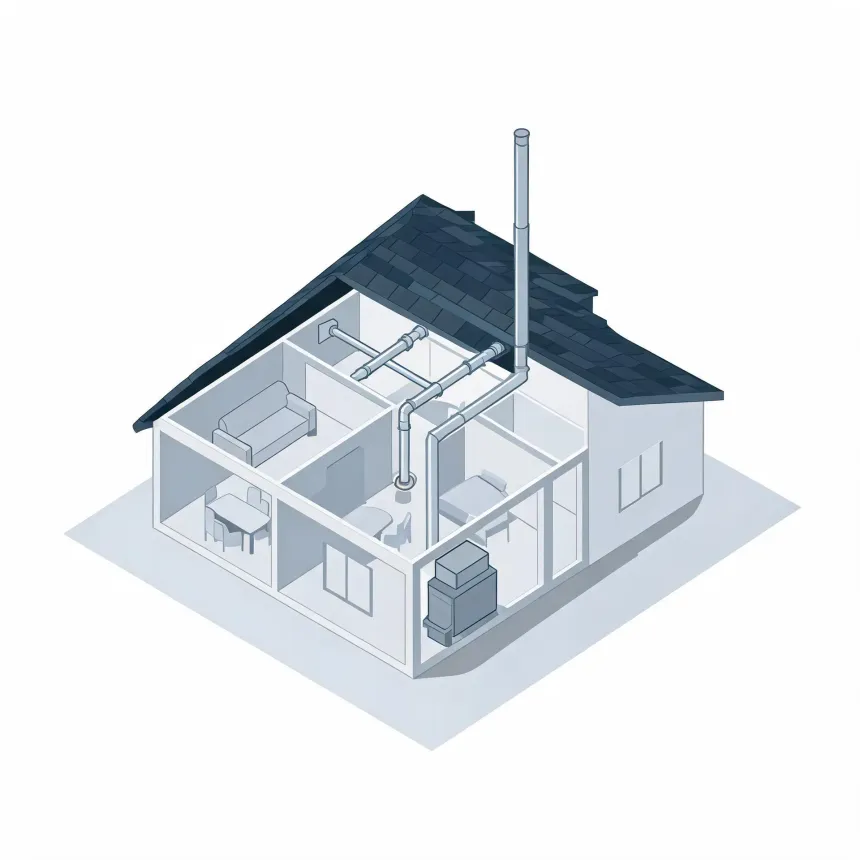
Hitting the higher efficiency tier means a second heat exchanger that pulls more heat out of the exhaust before it leaves, and that exhaust comes out cool enough to need a plastic vent pipe instead of metal. That changes how the furnace vents out of the house, which is worth asking about if a contractor is comparing a lower-tier unit against a higher-tier one for the install.
Ask what the furnace is rated for on temperature rise, not just AFUE. Every furnace lists a range on its data plate, and the blower speed has to be set to land inside that range for the ductwork it's paired with. Too high and the heat exchanger runs hotter than it should, which shortens its life. Too low and you get lukewarm air and a furnace that short cycles. Ask too what the ductwork was sized for. A furnace is only one part of the system, and a contractor worth hiring checks the return air before quoting a number, not after it's installed.
Installation day starts with the old furnace coming out, and that takes longer than people expect once the ductwork, gas line and vent pipe all have to be disconnected and checked over. The new furnace gets set in place, then the ducts get connected to it, not just bolted on. The gas line gets pressure tested before anything is lit. The vent gets run and sloped the way that furnace's exhaust needs, metal or plastic depending on the unit. Once it's running, a tech checks the temperature rise against the data plate and adjusts the blower speed to land in range. That last check matters as much as anything that happened before it.